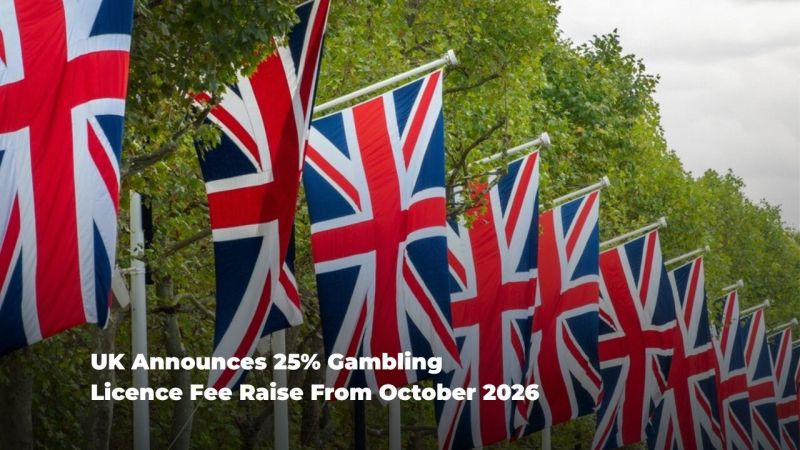
The UK government has confirmed a 25% increase in gambling licence fees, despite a consultation showing little support from operators for rise in costs. Its new fee structure will take effect on 1 October 2026, increasing expenses for licensed gambling businesses after the remote gambling tax changes introduced earlier this year.
The Department for Culture, Media and Sport (DCMS) had originally consulted on three options, including a 20% increase, a 30% increase, and a 20% increase plus an additional 10% charge for tackling illegal gambling and protecting revenue. Instead, it opted for a fourth option by introducing a flat 25% increase.
The department acknowledged that almost every major operator opposed higher fees.
“Almost all of these stated that they did not support any of the three options, and instead favoured no increase at all, with some operators proposing exemptions for their specific category of licence.
“Operators cited the impact of successive cost increases for the industry, particularly in relation to recent changes to gambling duty rates and the introduction of the statutory levy for gambling operators.
“There were also questions about whether the proposed increases accurately reflect the cost of regulation.”
Licence fees will be paid to the Gambling Commission, with applicants for operating licences and gambling technology suppliers also subject to application charges.
New Fee Structure Covers Operators, Personal Licences And Variations
These reforms apply across almost every licensing category administered by the Gambling Commission. Operating licence fees will increase by 25%. Personal licences, supplementary operating licences and single machine permits will also rise by 25%. The same increase will apply to applications seeking changes to existing operating licences or changes in corporate control.
There are two notable exceptions. Licence fees for society lotteries will be unchanged. Meanwhile, general betting operating licences for on course bookmakers will move to a gross gambling yield based system. This follows previous government decisions placing a lighter financial burden on sectors linked to horse racing.
The revised annual fee tables introduce higher charges as operator revenues increase. Virtual betting operators generating more than £1.6 billion in annual gross gambling yield will pay £1.45 million, plus an additional £272,324 for every complete £200 million earned above the threshold. Similar fee structures will apply across betting hosts, pool betting and betting intermediary licences.
DCMS Rejects Calls To Delay Or Phase In Higher Charges
Operators argued that the latest increase follows a series of financial pressures, including gambling duty reforms and the introduction of the statutory levy. Some respondents suggested phasing in the higher fees over several years. But the DCMS rejected this proposal.
According to the department, licence fees still represent a small proportion of annual gross gambling yield. It concluded that introducing the increases gradually would add complexity without delivering benefits.
This decision reveals the government’s position that the Gambling Commission requires extra funding to carry out its responsibilities while maintaining regulation of a complex gambling market.
Although operators questioned whether the new fees accurately reflected regulatory costs, the department maintained that the revised structure provides a more sustainable funding model for future regulation.
Illegal Gambling Funding Remains A Point Of Disagreement
The consultation also highlighted disagreements over how efforts against illegal gambling should be funded.
“A number of operators objected to providing any funding for tackling the illegal gambling market through licence fee increases, instead recommending that funding for tackling illegal gambling should come from central government departments including HM Treasury and the Home Office,” DCMS revealed.
“Some operator groups, including society lotteries and on-course bookmakers, also suggested that their share of illegal market funding should be minimal as there are very few illegal operators within their sectors.”
The industry supports stronger action against unlicensed operators. However, many businesses believe enforcement should be financed directly by the government instead of taxing operators.
Black Market Enforcement Keeps Influencing Government Policy
Illegal gambling has become one of the few areas where regulators and licensed operators agree on the need for stricter enforcement.
The Betting and Gaming Council estimates more than £16 million was staked with illegal operators during 2025, while ministers have highlighted the risks for consumers and tax revenues. Aside from higher gambling taxes, the government has allocated an additional £26 million to the Gambling Commission to improve enforcement against illegal operators.
The DCMS also established an Illegal Gambling Taskforce led by Gambling Minister Baroness Twycross. It is examining issues such as payment restrictions and whether unlicensed gambling companies should be prevented from sponsoring English sports teams.
Expert Opinion
The UKGC has confirmed its decision to increase gambling fees by 25% from October 2026. Several operators have pushed back against this latest measure due to other factors contributing to rising overheads. However, the government is funding the commission’s fight against illegal operators.
 Share
Share


 159 views