Key Points
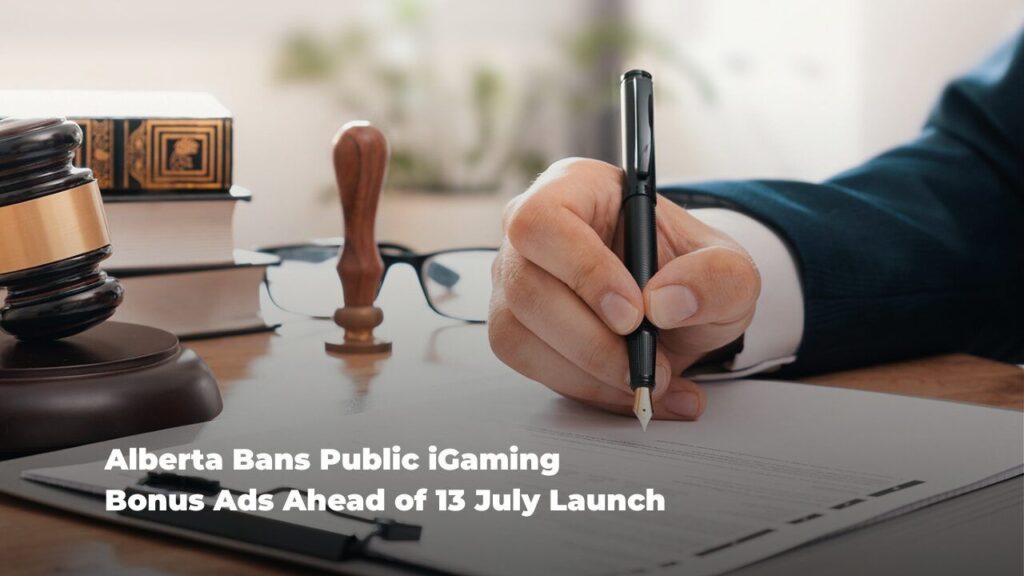
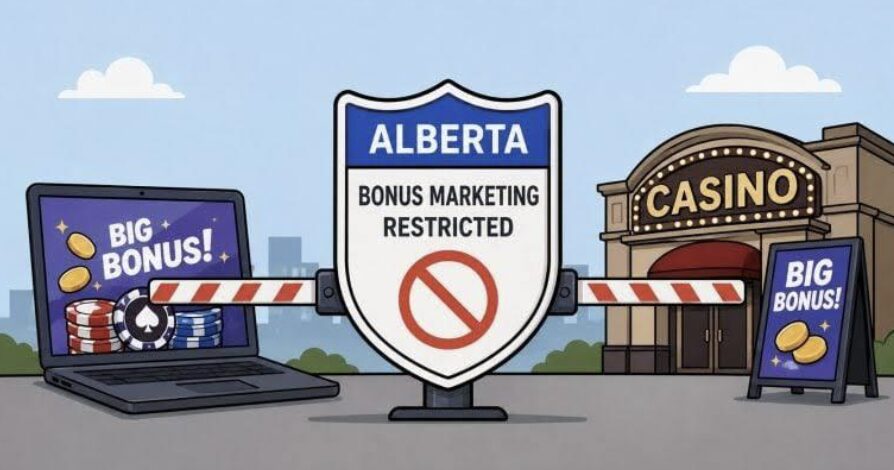
- The Alberta Gaming, Liquor and Cannabis Commission has restricted public advertising of iGaming bonuses and credits ahead of the 13 July market launch, limiting operators to their own websites or consented direct communications only.
- The Gaming, Liquor and Cannabis Amendment Regulation (AR 2/2026) codifies the restrictions, including a ban on describing offers as “free” or “risk-free” unless genuinely so.
- Operators entering the Alberta market must register with AGLC, pay required fees, and enter a commercial agreement with the Alberta iGaming Corporation all before 13 July 2026.
Alberta is a fortnight away from one of Canada’s most anticipated regulated online gambling launches on 13 July 2026. The date is locked, the applications are in, and the fees have been cleared. Contracts are moving through the Alberta iGaming Corporation’s commercial pipeline.
What operators did not map cleanly into their launch strategies is this: Alberta is not letting them advertise their way through the door.
Weeks before the market opens, the Alberta Gaming, Liquor and Cannabis Commission published restrictions on how bonus offers, credits, and promotional incentives can reach the public, and the permitted channels are far narrower than most operators had planned for. Promotions themselves are not banned. The routes to players are.
No Bonus Ads in Public
This rule can be found in The Gaming, Liquor and Cannabis Amendment Regulation, AR 2/2026, which, according to CanLII, cites the 2/2026 amendment. The advertising standards are laid out in Section 34.7. Schedule 1.1 contains the bonus terms, and there are no qualifications made in the wording.
Ads shall not promote any inducements, bonuses, or credits associated with gambling. Those who will be promoting their bonuses on general mediums, paid ads, or on broadcasting stations will automatically violate the rule without having one wager placed.
Two exceptions apply. Bonus communications are permitted on an operator’s own iGaming website, and they may be sent directly to individual players but only where that player has given express, informed consent. Pre-ticked boxes will not satisfy it. Assumed consent will not either.
The same Schedule governs how permitted offers must be read. Terms must be disclosed clearly. Nothing may be labelled “free” unless the player pays nothing at all. “Risk-free” disappears from the copy unless the player never risks a penny of their own money.
Sports Betting Ads Carry Additional Layers
The AGLC updated its Standards and Requirements for Internet Gaming on 18 June, and the advertising framework reaches further than bonus restrictions alone. The structure draws from Ontario’s regulated model and, in specific areas, goes past it.
Active or retired athletes cannot appear in operator advertising, except in responsible gambling messaging. Celebrities and influencers face the same restrictions. Imagery designed to attract minors is banned outright, and outdoor placements near schools or youth venues are prohibited regardless of the product being advertised.
Ad content faces its own tests. Nothing may suggest that gambling improves a player’s standing, attractiveness, or financial outlook. Nothing may imply that skill changes the outcome of a game of chance. The AGLC can order the removal of any advertising it judges as socially irresponsible or misleading, and it does not need to establish a formal breach to do so.
Promotions Still Permitted — Within a Tight Frame
The AGLC’s compliance documentation is direct about one thing: bonuses and promotional offers are not gone. Operators can still use them as commercial tools. What they cannot do is push them through unsanctioned channels or structure them in ways the regulation considers deceptive.
Contests or giveaways that alter game odds are out. So are promotions requiring wagers above the minimum stake, and any progressive structure funded by player contributions. Every permitted promotion must lay out its conditions without ambiguity, and players must find it as easy to withdraw consent as it was to give it.
Third-party relationships fall inside the same framework. Affiliates and marketing partners working with licensed Alberta operators cannot send traffic to unregistered gambling sites. Physical device partnerships where a business provides hardware to players for the purpose of accessing iGaming platforms are explicitly prohibited.
The 13 July Registration Gate
Alberta Minister of Service Dale Nally revealed the date for the commencement on 13 July through his letter addressed to all the stakeholders, with at least 30 operators lined up to use the platform once it starts operating. From this day onwards, those operators who have registered themselves with AGLC and signed the business contract with Alberta iGaming Corporation are authorized to operate the legal iGaming platforms in Alberta.
AGLC owns regulatory oversight, registration, and compliance. The Alberta iGaming Corporation handles commercial agreements, anti-money laundering requirements, public complaints, and financial reporting. Operators pass through both before going live.
Registration moves through three stages: due diligence review, compliance engagement, and technical integration with the provincial Self-Exclusion Programme. That programme gives players three options excluded from all registered iGaming, from land-based venues, or from both simultaneously. The integration must be complete and functional before any operator receives approval to operate.
Once a Player Self-Excludes, Marketing Stops
The self-exclusion obligation carries one of the regulation’s sharpest edges. The moment an operator receives notification that a player has joined the Self-Exclusion Programme, all marketing communications to that individual must stop. There is no waiting period, no internal review process, no grace window. The obligation triggers on notification.
Alberta frames this as player protection, not a penalty. The province wants commercial competition between operators to occur at the product and experience level, not through sustained promotional pressure on the players most likely to be harmed by it. As iGaming Business reported when the framework was first published, roughly 70% of Alberta’s online gambling activity currently flows to unregulated offshore sites the very problem this framework is designed to address.
Alberta Is Playing a Longer Game
A fortnight before launch, the province’s regulatory posture reads as deliberate and, in places, quietly confident. Alberta is opening its iGaming market without the promotional avalanche that accompanied comparable launches in other jurisdictions. Operators can compete, build brands, and offer incentives.
What they cannot do is carpet-bomb the province with offers, cold-contact unregistered players with bonuses, or use athletes to make gambling feel like an aspiration.
Whether that discipline holds once the market finds its floor is an open question. For now, the rules are written, 13 July is coming, and the window is closing faster than some operators are probably comfortable with.

Expert Analysis
Alberta’s launch framework is one of the more constrained bonus advertising environments seen in any newly opened Canadian provincial market. The dual-channel limitation operator website and consented direct contact only sits narrower than Ontario’s position at launch, and the athlete advertising ban for anything outside responsible gambling messaging draws a line that most other jurisdictions have left blurred. Operators built around acquisition-heavy, bonus-led strategies will need to rebuild their Alberta playbooks from the ground up. Those who have already invested in brand-led models may find the tighter environment works quietly in their favour, while operators who depend on promotional volume to acquire users will feel the 13 July gate more acutely than the registration paperwork ever suggested.
 Share
Share


 254 views