







Key Points
- Thailand’s Ministry of Digital Economy and Society blocked 13,888 gambling-related websites, social media pages and URLs between 1 and 18 June 2026. The operation used artificial intelligence and ran under direct orders from Prime Minister Anutin Charnvirakul.
- On 20 June 2026, Thai authorities arrested the administrator of PHAYAK789, an illegal gambling website that operated with a volume of more than 15 million USD every year, boasting a registered member base of more than 20,000 individuals.
- As early as 2026, more than 4 million Generation Z members aged from 15 to 25 years old have been involved in illegal gambling via the internet, lured by influencers on the livestreams and videos.
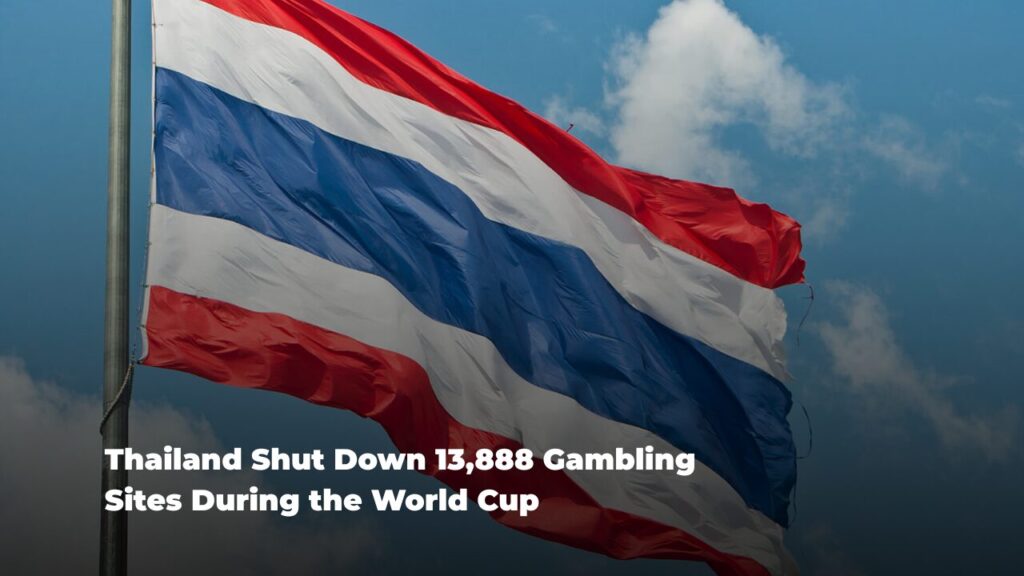
A football match starts. Millions of fans grab their phones. Somewhere behind that moment, illegal gambling operators are doing the same thing, watching the same match, just for very different reasons. Thailand saw that coming. Between 1 and 18 June, the Ministry of Digital Economy and Society, known as DES, moved through court orders and direct coordination with platform operators to pull 13,888 gambling links, websites and social media pages offline.
None of this came without warning. The numbers go back months. According to the Bangkok Post, DES had already blocked 673,699 gambling-related URLs between 1 October 2025 and 31 May 2026, with 635,717 removed under court orders and 37,982 taken down through voluntary platform cooperation. Thai police put the total figure slightly higher, above 717,000 blocked links across the same period. By 11 June, when the first match was played, authorities had been running this operation continuously for eight months.
Government Calls Illegal Gambling a ‘Social Time Bomb’
The order came from the top and moved fast. Prime Minister Anutin Charnvirakul directed agencies to go after illegal gambling websites, with his government calling the problem a “social time bomb.” DES Minister Chaichanok Chidchob passed that instruction down the chain, and Deputy Minister Nan Boonthida Somchai confirmed her ministry acted without delay.
“The DE Ministry has integrated its efforts with relevant agencies and coordinated with platforms to immediately enhance the blocking of URLs related to online gambling,” Ms Nan stated. “Over the past 18 days, more than 13,000 items have been blocked by using AI technology to detect and analyse social media websites related to online gambling.”
Her message to the public did not stop there. Sharing gambling content online, even without knowing it breaks the law, can lead to criminal charges under Section 14 of Thailand’s Computer Crime Act. That is worth pausing on. An ordinary user who reposts a betting link, not an operator, not an affiliate, just someone sharing content, could face legal consequences. For marketers working anywhere near Southeast Asia, that changes the calculation. Affiliate promotion, influencer mentions and boosted posts tied to gambling services are not simply blocked here; under Thai law, they can be criminal.
The enforcement reach went well beyond the DES. Police Lieutenant General Trairong Phiwpan, Deputy Director of the Technology Crime Suppression Centre, confirmed that National Police Chief Kittirat Phanphet had directed every relevant unit to move. As reported by the Bangkok Post, Trairong stated that “decisive measures against online gambling by making full use of all possible means, ranging from investigation to continuous crackdowns and blocking of websites and social media channels” were now in effect.
One Arrest Shows Just How Big the Illegal Market Has Grown
Two days after that statement, the numbers got personal. On 20 June 2026, the Cyber Crime Investigation Bureau managed to arrest the person responsible for giving an actual estimate of how much a gambling site was worth. The 31-year-old female administrator of a gambling website called Phayak789 was caught in Saraburi province after running the website for more than three years. Over 20,000 people participated in the gambling activities through the site. The monthly turnover was 40 million THB or 1.2 million USD, making it exceed 15 million USD within a year.
PHAYAK789 was not some obscure corner of the internet. Football betting, lotteries, slot machines, baccarat, automated deposits, automated withdrawals; the whole system was built to run without friction. The suspect was paid 25,000 THB a month to manage accounts, handle transactions and walk users through the betting process. She was charged with advertising and soliciting unauthorised gambling. Police say the investigation into the wider network is still open.
One arrest. One platform. The turnover from that single operation outpaces what most small businesses see in a year. That is what Thailand is working against.
The Technology Behind Thailand’s Faster Takedowns
Thailand’s willingness to act was never in question. What changed is the speed. The DES deployed its WebD platform, which uses artificial intelligence and robotic process automation to detect illegal content, build evidence files, generate court petitions and send blocking orders directly to internet service providers, running through that entire process 31.5 times faster than manual methods and cutting court submission time by five working days. A separate URL Checker system watches blocked addresses to make sure they stay offline.
Gambling operators have adapted to exactly this kind of pressure. They do not anchor themselves to one website anymore; they scatter across Facebook, Line, TikTok and wherever else they can reach users, producing new links at a pace no manual team can match. Automation is the only answer to that volume.
Four Million Young Users and the Influencer Route In
Behind the enforcement numbers is a recruitment problem. Data from Thailand’s Information Technology Crime Suppression Centre put the figure at more than 4 million Generation Z users, aged 15 to 25, who had accessed illegal gambling platforms by early 2026. A large portion of them had never gambled before. Operators found them through influencer marketing, livestreams and short-form video, packaging betting as a quick way to earn. That is where this story stops being just about Thailand and starts being about the marketing industry more broadly.
Paid influencers, short-form video, social amplification, these are not unusual tactics. Legitimate brands use them daily. The difference here is the product being sold and the absence of any disclosure. Thai officials are already on the case of bringing charges against influencers spreading gambling that is banned under the law, while the Computer Crime Act notice applies to everyone sharing the gambling content online, not just the people running the platforms.
The Debate That Eight Months of Enforcement Has Failed to Settle
URL blocking hasn’t stopped the debate about whether anything is being done at all. On the one hand, opponents say that demand has not been reduced despite eight months of enforcement efforts and a regulated system would allow the state to collect taxes from the gambling industry. However, the proponents believe that legalisation will speed up gambling problems, including addiction and financial ruin. Both sides share one uncomfortable fact: more than 4 million young users were already inside the illegal market before the World Cup even started.
Expert Analysis
Thailand’s World Cup campaign tells two stories at once. Technically, enforcement has come a long way. In terms of shrinking the underlying market, the evidence is less convincing. PHAYAK789 was processing 15 million USD per year, and that was one case. The broader illegal ecosystem, spread across social media, automated payments and influencer networks, has proved far more resistant to URL blocking than the takedown numbers suggest.
For iGaming operators in regulated markets, the payment shift is the detail that carries the most weight. Networks have moved from mule accounts to corporate structures, cross-border intermediaries and cryptocurrency. These are not casual operations. They are financially organised businesses that can rebuild their digital presence quickly as long as the money keeps moving. Across Asia, regulators are starting to focus on the URLs themselves.
For marketers, the conclusion is direct. Influencer and affiliate promotion linked to gambling in Southeast Asian markets carries a legal risk that does not stop at the operator. It reaches the person who posts the content. Any campaign touching gambling-adjacent audiences in Thailand, or using creators who are active in the region, needs legal review before a single post goes live. Under the Computer Crime Act, intent is not required for prosecution.
Explore more:
 Share
Share


 314 views