





Key Points
- Good causes funding fell £107.7m year-on-year in Q1 2026-27; EuroMillions alone accounted for £169.9m of the total sales decline.
- The UKGC confirmed a licence implementation cost recovery was deducted from the quarter’s good-cause figure but has not disclosed how much it took off.
- The April 2026 High Court ruling found that years of litigation directly damaged good causes; a finding the UKGC itself acknowledged publicly.
A 22% Drop With More Than One Cause
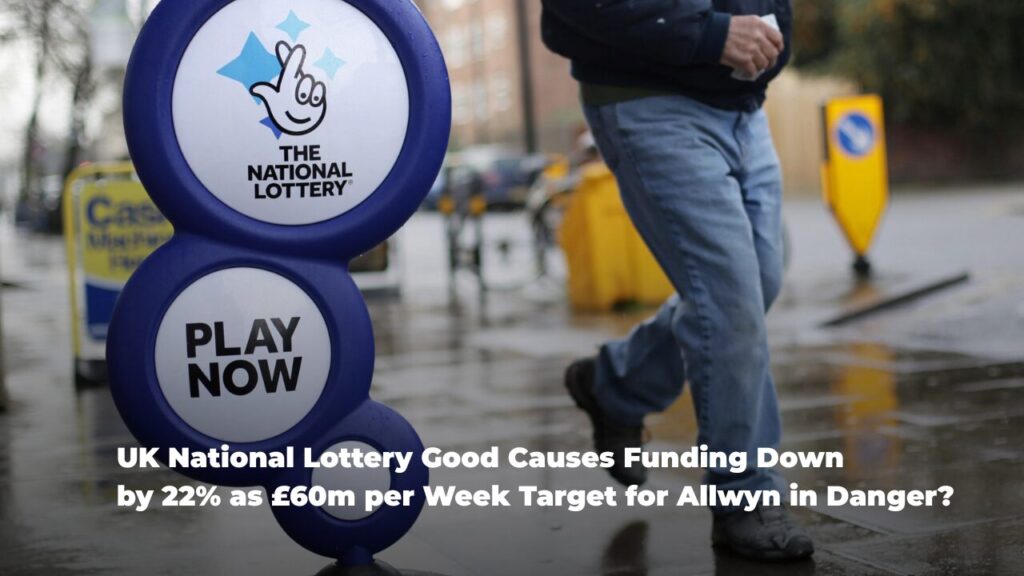
National Lottery funds for good causes stood at £377.2 million in 13 weeks running from April to June 2026. This was £107.7 million, or 22.2%, less than the corresponding period last year, and £69.5 million, or 15.6%, less than the previous quarter. These Q1 2026-27 figures have been released by the Gambling Commission within its National Lottery Distribution Fund publication series.
The operational contribution, meaning money generated directly from game sales, came to £358.4m. A further £18.9m came from unclaimed prizes, interest, and other adjustments. In the same quarter of 2025-26, the operational contribution alone reached £479.7m, making this year’s combined total look thin by comparison. Over the past four quarters together, the lottery has still channelled £1.7bn to supported projects, but the single-quarter numbers are moving in one direction.
EuroMillions Drove the Sales Drop; But That Is Not the Full Picture
Total National Lottery sales fell £261m, or 12.5%, against Q1 2025-26. EuroMillions accounted for £169.9m of that decline. Interactive instant-win game sales dropped a further £42.6m. Sales were also £85.6m, or 4.5%, lower than in Q4 2025-26.
Allwyn, during an interview on NEXT.io, gave reasons for this year-on-year comparison being so alarming. In the same period of 2025, there were 12 jackpots that crossed the £100 million mark in the EuroMillions game, with some jackpots crossing even the £ 200 million mark. There was no such trend in 2026. The rollover period got shorter, jackpot pools reached lesser heights, and there was no such boost that jackpots usually generate. The EuroMillions game is a collective European game, and thus the jackpot cycle is out of anyone’s hands.
Unclaimed prize payments also vary by quarter depending on which scratchcard games close and when 180-day claim windows expire. That variability makes quarter-on-quarter readings uneven by nature, separate from any operational factor.
The Deduction the UKGC Has Not Quantified
Inside the Q1 figures sits an adjustment that competitors have largely passed over. The UKGC confirmed that Allwyn began recovering costs tied to implementing the fourth National Lottery licence during the quarter, as the licence terms permit. That recovery is applied directly within the good-cause contribution calculation, which means it reduces the amount flowing into the National Lottery Distribution Fund.
The UKGC did not publish the size of that deduction. Allwyn rejected the word “reduction,” saying Recoverable Implementation Costs are provided for under the Fourth Licence and should not be treated as a cut to good-cause funding. That is a contractually accurate position. The issue is that without a disclosed figure, distributors, grant recipients, and the public cannot separate the EuroMillions effect from the accounting adjustment. The UKGC publishes these as official statistics; omitting a quantified line item for a known deduction leaves the numbers incomplete.
What the High Court Ruling Added to the Record?
The April 2026 High Court judgment is relevant to this quarter beyond its headline outcome. Mrs Justice Joanna Smith dismissed all claims brought by Richard Desmond’s Northern & Shell and The New Lottery Company against the Gambling Commission, finding the fourth licence competition had been lawful and fairly conducted. More pointedly, the judgment found that good causes and Allwyn both suffered material losses as a direct result of delays caused by the litigation pursued by unsuccessful bidders.
TNLC and Northern & Shell’s application for an appeal was turned down on 30 July 2026, bringing to an end four years of litigation regarding the licence. Allwyn officially acquired control of the operations from Camelot back in February 2024, but the judicial documents indicate that the delays caused by litigation have been affecting Allwyn right from the moment they acquired control.
Allwyn’s £60m Pledge Is Falling Behind
With the licence win in 2022, Allwyn pledged to double the amount of good cause return from £30m per week to £60m per week by 2034. According to the company’s update on its operations in March 2026, the lottery is currently generating £33m per week and is still on track to meet the 2034 objective. With the current Q1 2026-2027 performance level, this figure is below the one.
In total, Allwyn has spent more than £450m in modernising technology and the range of products offered by the National Lottery, which is described as the largest transformation in the history of the lottery since its launch in 1994. Digital sales have passed retail ones for the first time in 2025, achieving 51% of market share. Twelve million customers use digital channels. The list of new games includes the UK Powerball, worth £4 per line and played in collaboration with the Multi-State Lottery Association, as well as TV-format-based scratch cards.
Whether that timeline is credible depends partly on whether EuroMillions jackpot sequences return to their 2025 frequency. Sales volume and good-cause returns under the current licence structure move together: every product generates good-cause money at the same rate, so total revenue determines the outcome directly. A quiet jackpot environment is not a temporary inconvenience; it is a structural revenue variable the operator cannot control.
The Trend Predates This Quarter
In May 2026, the UKGC released its Q4 2025-26 report, with Q4 good-cause payments of £446.7m – already £32.5m, or 6.8%, down on Q4 2024-25. The sales decline in Q4 2025-26 was £111.5m from a year earlier, due to the same weak EuroMillions and instant win results. Declines have now been reported each quarter consecutively, further diminishing the statistical fluke argument for Q1 2026-27.
Household spending is not the answer. UK consumer expenditure, after adjustment for price changes, increased 0.6% from the previous quarter and 0.9% year-on-year in early 2026, according to the ONS. Consumers are not generally trimming back on spending. Lottery ticket purchases are declining against a backdrop of stable consumer spending levels, indicating that competition for discretionary funds is to blame.
There was a 12-week public consultation by the government on how lottery money is distributed in mid-2026; it was the first one since 2002. According to Culture Secretary, Lisa Nandy, the distribution of money is overly focused on London and the southeast of the country. This is happening at a time when less money is available for distribution.
Expert Analysis
While Allwyn’s argument of one subdued quarter being insufficient evidence for the establishment of a trend would have been easier to argue prior to the Q4 2025-26 results pointing to an identical trend, the two sequential quarters of annual declines due to the same product types would suggest that the EuroMillions comparison is responsible for the extent of the shortfall, rather than the direction. The implementation cost recovery, which is not disclosed, presents another uncertain factor which UKGC has to quantify in the Q1 2026-27 report. With the legal challenge to its business concluded as of the Court of Appeal ruling in July 2026, Allwyn has none left to hinder its operations in terms of legal action. The Q4 2026 quarterly report would reveal if the sales gap is increasing or narrowing.
Explore more:
 Share
Share


 245 views