Key Points
- The all-party Lords Committee released ‘Gambling Harm, Time for Action’ on 17 September 2026, demanding a complete advertisement ban “as soon as practicable”.
- The industry figures indicate that illegal operators are currently spending £845 million on advertisements in the UK every year, up 32% from last year, and are forecast to exceed legal gambling organisations in expenditure by 2028.
- The 2018 Italian Dignity Decree is closest in context to the UK case, as it led to the Italian Senate demanding an inquiry in March 2025 on account of the ban’s contribution to the growth of the black market.
Lords Tell Government to Choose: Industry Growth or Public Health
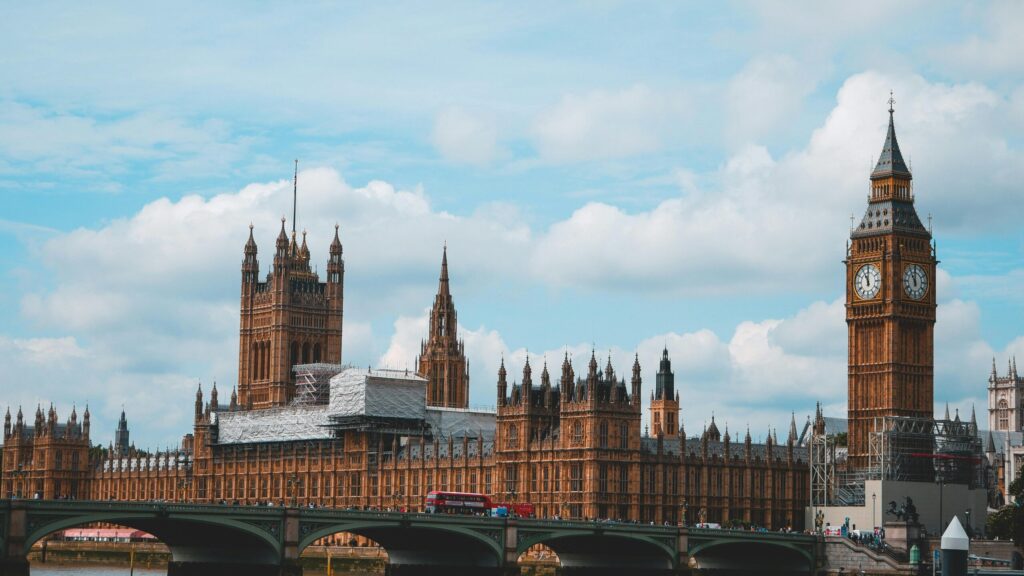
A House of Lords Liaison Committee published Gambling Harm, Time for Action on 17 September 2026, calling for a comprehensive ban on gambling advertising across the UK as soon as “practicable.” The cross-party committee did not hedge its position. It openly acknowledged the ban would shrink the licensed gambling sector and told the government to abandon its objective of growing that sector anyway.
The report was blunt about a contradiction at the heart of current policy. The Labour Party’s election manifesto of 2024 promised to reduce the harm from gambling, even as ministers spoke about growing the industry. It was pointed out that the two were incompatible and that a decision had to be made.
Six Years of Unfinished Business
This report is not starting from scratch. It follows a July 2020 Lords inquiry into gambling’s social and economic impact, which called for a public health approach to regulating the sector. That approach was formalised in the 2023 gambling white paper and partly realised through the statutory gambling levy. NHS England and its devolved counterparts in Scotland and Wales now control 50% of those levy funds, with the Office for Health Improvement and Disparities leading prevention spending.
Lord Ponsonby of Shulbrede, chair of the Liaison Committee, noted that “six years have elapsed” since the original report and that the committee’s earlier advertising recommendations “remain largely unaddressed.” Before the Gambling Act 2005 liberalised the rules, television and radio advertising was largely confined to bingo, football pools and the National Lottery, operating under a principle that gambling should be “tolerated but not stimulated.” Restoring that principle is precisely what the committee now wants.
The Numbers Behind the Push
In Great Britain, there are about one to one-and-a-half million individuals who fall under the category of problematic gamblers, representing about 2.4% of the country’s adult population. Losses may include broken relationships, money troubles, psychological problems, and in some instances, even suicide.
Lord Foster of Bath quoted a modelled study from the Sheffield Addictions Research Group, published in the journal “Addiction,” which found that a decrease of 10% in the money spent on gambling would boost UK gross value added by £1.25 billion and generate over 22,000 jobs. This is because money freed up from being spent on gambling will create greater economic value in this country than gambling. It is important to note that this is modelled and not observed in a real-life example anywhere in the world due to an advertising ban.
Dr Raffaello Rossi, Senior Lecturer in Marketing at the University of Bristol and Co-Director of the Bristol Hub for Gambling Harms Research, gave a sharper assessment. “Children are being failed by a regulatory system built for another era,” he told iGaming NEXT. “Gambling marketing is now woven into sport, social media, memes and online content, making it almost impossible to avoid and often difficult even to recognise as advertising.” He added that piecemeal restrictions “will simply push advertising elsewhere” and that only comprehensive action will protect children.
What the International Record Actually Shows?
The committee positioned Britain as a “comparative outlier,” pointing to Italy, the Netherlands and Australia as jurisdictions that moved further on advertising restrictions. That framing deserves more scrutiny than the committee’s three evidence sessions could provide.
Italy enacted its Dignity Decree in 2018, which took full effect from 1 January 2019, banning virtually all gambling advertising and sports sponsorship. Seven years on, Italy’s Senate Culture Commission adopted a resolution in March 2025 requesting the government review the legislation. The Senate’s stated reason was that the ban had failed because it applied the same regime to both licensed and unlicensed operators, which the resolution said led to “the flourishing of the black market.” The causal link between the ban and black market growth is the Senate’s own stated conclusion. Italy’s experience is now an active cautionary study for any jurisdiction considering a blanket prohibition.
In the Netherlands, an alternative and equally educational approach was used. From July 2023, progressive limitations on advertising were implemented such that general gambling advertisements could no longer be made on television and radio, with sports sponsorships being limited by July 2025. The Dutch authority responsible for regulation of gambling, the Kansspelautoriteit, has stated explicitly that a complete ban on advertising is undesirable as the share of gross gaming revenue attributable to the licensed market has dropped to around 49% at the beginning of 2025.
The Black Market Problem the Report Sidesteps
The committee acknowledged industry warnings about the illegal market and then concluded those concerns “must not be a barrier” to addressing harms in the licensed sector. BGC CEO Grainne Hurst called this approach “deeply misguided,” arguing the report “risks weakening, rather than strengthening, the protection of players.”
Her concern is backed by data the committee did not adequately weigh. According to marketing intelligence firm WARC, total UK gambling advertising is forecast to reach £1.9bn by October 2026. Of that figure, £845m already comes from unlicensed operators, a 32% year-on-year rise, and illegal operators are projected to outspend licensed companies entirely by 2028. Licensed operator ad budgets have already fallen 9.2% this year, partly driven by higher gambling taxes, while the black market accelerates unconstrained by any of the rules the committee is proposing to tighten.
Dan Waugh of Regulus Partners, who challenged several of the committee’s evidential claims during its June hearing, told iGaming NEXT: “Despite the considerable uncertainty regarding the quality of the evidence submitted, and the fact that the inquiry consisted of just three oral evidence sessions, the committee members appear comfortable with recommending the use of state powers of censorship to prevent the promotion of a lawful and culturally significant activity.” Vaughan Lewis, MD at TEISE Advisory and former chief strategy officer at evoke, added a measured warning: “The regulated market’s competitive position is not something that can be taken for granted.”
What Happens Next Under Burnham?
The government is not required to introduce legislation on the committee’s proposals, although it will be providing an official reply. The political climate is shifting to one of tougher gambling laws as Andy Burnham, the Prime Minister since July 2026, has acted swiftly to prevent the establishment of new betting shops. On a separate front, Chancellor John Healey is reportedly considering increasing the Machine Games Duty before the Budget date of 28 October, according to The Times.
Will Prochaska, Director of the Coalition to End Gambling Ads, said the report “should spur the Burnham government to continue what they’ve started on gambling reform and ban these harmful ads,” describing an advertising ban as “a unicorn of a policy for government, it’s popular, it protects public health, and it will lead to economic growth.”
Expert Analysis
We are not dismissing the public health case. The evidence that gambling advertising harms vulnerable people, and particularly children, is serious and well-documented. But there is an intellectual problem in the committee’s framing that deserves to be said plainly.
The Lords cited Sheffield’s modelled economic projections as evidence that a ban would grow the economy, while treating Italy and the Netherlands as jurisdictions whose experiences do not apply to Britain. Italy’s Senate did not call for a review because of industry lobbying. It called for a review because the ban applied the same rules to licensed and unlicensed operators, which the Senate itself said had fuelled the black market. That is a regulatory design failure, not a vindication of comprehensive prohibition.
The Dutch data sharpens the concern further. A licensed market holding roughly 49% of gross gaming revenue while advertising restrictions tightened is not a success story for prohibition advocates. It is evidence that sequencing matters as much as the policy itself. Strip licensed operators of advertising visibility before containing the illegal market, and you do not reduce gambling harm. You change who profits from it. If the Burnham government legislates on this basis without first addressing the black market’s accelerating advertising spend, the most likely outcome is one the Lords report does not seriously model: a larger, better-funded illegal sector serving the same consumers the committee says it wants to protect.
Explore more:
 Share
Share


 3 views