Key Points
- The NFL has confirmed Saquon Barkley had to sell up due to league rules, but won’t say any more on the matter.
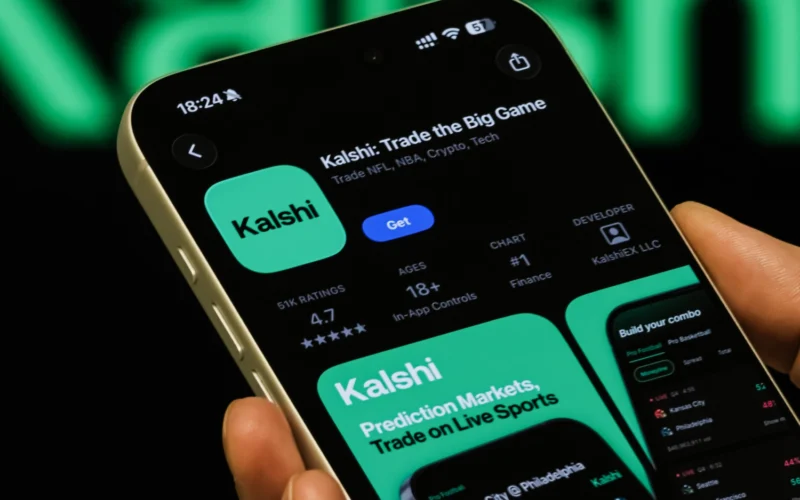
- At the same time, the NFL has asked the Supreme Court to let States decide on the future of prediction markets, with Kalshi’s court case due back on 7th December.
- Meanwhile, three different appeals courts have given different rulings on the matter, and the NBA & MLB have both signed up with the federal regulator.
One little barbed comment, “I was in it before, but it didn’t work out,” summed up Saquon Barkley’s exit from Polymarket. And this is where a February rule, three conflicting court rulings and yet another rival league betting the other way all come in, which one will be the deciding factor that gets to decide what NFL players can own in future?
Out of Polymarket, Under League Rules
On 28th October, Barkley told Front Office Sports that league rules left him with no choice but to get out. “I’m not involved right now” he said, he even added “I’m not allowed to be in that.” He said, as it happens, that this year the NFL had briefed all players on the things they could & couldn’t do when it came to endorsements & investments, and prediction markets had been included on that list. “I kinda had to get out,” he said. It was an offhand comment made during a pre-season chat.
The NFL confirmed on Wednesday that it doesn’t allow players to invest in or promote sportsbooks, and that covers prediction markets too. On Barkley, they’ve kept their lips zipped. Polymarket didn’t even bother to comment.
And the Rule Was Already Published
Barkley’s stake in Polymarket first came to light in a September profile of his business ventures. There was no word on the sale price or whether & when he’d actually sold, so the size of the holding is still a mystery.
In January, the NFL Players Association told Front Office Sports that the league views prediction markets as gambling. Then in February, the league’s chief spokesman Brian McCarthy was asked if prediction market ads were BANNED from the NFL, and he basically just shook his head & pointed to the rule book. The PGA Tour also has a rule against sharing ads for prediction markets saying they’re not an “approved category”.
It’s different in the NBA, where Giannis Antetokounmpo is an investor with Kalshi, he just has to avoid any NBA-related business, however. LeBron James, though, is one of Polymarket’s biggest earners, and we’re talking $15 MILLION a year. (Front Office Sports said they’d got that info from a source who would prefer to stay anonymous).
NFL Takes the High Court Route
Barkley’s story is caught up in a much bigger fight over who gets to call the shots when it comes to sports contracts. On 8th of October, the NFL weighed in on the Supreme Court side of the argument in the case of Flaherty v. KalshiEX, even though they’re not a party to the actual lawsuit.
The league’s brief makes the argument that Washington needs to step in on the game integrity front because federal oversight just isn’t cutting it. They label insiders’ trading rules as useless unless the league and the operators are on the same page when it comes to the people who aren’t supposed to be betting. The NFL reckons a whopping $1.8 billion of the $3.3 billion that changed hands on the first Sunday of the season was connected to their own games, a figure that comes straight from the brief, mind you.
Another point they’re pushing is that you gotta be at least 21 to trade, and that’s because the CFTC lets 18-year-olds have a go on their own trading platforms. Kalshi responded by saying the CFTC have already got a rulemaking process that addresses a lot of the league’s concerns right now.
Since April, the appeals courts have been all over the shop, and now the Supreme Court is being asked to settle it once and for all. On April 6th, the Third Circuit gave Kalshi a win, 2-1, in a preliminary ruling that blocked New Jersey’s laws. That’s not the final word on the matter, though, the dissenting judges reckoned that states still have plenty of room to regulate gambling in all its glory. In the case of Nevada, the Ninth Circuit just flew straight past Kalshi’s federal preemption argument, and that was with a unanimous verdict. And the Sixth Circuit, ruling in the case of Ohio and Tennessee, decided that Kalshi’s sports contracts can’t be considered swaps. Kalshi got shut out on the injunction front in both states, but it gets to take the Tennessee case back to the drawing board.
New Jersey’s filings say this is all pulling in at least 20 states and making them join the party. Then, 2 days later, on October 7th, Ohio, 38 other states and Washington, D.C., chipped in with a brief backing New Jersey’s cause.
Kalshi’s response was originally due on November 9th, but the Court said they could push that back to December 7th on October 30th.
NBA and MLB Take the Federal Route Instead
Just before Barkley made the rounds, the NBA came out and said they’d rather take the federal route. On 26th October, they signed a memorandum of understanding with the CFTC, and in return, they named Kalshi and Polymarket the preferred exchanges. Not only do they get to use the NBA’s IP, get some marketing rights and official Sportradar data to go along with it, but both exchanges also get to use the NBA’s name and data to run and settle NBA markets.
As part of the deal, league and team staff are off limits to trading NBA contracts, and the operators are now putting their hands up saying they can’t trade on certain markets. We spoke to Scott Kaufman Ross, the NBA’s head of media distribution, who said “protecting game integrity is our top priority”, but in fairness, they did also widen their DraftKings deal to cover prediction markets, and we’re told more betting partners are on the way.
It looks like the NBA’s 5-page memo itself isn’t actually binding, and basically, it just gives them both a bit more wiggle room when it comes to sharing information. On March 19th, MLB went down the same path, naming Polymarket their Official Prediction Market Exchange with all the exclusive rights.
Expert Analysis: Is the Source of Risk the Lack of Regulation of Rules?
It is hard to say which aspect of the arguments made by the league is the weakest, but it definitely is the ownership prohibition. Integrity concerns in trading NFL contracts and having passive stakes in the companies seem like completely different things. Also, we were not able to find any information explaining why it makes sense to put players and owners into the same category.
The lack of public information on how much and when the Barkley trade took place matters because it determines the financial loss, if any.
ProFootballTalk fails to address an important question of whether owners can have the same rights in holding stakes as sportsbooks or if they are restricted in the way players are restricted, and vice versa.
The figure of $1.8 billion can mean both threats to integrity and the fact that NFL games generate traffic on those platforms. Both the NBA and MLB signed the agreement with the CFTC, and two out of three circuit courts supported the states’ side.
 Share


 6 views