






Key Points
- Martha Pacold, the presiding judge, issued a ruling that blocked licensing and criminal laws in Illinois as regards the sport contracts under consideration, terming them swaps.
- Illinois’ three-tiered transaction charges neither received an approval nor a rejection; rather, the judge requested more briefs.
- This decision is contrary to that made in Wisconsin, thus putting pressure on the Seventh Circuit.
Kalshi Wins Partial Illinois Ruling, But The Fee Fight Is Still Open
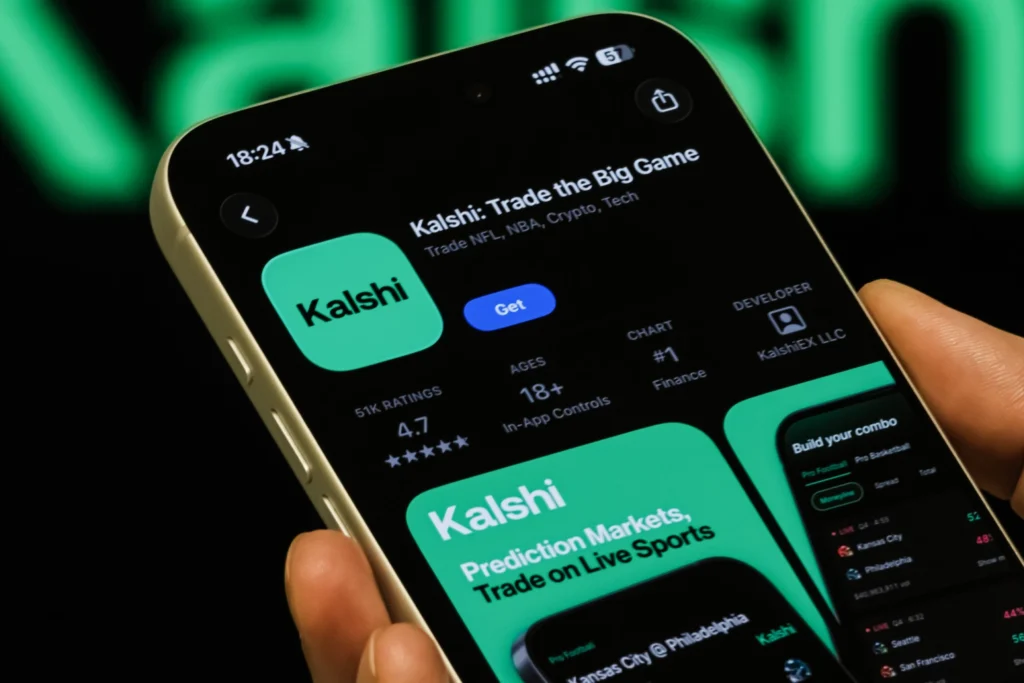
The Kalshi team needed a legal victory following their rough fall of defeats at the hands of the regulators in different states, and indeed, on 2nd October, they got one. An Illinois federal court put a stop to Illinois enforcing its gambling regulations on the company’s sports contracts. There is a loophole in this victory, and the loophole is money.
What the Illinois Judge Blocked?
Judge Martha M. Pacold, in the US District Court, granted some of the motions of Kalshi, Coinbase, and the CFTC. This preliminary injunction prevents Illinois from enforcing its licensing regulations for sports wagering and the criminal sanctions associated with these contracts. Those rules came from a new state law. Lawmakers had ordered platforms to block traders younger than 21 and limit sports offerings, as part of the $56 billion budget passed this year. Pacold found these rules likely clash with the federal Commodity Exchange Act. In the court’s written opinion, she said many of the contracts are likely swaps, adding that “they just happen to be swaps that people find entertaining and fun.”
Luana Lopes Lara, one of Kalshi’s founders, described the decision as “beautiful” on social media. The office of Illinois Attorney General Kwame Raoul declined comment. This is still an early ruling, not a final judgment. Pacold found that Kalshi and its partners are likely to win on these points, which is enough for temporary protection while the case continues.
Why Pacold Said Sports Contracts Are Likely Swaps?
In coming to her decision, the judge based herself on championship contracts. For instance, there was a contract on the possibility of the Chicago Cubs winning the World Series in 2026.
She said that since the outcome would have monetary implications for broadcasters, arena managers, vendors, and sponsors, the connection between economics and such contracts makes them fall within the scope of swap, as defined by the federal government.
However, it was not enough for a contract to be approved by the CFTC. Each contract had to meet the requirements in its own right, and even the representatives of Coinbase agreed that a bet on the colour of the sports drink spilled on a coach would not qualify.
This is a very important lesson, as fun bets can very well fall under the Illinois laws according to the wording of the final order.
Illinois Fees Are Still Unresolved
The key part that was often omitted from the reports. Illinois introduced prediction market fees in June in connection with its fiscal 2027 budget. These prediction market fees are defined in detail in the court’s decision. The exchanges will pay 1.75% fees on their first five million sports-related transactions in the fiscal year and then 3.5% on each subsequent one.
Ms. Pacold has not yet made any decision concerning these fees. She stated that “Regulatory uniformity, however, does not necessarily entail uniformity in cost,” implying that taxation and regulation may be considered in different ways.
It is also possible that Ms. Pacold may look in another direction. A sufficiently high amount for such fees can also contradict federal law.nIllinois legislators apparently prepared themselves for a confrontation. At least, according to the Chicago Sun-Times, the prediction market fees income has not been counted in the budget projections.
How Illinois Reached This Courtroom?
The conflict erupted on 1 April 2025 when the Illinois Gaming Board issued a cease and desist letter to Kalshi. The exchange was accused of conducting sports betting without a licence.
Coinbase got involved after partnering with Kalshi in December 2025 which made its users able to use contracts from the exchange. Then, on 2 April 2026, the CFTC and the Justice Department sued Arizona, Connecticut, and Illinois, which was an unprecedented move.
Kalshi lodged a lawsuit in June, arguing that the exchange found itself in an impossible situation because leaving Illinois violated the CFTC regulations while staying there cost too much geoblocking which could never be recovered by Pacold.
How Illinois Fits the National Court Fight
Different courts are giving out different judgments on the same issue. The chart below gives an analysis of the leading cases.
| Court | Result |
| Third Circuit (New Jersey), April 2026 | For Kalshi, 2-1 |
| Ninth Circuit (Nevada), August 2026 | For the state |
| Wisconsin district court, July 2026 | For the state; now before the Seventh Circuit |
| Sixth Circuit (Tennessee and Ohio), 25 September 2026 | For the states |
| Illinois district court, 2 October 2026 | Partly for Kalshi and the CFTC |
The decision from the Sixth Circuit was rendered just a week before Pacold’s decision, holding that Kalshi would be required to adhere to the gambling laws in Tennessee, according to Tennessee’s Attorney General Jonathan Skrmetti.
The state of Wisconsin is very important for Illinois as both the states belong to the same circuit, and gaming attorney Daniel Wallach referred to the two decisions as an “intra-circuit split.”
What Happens Next
The court order sets two near deadlines. The parties must file a status report on fee arguments by 8 October, then a proposed injunction by 29 October. The wording of that injunction will decide how far Kalshi’s protection really reaches. A narrow order covering only championship-style contracts would leave Illinois plenty of room to act. Above all of this sits the Supreme Court. New Jersey asked the justices to take up the question in a petition filed on 2 September, and gambling regulator associations backed that request the same week as Pacold’s ruling.
Expert Analysis: Illinois Lost on Rules, but May Win on Price
We believe that most of the cheering is misdirected to the wrong component of this ruling. Licensing creates the headline, while the fee creates a future trendsetter.
In our opinion, the issue of the fee presents an entirely new way to go about the whole situation. If the courts were to agree that states have the right to impose taxes but not the right to impose a license, then the other state legislatures would follow Illinois’ example.
Another point that we noticed as being quite flexible is the economic test that was imposed by the judge. Any sports event has something to do with either a street vendor or some sponsor; therefore, the borderline between exchange and gambling is determined by the way lawyers explain regular economic activity.
Then there is a political dimension that should be noted as well. According to OpenSecrets data, Kalshi made a contribution of $147,500 to Republican attorneys general and $170,000 to the Democrats in the first half of 2026. The contributions are perfectly legal, and Kalshi claims it backs both parties; however, it makes contributions to associations comprising people who are currently challenging prediction markets in court.
Our interpretation is straightforward: Illinois lost the case regarding who can trade, but it has not lost the case on the cost of the trading. Should the case be taken by the Supreme Court, the cost issue might become as important as the swap issue.
 Share
Share


 3 views