




Key Points
- As of 2 October 2026, there are certiorari proceedings ongoing before the US Supreme Court by way of separate petitions for each of the New Jersey (No. 26-299), Robinhood (No. 26-338) and Crypto.com (No. 26-344) cases. The case involving Kalshi continues as separate proceedings for en banc reconsideration within the Ninth Circuit.
- Kalshi has won in favour of its position on the preliminary injunction at the Third Circuit in April 2026; while the Ninth Circuit and the Sixth Circuit, on 25 September, have ruled against the use of state gambling laws to apply to sports event contracts.
- The American Gaming Association estimates that about $1.5 billion in potential gaming taxes were lost by states and tribes due to prediction market-based sports contracts beginning in 2025.
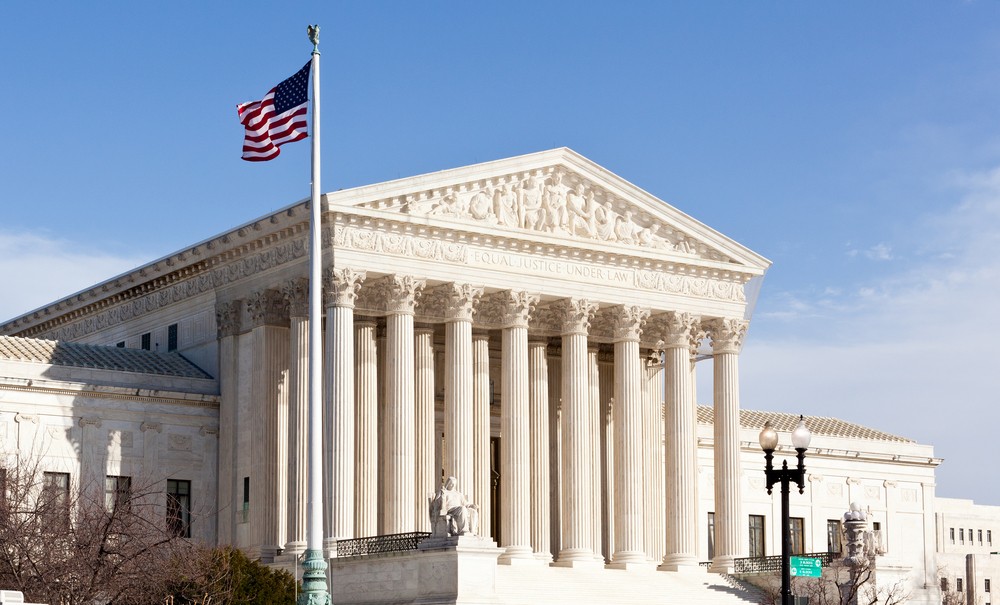
Three certiorari petitions have arrived at the US Supreme Court within one month. Two circuits sided with states on the central legal questions; one sided with Kalshi, but only at the preliminary injunction stage. The 2026-27 term of the Court began on October 5th and the Court entered its session with an issue which no lower court has been able to resolve. Is betting on sporting events on prediction markets a federal derivative or is it a state-regulated sports bet?
How Three Courts Read the Same Statute Differently?
The Third US Circuit Court of Appeals sided with Kalshi against New Jersey in April 2026, granting preliminary injunctive relief. It found Kalshi was likely to succeed on its argument that the Commodity Exchange Act gives the CFTC exclusive authority over sports event contracts on federally registered exchanges. That ruling was interlocutory, not a final merits determination.
The Ninth Circuit went the other way in August, in a Nevada case. It found Kalshi had not shown its sports contracts were pre-empted from state gambling law as federal swaps. On 25 September, the Sixth Circuit then ruled unanimously against Kalshi in consolidated Ohio and Tennessee cases. Judge Julia Smith Gibbons, writing for the panel, held that Kalshi “has not shown that its sports-event contracts satisfy the statutory definition of a swap.” The court also held the Commodity Exchange Act does not pre-empt Ohio or Tennessee gambling laws. A Fourth Circuit case involving Maryland remains active, keeping the legal picture open on yet another front.
The substantive split runs Third Circuit versus Ninth and Sixth, on both contract classification and pre-emption. States now hold two appellate decisions; Kalshi holds one preliminary finding.
Three Petitions, One Different Strategy
New Jersey filed its certiorari petition on 2 September under docket No. 26-299, seeking review of the Third Circuit ruling. Attorney General Jennifer Davenport argued the Commodity Exchange Act does not allow prediction platforms to bypass state law by self-certifying contracts with a federal regulator. According to NPR, sports contracts represent roughly 80 per cent or more of weekly trading volume on platforms like Kalshi. That proportion gives the jurisdictional dispute a scale far larger than a narrow statutory question.
Robinhood filed a separate petition (No. 26-338) on 10 September; Crypto.com filed another petition (No. 26-344) on 11 September. Both firms dispute the Ninth Circuit’s decision in Nevada and contend that CFTC jurisdiction overrides any state gambling law with respect to the sports agreements.
Kalshi chose a different path, applying for en banc rehearing before the full Ninth Circuit. It argues the three-judge panel misread the Commodity Exchange Act and applicable CFTC regulations. Whether the Supreme Court waits for that process before acting on the three petitions is one of the live procedural unknowns. Some legal observers believe the Court will want the Fourth Circuit to rule first; others argue three active petitions already on the docket make further waiting unrealistic. Sports lawyer Daniel Wallach told Reuters the conflict spans “50 states, hundreds of Native American tribes, hundreds of casinos, multi-billion-dollar financial exchanges, online sports betting companies and the federal government,” calling it “probably the most expansive and significant group of stakeholders that you could imagine for almost any case.”
The Two Questions No Court Has Finally Settled
The courts are fighting over two distinct questions. Running them together is part of why the rulings have landed so differently.
The first is classification: are sports event contracts “swaps” under the Commodity Exchange Act? The CFTC and prediction market operators argue yes, saying swaps include contracts linked to events with financial or commercial consequence. The Sixth Circuit rejected that reading, finding sporting outcomes lack the intrinsic financial character of an interest rate or commodity price movement. Any downstream economic effect from a match result, the court held, is too indirect to qualify.
The second is pre-emption: even if sports contracts are swaps, does federal law override state gambling regulation? The Sixth Circuit held that it does not. Congress, the court observed, knows how to write express pre-emption clauses and deliberately chose not to include one in the section governing CFTC exclusive jurisdiction. The Supreme Court will need to settle both questions simultaneously, since the lower courts have now diverged on each independently.
What Is Actually at Stake?
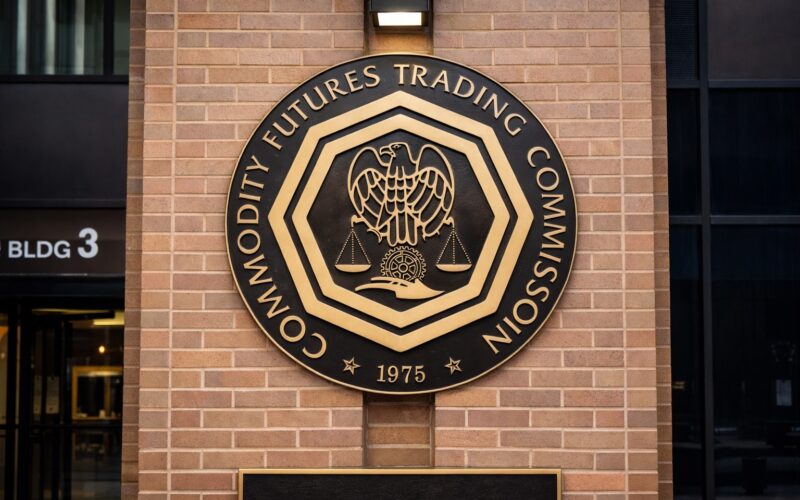
The CFTC, under Chair Michael Selig, has published proposed amendments to Rule 40.11 to clarify federal standards for sports, political and cultural event contracts. Those are proposed amendments open for public comment, not yet finalised as binding rules. The agency filed amicus briefs supporting Kalshi in the circuit cases and has taken legal action against states seeking to enforce gambling laws against prediction market platforms.
AGA’s commercial gaming revenues data suggests that the US has lost approximately $1.5 billion worth of gaming tax revenue owing to the launch of sports bets through prediction markets starting in 2025. This is an estimate by the AGA and does not come from any independent source from the government. Commercial gaming made a record payment of $17.86 billion in taxes to state and local governments in 2025 according to AGA data, whereas prediction markets paid nothing at all. Tribal gaming recorded a gross gaming revenue of $46.2 billion in fiscal 2025.
Donald Trump Jr. advises Kalshi and holds a financial stake in the platform. Bloomberg reported that his venture capital firm 1789 Capital was leading a $1 billion Polymarket funding round at a reported $21 billion post-money valuation as of 31 August. Kalshi itself was most recently valued at approximately $22 billion.
A Harris Poll commissioned by the National Council on Problem Gambling surveyed 2,045 US adults in May 2026. It found 85 per cent believe people can develop addictive behaviours linked to prediction market platforms. A further 84 per cent said these platforms should carry consumer protections comparable to traditional gambling products.
Expert Analysis
We find it genuinely hard to accept the framing that this is purely a regulatory clarity dispute. Prediction market platforms did not stumble into sports betting; sports contracts became the dominant product because they replicate the experience of wagering on games, without the licensing costs, gambling taxes and consumer protection requirements every state-regulated sportsbook is legally required to carry. The Sixth Circuit’s key observation draws directly from the Supreme Court’s own federalism precedents: Congress must speak clearly and expressly when it intends to displace a field states have traditionally governed, and on gambling, that field runs back more than a century of settled authority. The industry’s strongest argument, that state-by-state regulation fragments a national market, is commercially credible. It is also legally irrelevant to a preemption analysis, where the question is what Congress said, not what makes commercial sense. Two circuits read the same statute and reached the same conclusion without once leaning on efficiency arguments. We think that statutory silence, Congress choosing not to write a preemption clause in the CFTC’s jurisdiction section, speaks more clearly than the industry is comfortable acknowledging. Courts have now read that deliberate omission the same way on two separate occasions, independently. The platforms may ultimately prevail on some contract classifications and lose specifically on sports; the current appellate record, on both the swap classification and the pre-emption question, does not obviously point in their favour.
 Share
Share


 3 views