Key Points
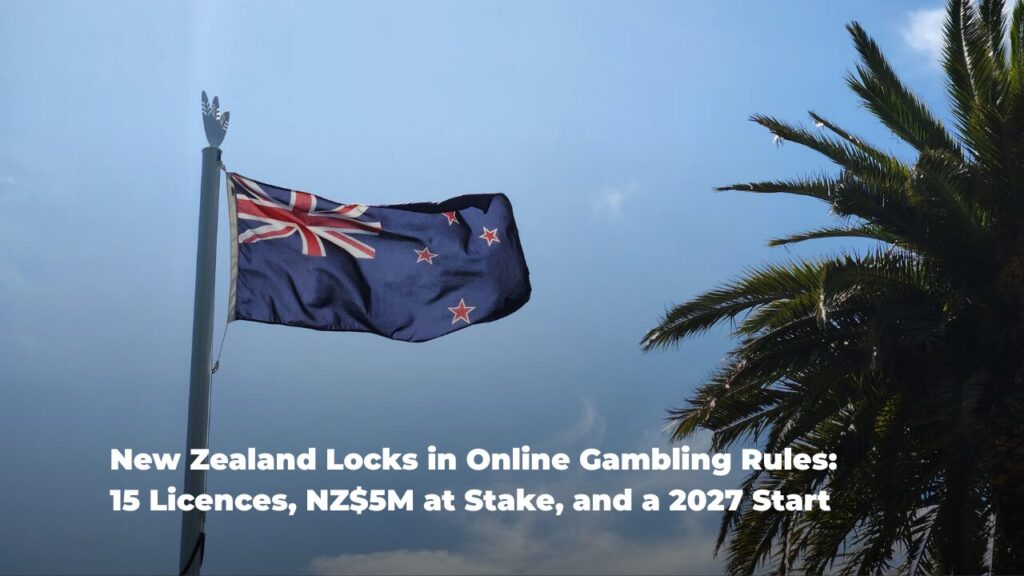
- As New Zealand pushes through its Online Casino Gambling Bill, this marks the start of the creation of a regulated market with only 15 licenses, stringent operator requirements, and fines of up to NZ$5 million, all of which create a feeling of pressure and relief.
- Licenses become available starting 2026, where interested operators will have to make their application before 1st December, and platforms are expected to go live by early 2027 with user protection mechanisms and taxation applied, causing anticipation and pressure.
- Through this bill, offshore gaps face closure, community funding comes from a 16% tax structure, and the system shifts from an open market to a controlled national model, which carries both concern and trust.
Online gambling operated in New Zealand long before this bill arrived. Offshore platforms served local users with no restrictions, no accountability, and no obligation to protect consumers. The money is left. Communities got nothing. This situation ran for years, and the lack of action frustrated many. The Online Casino Gambling Bill addresses it head-on. Royal assent triggers a regulated structure, and while the change is staged, it is real and it is coming.
The Grey Market Gets Replaced
Up to 15 licences define the size of this market, and the government made that choice deliberately. Expansion was not the goal. Control was and operators who hoped for a wide-open market now face a much tighter path.
The Department of Internal Affairs manages applications from July 2026. The 1 December 2026 deadline is firm. Eligibility ends when that date passes, and enforcement begins.
Even approved operators wait before launch. Advertising rules, harm minimisation frameworks, consumer protection standards, and cost recovery mechanisms all need finalisation first. No licensed platform goes live until that work is complete.
Entry Rules Reshape the Entire Operator Approach
Applicants must show robust harm prevention systems from the start. The ability to identify and exclude problem gamblers is not a bonus it is a requirement. Consumer protection moves from the margins to the centre of every application.
Authorities hold strong enforcement tools. The system includes take-down notices, formal warnings, enforceable undertakings, and fines reaching NZ$5 million for serious or repeated breaches. That penalty level is not symbolic it creates a real cost for non-compliance.
Offshore operators once avoided all of this. That option is gone. Every operator now faces a binary choice to comply fully or exit.
End of Offshore Access Paths
The law now covers every online casino that users in New Zealand can reach, no matter where the operator is based, which brings a sense of control with rising tension. That gap in jurisdiction which offshore platforms relied on no longer remains, and this shift creates pressure with a clear change in direction. Operators must hold a licence or they must stop serving users in New Zealand by 1 December 2026, which creates urgency with a firm decision point. Those who continue without approval face the same NZ$5 million cap, and this outcome builds fear with financial consequences. The framework defines rules before action and applies them across all cases without exception, which brings certainty with strict control.
Tax Structure Closes the Gap and Funds Communities
Taxation was a long-standing weakness in the old system, and the bill closes it. Minister of Internal Affairs Brooke van Velden was direct: “The bill supports the coalition agreement by closing the gambling tax loophole and requiring licensed online casino operators to pay tax, just like any other business operating in New Zealand.”
The Offshore Gambling Duty increases from 12% to 16%, with an added 4% for community funding. Public consultation produced 3,966 submissions from more than 5,000 respondents, many of them worried that online gambling would eat into income from poker machines.
Poker machine revenue has supported youth sports, cultural initiatives, disability programmes, and local clubs for a long time. The tax revision aims to protect that. Community funding could reach between NZ$10 million and NZ$20 million in the first year, assuming a January 2027 start. A recommendation for the Lottery Grants Board to manage these funds is on the table, but no decision is confirmed yet.
Fast Parliament, Tight Timeline, Growing Industry Tension
Parliament moved quickly on this bill, with the first reading in 2025 producing 83 votes to 39 in favour. That pace drew concern from industry stakeholders and legal experts. Advertising rules, harm minimisation, and cost recovery models remain incomplete, and the timeline leaves little space for further consultation.
Yet operators are not waiting. Entain has already signalled interest in three of the 15 licences. CEO Stella David highlighted the exclusive TAB brand in New Zealand as a potential bridge between sports betting and iGaming through cross-selling. Competition for licences is real, even now.
A Reset, Not Just a Rule Change
New Zealand is not tweaking an existing system. It is building a new one, moving from offshore dominance to centralised control with enforceable rules and measurable economic outcomes. That is a structural shift with consequences that reach well beyond the industry.
The framework reduces the number of participants, raises standards, and extends enforcement to all operators regardless of location. Fewer operators enter the market, but those who do face reduced offshore competition and that changes the risk and reward balance meaningfully.
Industry Outlook: Risk, Reward, and the Fight for 15 Spots
The 15-licence cap creates a competitive environment where precision matters more than scale. Getting a licence is step one. Holding it through full compliance is the ongoing challenge and the costs are real.
Regulatory obligations, harm prevention systems, and taxation all drive costs upward. But the protected market that comes with approval offers a clear advantage to those who succeed. Investment in localised compliance is unavoidable player monitoring, exclusion mechanisms, and reporting must all meet New Zealand’s specific standards.
Across the wider industry, this move fits a pattern that is spreading. Governments are building controlled ecosystems to stop offshore leakage, collect tax, and protect consumers. The result is fragmentation, and operators must now build individual strategies for each market they want to enter.
Well-resourced, compliance-driven operators especially those with an existing local footprint are best placed to succeed. Smaller operators and those built around offshore access face a hard wall unless they adapt quickly.
Clarity on secondary regulations in late 2026 remains an open question, as does the practicality of enforcement. The licence cap could concentrate market power over time, which may attract scrutiny on competition grounds.
Licence outcomes and the final regulatory shape will be the moments to watch as 2026 unfolds. The law provides the framework, but what operators actually do when the market opens in 2027 will determine whether it delivers.
New Zealand’s online gambling market was never absent. It just operated without rules. Now someone sets the rules, someone collects the tax, and the system decides who stays in the game.
Further updates on regulatory developments will be available in the Regulation Section.
 Share
Share


 361 views