





Key Points
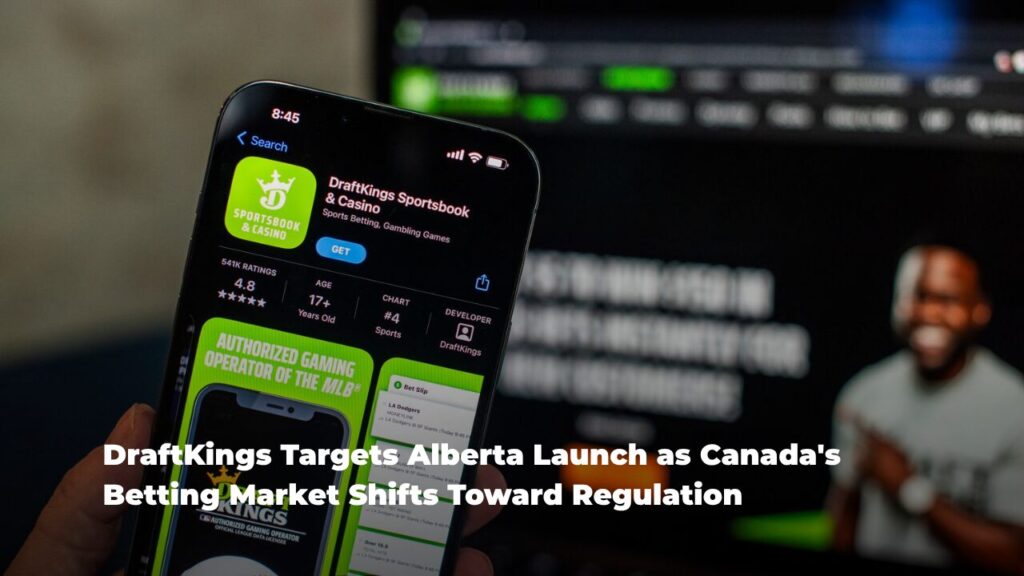
- DraftKings is lining up to launch its online sportsbook and casino in Alberta on the 13th of July all going well with the regulatory thumbs up with pre-reg open already but betting and deposits still locked down till the big day.
- Alberta is shifting from a situation where about 70% of all online betting was happening through those dodgy offshore sites to a properly regulated system with more than 50 operators already taking a serious interest.
- This is a big deal for DraftKings as it gets its foot in the door in a second Canadian province making it 34 jurisdictions across North America now and brings a bit of fresh competition to the likes of FanDuel, Caesars and Bet365.
Betting across Alberta appeared to run without interruption for years. What that steady flow of wagers concealed, though, was a gap that sat beneath the surface and shaped everything around it. Close to 70% of all activity ran through unregulated platforms, and that structural reality left its mark on every part of what followed.
Oversight held no real authority within that arrangement. Consumer protection existed in name only, and tax revenue moved beyond the reach of the province without resistance. That did not change at once instead, the pressure built over time until Alberta reached a point where holding its position was no longer an option.
The Alberta government made the call back in 2025 to start bringing online betting and iGaming under a single, properly regulated framework. It was more than just a change of policy though it was a pretty deliberate move to shift a market that was already in full swing into a more legitimate space where you could actually keep an eye on what was going on, know what operators were being transparent, and actually hold people accountable. Play Alberta had stood as the only regulated option before that point, carrying provincial oversight on its own. That era now draws to a close as the market prepares to welcome competition.
DraftKings Moves Early as July 13 Deadline Approaches
DraftKings has placed itself at the front of a transition that gains speed with each passing week. The Boston-based operator confirmed it is opening pre-registration for Alberta users ahead of the official market launch on July 13, 2026, choosing to act before the full system comes online.
Accounts can now be created by interested users. Deposits remain off-limits, and bets cannot be placed at this stage a restriction that fits a rollout designed to meet regulatory expectations without jumping ahead of them.
That measured pace ties directly to what remains in place. A launch on July 13 depends on licensing and regulatory approval from the Alberta Gaming, Liquor, and Cannabis Commission, which continues to guide the transition forward. The same date carries a consequence that draws a line across the whole market. From that point, unregulated operators must stop offering betting services in Alberta, separating the old arrangement from what replaces it.
Timing the Launch Around Peak Sports Demand
This rollout does not arrive in a neutral moment. Its connection to a global sporting event gives it a dimension that strategy alone could not manufacture. The World Cup, hosted in North America, brings a level of sports engagement that makes a market launch in this window carry weight beyond what the calendar date alone would suggest.
Greg Karamitis, executive vice president and general manager of sports at DraftKings, said: “We’re excited about the opportunity to expand DraftKings’ footprint in Canada and bring our online sportsbook and casino experiences to customers in Alberta. With the anticipated launch aligning with the World Cup hosted right here in North America it’s a particularly exciting moment for sports fans in the province to engage with our platform.”
That connection sets expectations before the first bet is placed. A period of high sports interest can pull users toward a platform at a speed that a quieter moment simply would not generate, and in a market where user habits are still forming under a new framework, that difference carries real consequences.
Competition Builds Before the Market Even Opens
The competitive field has already started to define itself before July 13 arrives. Several established operators have moved into the pre-registration phase, each claiming their position ahead of the market:
- theScore Bet
- Caesars
- BetRivers
- PointsBet
FanDuel and bet365 are expected to follow. FanDuel has already secured approval in other jurisdictions, including Arkansas, where a partnership with Oaklawn Racing Casino Resort supported its expansion.
The wider pool of interested parties keeps growing. Regulators report that over 50 operators some estimates place the number above 55 have signalled their intent to enter Alberta. Only a share of those have completed licensing applications and met the fee requirements so far, producing a staggered pattern of entry as compliance timelines vary across the group.
That pattern shows a market forming in layers. Operators who move first secure their ground while others work through the steps that bring them into the system.
Regulatory Framework Expands Beyond Online Betting
What unfolds in Alberta does not stop at mobile platforms. The framework reaches into physical spaces as it develops, adding plans for in-person betting at casinos, racetracks, and sports venues and building a hybrid ecosystem across both digital and physical environments.
Oversight runs through the centre of that structure. The AGLC has been clear that licensing carries ongoing monitoring rather than a one-time sign-off, with operator suitability subject to reassessment based on advertising conduct, industry rules, and responsible gambling standards. That structure reflects what other regulated markets have learned, where growth moved at a pace that enforcement mechanisms struggled to match.
DraftKings’ Broader Expansion Strategy
Alberta carries meaning for DraftKings that stretches beyond a single launch date. Once the platform activates, it will represent:
- The company’s second Canadian market after Ontario, where it launched in May 2022.
- Its 34th North American jurisdiction for online sports betting.
- Its seventh jurisdiction offering online casino products.
Recent activity points in the same direction. DraftKings secured a vendor licence in Arkansas through Southland Casino Hotel, replacing the Betly-branded sportsbook with its own, and extended into Missouri and Puerto Rico as part of the same period of growth.
A pattern runs through each of these moves. Enter the market early, build the partnerships that secure the position, and scale operations within newly regulated environments before the window for doing so tightens.
Industry Voices Reflect the Pre-Launch Strategy
Pre-registration has shifted into something larger than a preparation step across the industry. Operators use it as an early engagement point, treating it as the moment where positioning begins well before any revenue has the chance to arrive.
Eric Hession, president of Caesars Digital, described the approach: “Opening pre-registration is an important first step that allows players to prepare for launch while we finalise our plans to bring our full trifecta of platforms online in Alberta.”
That description captures how the process unfolds across stages. Access comes first, then readiness, and only after those two phases settle does full participation open up.
What Does This Shift Really Change?
Alberta’s move carries the look of a routine regulatory update on first reading. Its reach into the betting ecosystem runs further than that surface impression suggests. Unregulated platforms step out of the market, access through those channels closes almost at once, and licensed operators move into the space that opens up.
Consumers step into an environment that carries structured safeguards they did not have before. That same environment also brings exposure to marketing from competing brands on a scale the market has not seen. The province starts to hold economic value that had been leaving its borders, and the flow of revenue at a systemic level shifts direction.
Expert Analysis: Strategic Implications for Operators and the Industry
Alberta’s launch holds significance beyond a single market entry. It acts as a test case for how mid-sized jurisdictions work to convert established grey markets into systems under regulation.
-
Operational Impact
Operators work against a timeline that compresses quickly. Licensing, compliance systems, responsible gambling frameworks, and localised marketing all need to be in place before July 13. Pre-registration reduces friction at the point of launch but raises upfront costs without any revenue to offset them, putting early entrants in a position where spending runs ahead of returns.
-
Competitive Dynamics
Over 50 operators expressing interest makes the risk of early oversaturation a real possibility. Consolidation will likely move at a pace, with market share gathering around brands that carry established technology, promotional capacity, and recognition from other markets. DraftKings and FanDuel arrive with structural advantages that their scale in the United States has already built.
-
Revenue Redistribution
Licensed platforms compete to capture the demand that unregulated operators leave behind as they exit. That dynamic turns the situation into a redistribution of existing liquidity rather than the creation of something new.
Opportunities
- User acquisition during a World Cup-driven period of high sports interest.
- Cross-selling between sportsbook and iGaming products.
- Brand establishment ahead of tighter regulations that raise future entry barriers.
Risks
- Customer acquisition costs are pushed up by the density of competition.
- Regulatory scrutiny directed at advertising and responsible gambling standards.
- Margin compression during early promotional activity.
Winners and Losers
Licensed operators, provincial regulators, and consumers who want the assurance of a safer environment all stand to gain. Unregulated platforms face displacement at the moment the market shifts. Smaller operators may find the presence of larger, better-resourced brands difficult to compete against.
What Comes Next?
Three indicators will determine the shape of the next phase as July 13 draws near. Conversion from pre-registration to active user status will show how well early interest becomes real participation. Market share distribution across the first six months will reveal how quickly competition settles into a recognisable structure.
Enforcement intensity from regulators, particularly around advertising, will signal how firmly the framework holds in practice. A successful redirection of grey market activity into regulated channels in Alberta could influence how other provinces approach the same challenge. A failure to achieve that redirection would raise questions about whether regulation alone has the force to change behaviour that formed without it.
The movement, though, has already started. Alberta does not simply open a market it reshapes who holds authority within it.
Explore more:
 Share
Share


 424 views