
Key Points
- The Senate passed the Remote Gambling Order on 2 October 2026 following its passage in the House by 33 votes to none.
- Licensing provisions under the 2021 Act have not come into effect and the Attorney General hopes to achieve implementation by 1 January 2027.
- According to the Ministers, regulation will bring in additional tax revenues and foreign exchange earnings while gambling taxes have been relatively low.
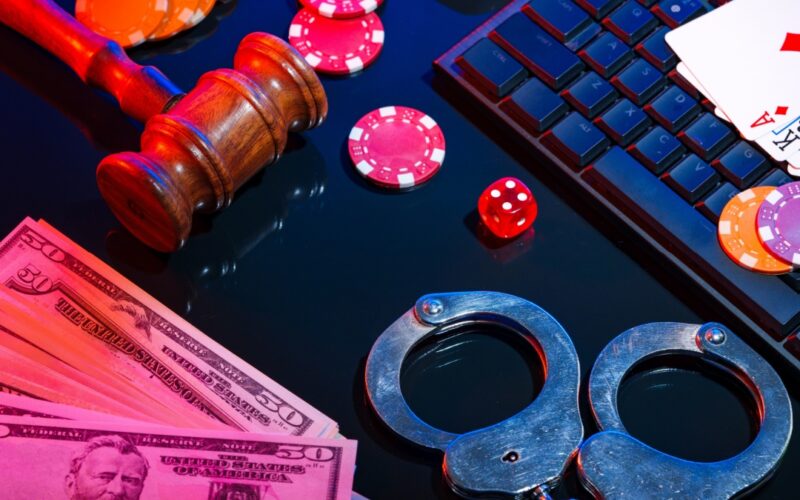
A law can be made in just one afternoon, but yet take months before anything changes. The senators agreed to a law that lifts the criminal ban on gambling conducted from abroad via Trinidad and Tobago on 2 October 2026. There is no operator licensed by the Order, and no license can be issued at the moment.
House Voted 33-0 and the Senate Followed
The Order changes section 76 of the Gambling (Gaming and Betting) Control Act 2021. Section 76(2) of the Gambling Act permits the Minister to change section 76 of the same Act by way of an Order, although this must be done with the consent of the Parliament. Parliament had already sanctioned it by way of a vote of 33 to 0 on 30th September.
Section 76 made it illegal to use gambling devices in Trinidad and Tobago to lure people who were not within the jurisdiction to gamble. The penalties which used to be contained within the law included either a fine not more than TT5 million and seven years in prison or a fine not less than TT10 million and ten years in prison. This is the penalty that an individual planning to venture into the gaming business in the region will have to face because of this law.
Approval does not switch the business on, because the licences themselves have no legal footing yet. The Gambling Control Commission says the licensing section of the 2021 Act remains unproclaimed. Until it is proclaimed, nobody can apply for, or receive, a licence.
Senators Press Ministers on the First Licence Date
The Planning Minister, Kennedy Swaratsingh, moved the motion with a straightforward reason. “This is an industry that will thrive with or without us,” he said to the senators. “Regulation allows the State to identify the operators, tax the operators, and set the standards,” he added.
Sen. Faris Al-Rawi, a member of the opposition, straightaway questioned the timeliness of this decision. “When would we expect that the granting of licences for online gaming would take place?” he asked. John Jeremie, Attorney General, assured to promulgate the provisions “by January 1, 2027, or before.” To this, Al-Rawi, who had sought the date, remarked, “I couldn’t have asked for a better response than that.”
Desiree Murray, Independent Senator, brought up the other side of the coin. “There are always two sides to the gambling coin,” she noted. “While there is indeed revenue generation for the State, there is the aspect of individual damage.” She enumerated these measures that she wants for this licence: payment of fees in foreign currency; TT$15,000 maximum on credit card use; and verification of age and identity. There was no objection to the approval of the Order in the Senate, leaving these her safeguards to defend the licence.
Ministers Pitch Tax Revenue, Jobs and Foreign Exchange
The government officials felt regulation would lead to tax revenue, employment and foreign exchange income. According to Swaratsingh, it was “proper regulation rather than just letting loose gambling.” Swaratsingh wanted an industry that enhances “the State’s capacity to regulate participating operators.” The global industry, according to him, is projected to generate about US$700 billion in revenue by 2028. This projection is made by the minister himself and no independent verification of the figures is found in the debate reports.
Minister of Finance, Davendranath Tancoo, cited the funds already flowing into the State coffers through gambling taxes. Gambling taxes collected were TT$72.66 million by 2025 amounting to about US$10.74 million. As far as the House debates go, the collection for 2026 had already reached about TT$71.3 million. These figures, according to Tancoo, “clearly indicate that regulated gaming can generate a revenue source for the State.” He also believed in generating “revenue globally should this remote gambling industry become successful.”
When set against a prediction on a worldwide level of US$700 billion, a base of US$10 million per annum seems rather small. The government officials expect the nation to think of the income that licences can bring in rather than the amount that the sector currently pays. This is an understandable gamble, but it is a gamble nevertheless.
The Budget Speech Had Already Counted a Bigger Black Market
One year previously, the shadow economy was already quantified. In the Budget Statement for 2026, the annual gross receipts of the National Lotteries Control Board were put at TT$3bn. They put illegal lotteries at “upwards of $9 billion per year,” three times that figure. The same speech called for increased penalties for illegal lotteries, which will be up to TT$3.0m and seven years on indictment once the Gambling Act is proclaimed.
This is an estimate of illegal lotteries, and not of remote gambling, so it cannot be combined with the potential of the Order. It certainly indicates why officials need unlicensed gambling in a system where it can be seen and taxed. Proclamation is important here in two ways: taxation of licensed gambling establishments and penalties for unlicensed ones.
Regional Rivals and Scarce Dollars Test the Pitch
The new regime will not find itself in a market that lacks participants. Curaçao, Antigua and Barbuda, and Saint Kitts and Nevis are home to existing regimes. Trinidad and Tobago will join the ranks of other jurisdictions where the regime operates within a legal structure after the regime is operational.
The next requirement that needs to be addressed is foreign exchange. According to the IMF’s 2026 Article IV statement, there are shortages in foreign exchange, and reserves are capable of meeting import needs for 6.4 months. A regime that aims at gaining foreign currency will have to use banks lacking those funds.
What Has to Happen Before January?
There are three more things that must happen between the vote and a functioning market. First, the Government must make the licensing regulations known, then the Commission must publish the license conditions, and thirdly, the operators must make their applications and be approved. These are dependent on one another, so delay in proclamation means delay in licenses.
Expert Analysis: The Order Was the Easy Part
We think the Senate voted on the cheapest part of this plan. Removing a ban costs the Treasury nothing, which may explain why senators found it easy to back. Building a regulator that can vet operators, process payments and collect tax is the expensive part. Five years after the Act passed, its licensing section is still not in force. That history is why a January 2027 date deserves scrutiny.
We would also question the headline numbers, starting with the forecast. A US$700bn global forecast says little about what a small island can capture. Curaçao and its neighbours already offer operators a track record. In the coverage we reviewed, no one published a licence fee schedule. Without a fee schedule, the revenue case rests on hope rather than arithmetic.
Our sharpest concern is administrative, and it is narrow in scope. The same Budget Statement reported 356 of 1,054 approved Inland Revenue Division posts filled, with 286 acting. It aimed to fill the rest by February 2026, and we found no later count. A tax collector short of staff must now audit a licensed offshore sector.
Murray’s safeguards deserve more weight than the vote gave them. Every item on her list adds cost for operators who could choose cheaper rivals. The licence conditions will show whether the State wants clean revenue or fast revenue. We would judge this policy by the first licence, not by the vote. Do you agree that a January 2027 start is realistic for the first licence?
 Share
Share


 2 views