Key Points
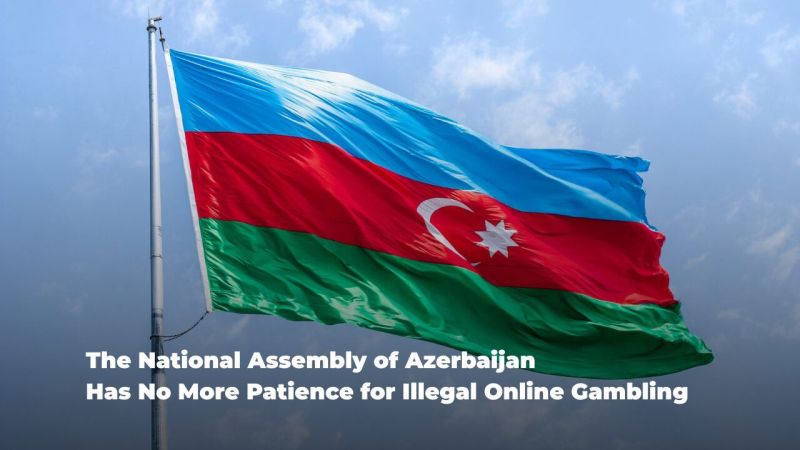
- The Azerbaijan National Assembly adopted the first reading of a law on 30 June 2026 where the punishment of gambling will be replaced with the imposition of proceeds-based fines and will be doubled up to the amount of illegal income.
- Multiple offenders would get a jail term of five to eight years and the option of non-custodial sentences will no longer be available.
- The bill follows a May 2026 Central Bank warning about millions of manats flowing abroad through unauthorised betting schemes, and sits alongside parallel administrative penalty proposals targeting participants as well as operators.

On 30 June 2026, the parliament of Azerbaijan passed the first reading of a bill that will replace the existing flat fine system of punishment in cases of unlawful gambling with a considerably harsher one. Fines will be levied based on the gains from the crime, while recidivists will not be eligible for non-custodial sentences at all.
Debated at an extraordinary session of the Milli Majlis, the draft amendments focus squarely on digital gambling activity, covering websites, mobile applications and social media platforms. Two specific parts of the Criminal Code are in the crosshairs: the formula used to calculate financial penalties, and the sentencing floor for repeat offences.
Fixed Fines Are Being Scrapped
The current Criminal Code sets fines for organising illegal gambling at between AZN10,000 ($5,880) and AZN15,000 ($8,820), fixed figures that apply regardless of how much an operation actually generates. Lawmakers want to change that completely. The proposed replacement links financial penalties directly to proceeds, allowing courts to impose fines of up to twice the income obtained through the illegal activity. A profitable platform could therefore face a penalty far beyond anything the existing law permits, and that is precisely the point.
Custodial options sit alongside the revised fine structure. Offences committed through digital channels, those involving minors, or those carried out through criminal conspiracy would be punishable by a fine of up to twice the illegal income, restriction of freedom for two to four years, or imprisonment for that same period. Where organised criminal groups are involved, or where the scale of profit is substantial, the sentencing range extends to restriction of liberty or imprisonment for three to five years.
No Way Out for Repeat Offenders
For anyone convicted twice, the proposed amendments take away something the current law still offers: choice. Right now, courts can respond to repeat gambling offences with either restriction of liberty for four to five years or imprisonment for four to eight years. Both options remain on the table. Under the draft, mandatory prison sentences of five to eight years would apply to the most serious repeat cases, with non-custodial sentencing removed from the available range altogether.
The shift reflects a view held by lawmakers that existing sentencing flexibility has not worked as a deterrent for those who return to illegal operations after a first conviction. Leniency, in their reading, has become an incentive.
A Separate Administrative Track Is Also Moving
Criminal penalties are only part of what is being proposed. Running in parallel, separate draft amendments would tighten the administrative framework for those who participate in illegal gambling rather than run it. Higher fines for repeat participants, confiscation of gambling equipment and winnings, and administrative detention of up to 15 days in certain cases are all included in these parallel proposals. Taken together, the two tracks suggest a broader enforcement architecture, one that reaches operators and players alike. The criminal bill has passed its first parliamentary reading and will move through additional stages before any of this becomes law.
The Context Behind the Bill
None of this is happening without a specific trigger. The Governor of the Central Bank, Taleh Kazimov, had made a statement in May 2026 that thousands of manats have been taken out of Azerbaijan via unapproved betting platforms and has asked banks, fintech, and payment processors to block any transaction that could be made with offshore gambling sites. This came at a time when there was a wave of anti-money laundering measures being introduced to address this issue.
There has been an increase in demand within the country as well. Based on data from market research company Blask, the index of participation of Azerbaijan in gambling activities increased from 2.48 million in March 2025 to 3.84 million by February 2026, with a surge in people’s interest in gambling brands. The estimated monthly turnover of the sector went up to $56.78 million by February 2026.
The broader regulatory picture has been taking shape for some time. The passing of laws in July 2025 that enabled the setting up of casinos on artificial islands in the Caspian Sea was a geographical loophole in the mainland ban on casinos. The ban was put in place through a presidential decree by Heydar Aliyev in 1998. The ban on casinos is still applicable to the mainland today. There are currently only two forms of legal gambling in the country, namely sports betting by Azerlotereya and official lotteries.

Expert Analysis
Proceeds-based fines are not a subtle adjustment. A fixed-fine ceiling of AZN15,000 is something a well-run illegal platform can price into its operating costs; doubling the actual proceeds removes that calculation entirely. The model works as a deterrent only if it is applied consistently, but as a legislative principle it closes the gap between penalty and profit in a way that the current regime never could.
Mandatory custodial sentences for repeat offenders follow the same thread. Remove the non-custodial option, and the court cannot choose leniency on the second conviction. Whether prosecutors will pursue these cases with the same consistency that the legislation demands is a separate question, one that the bill does not resolve.
What the first reading establishes is a direction. Azerbaijan is not adjusting how it handles illegal gambling at the margins; it is moving from a framework where penalties were tolerable toward one where they are intended to be prohibitive. Grey market operators who have been watching the Milli Majlis should not be reading this as routine legislative activity. Two more readings stand between this draft and enforcement. The pace at which those follow will tell operators exactly how serious Baku is about this.
 Share
Share


 303 views