





- The NGPC has committed to fast-tracking a new gambling bill to close the legislative divide between national and provincial regulation.
- Uniform gambling advertising standards are being built directly into operator licensing conditions by the National Gambling Board.
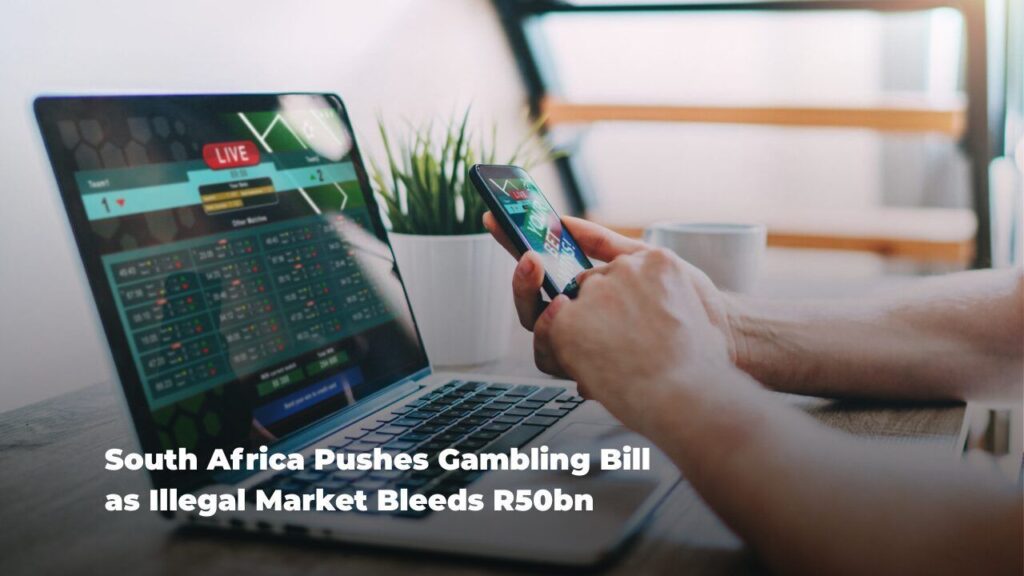
- Nearly two-thirds of South Africa’s online gambling activity is now controlled by illegal offshore operators, stripping the economy of over R50 billion a year.
South Africa’s National Gambling Policy Council has run out of patience. Minister of Trade and Industry Parks Tau confirmed the NGPC is fast-tracking a new gambling bill while, at the same time, tightening advertising regulations, both moving in parallel to address what regulators are calling a deepening failure of oversight. The announcement surfaced through a parliamentary reply, putting on the official record what licensed operators had been waiting to hear for the better part of a year.
NGPC Moves to Speed Up New Gambling Laws
Since July 2025, the NGPC has met twice to work through the challenges gripping South Africa’s gambling sector and plot the policy responses needed to fix them. One decision from those meetings carries more weight than the rest. “The resolution was to fast-track the development of a Bill to address gambling challenges in South Africa,” Tau said.
A Gambling Technical Committee has been set up alongside the bill, carrying a clear brief: review the National Gambling Amendment Bill 2018, test whether national and provincial laws actually hold up under scrutiny, and flag the gaps that need fixing. Consistency is what the committee is chasing, narrowing the distance between national and provincial gambling law so that enforcement stops falling apart at the seams. That gap has always been a problem in practice. Licensing belongs to the provinces, national oversight sits in a different room entirely, and illegal operators have been walking through the space between them.
Advertising Rules Shift from Talk to Licensing Conditions
The advertising piece of this package has been circling for a while. Back in 2025, Department of Trade, Industry and Competition director-general Simphiwe Hamilton confirmed the department was drawing up new norms and standards for gambling advertising, pledging publicly to publish those regulations before July 2026. Those regulations are now being built alongside the new legislation directly, no longer on a separate track.
Tau confirmed the NGPC has acknowledged the link between gambling advertising and addiction, with the National Gambling Board now coordinating with provincial authorities to produce uniform standards. When finalised, those standards will sit inside licensing conditions, which means non-compliance puts an operator’s licence at risk, not merely its wallet. “The department has also noted that advertisement has a major role in enforcing the enticing perceptions on gambling; therefore, Regulations on gambling advertising are being developed in parallel to the Bill to strengthen section 15 of the Act and Regulation 3 of the National Gambling Regulations, 2004,” Tau said.
Ad Market Regulators Are Now Targeting Has Expanded Sharply
The advertising environment regulators are wading into has become much larger. Sports betting companies have signed up South Africa’s most recognised athletes as brand faces, flooding pitch-side boards, influencer accounts and smartphone screens as a matter of routine. Proposed measures include time restrictions on advertising, caps on influencer and sponsorship activity, and more visible responsible gambling messaging.
The Illegal Market Is Driving Every Decision
Neither the bill nor the advertising clampdown exists on its own. Both are direct responses to a market problem that licensed operators have been flagging for years and that economic data has since confirmed in hard numbers. Unlicensed offshore operators now control nearly two-thirds of South Africa’s entire online gambling activity. The South African Bookmakers’ Association has put the annual economic damage at over R50 billion; a figure asset management firm M&G separately supported in 2025, estimating that losses to online betting platforms were closing in on that figure, with some South African households cutting spending on essentials to keep gambling.
SABA CEO Sean Coleman did not soften it: “While much of the recent public and media debate has focused on the growth of legal online betting, the existential crisis lies in the scale and impact of illegal offshore operators that continue to target South African consumers unchecked.” Licensed operators carry municipal rates, employment costs and compliance obligations. Illegal ones carry none of that, yet fish from exactly the same pool of customers.
Provincial Regulators Are Managing What Policy Is Still Designing
Where national policy is still being drafted, provincial regulators are already dealing with the consequences. The Limpopo Gambling Board recorded levy collections of ZAR334 million in FY2024/25, a rise carried almost entirely by a 42 per cent jump in bookmaker levies. Casino and bingo levies moved in the other direction. Those numbers sketch an industry pulling hard towards digital betting while physical venues quietly lose their footing.
Limpopo Gambling Board CEO Mokgase Gregory Makoko described the illegal market’s spread in terms that go well past lost revenue. “The most common forms include illegal gambling machines, illegal online gambling platforms, and unregulated card and dice games,” he said. In FY2024/25, enforcement teams seized 623 machines, recorded 88 apprehensions, 22 of them connected to illegal online gambling, and destroyed 666 machines. None of those numbers makes the national story.
One outcome was concrete enough to count: Galaxy Bingo Bochum shut down, the closure attributed to economic strain, post-COVID pressure, online competition and illegal gambling eating into its base. When it closed, 36 jobs went with it and ZAR100,000 per month in levy income vanished from Limpopo’s accounts.
What the 2018 Bill Actually Means for What Comes Next?
The National Gambling Amendment Bill 2018 is still technically alive in parliamentary mediation. Hamilton confirmed that every legal avenue on that bill has been exhausted and the minister, as the executive, has no power to withdraw it. Parliament will have to act. The NGPC’s new bill is being built to go further, with provincial consultations already running. Whatever happens to the 2018 legislation in parliament, it was never built to handle the size of the illegal online market that South African regulators are now staring down.
Expert Analysis
South Africa’s gambling policy effort is running on two tracks simultaneously, legislation and advertising controls, and the urgency behind both comes down to one fact that regulators can no longer talk around: illegal operators have swallowed nearly two-thirds of the online market and faced no meaningful check. The National Gambling Board’s enforcement data, Limpopo’s seizure figures and SABA’s economic estimates all describe a licensed industry shedding ground faster than law can catch up. The Gambling Technical Committee’s brief, revisiting the 2018 bill while building something more comprehensive alongside it, signals that authorities have accepted that patching the existing framework will not work. Folding advertising standards into licensing conditions rather than floating them as voluntary guidance is the harder line; it binds compliance to the licence itself, not to goodwill. Whether the pace of lawmaking can match the pace of an illegal market that has already captured most of the digital space is the question parliament will have to face head-on.
Explore more:
 Share
Share


 192 views