Key Points
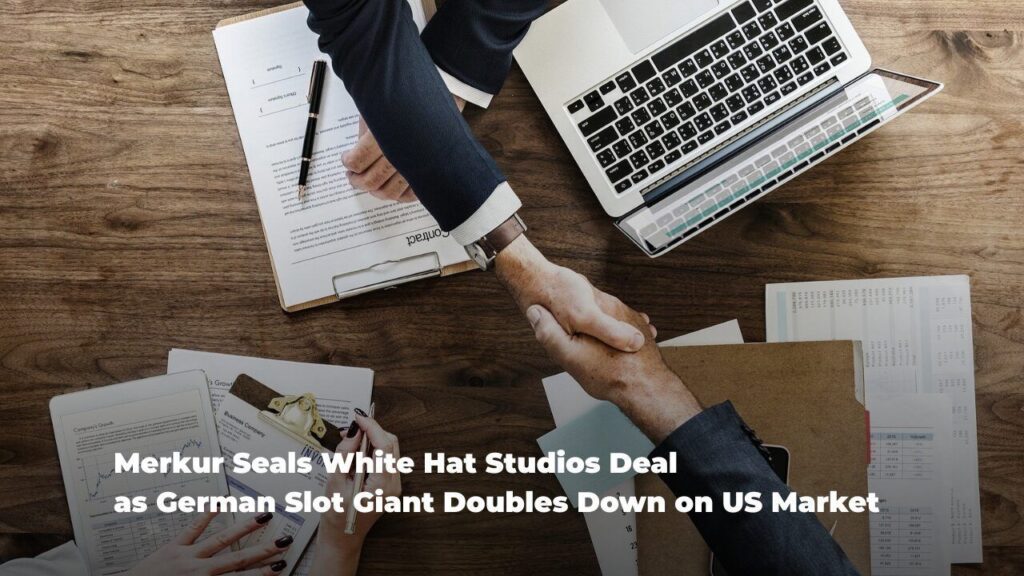
- Merkur Group has agreed to acquire White Hat Studios for an undisclosed sum, subject to regulatory approval.
- The deal covers only the studios division; the White Hat Gaming platform and white label business remain under existing ownership.
- The acquisition follows Merkur’s completion of its Gaming Arts purchase in Nevada and extends the group’s presence across all seven regulated US iGaming states.
Merkur Group pulled the trigger on 15 July, confirming the agreed acquisition of White Hat Studios to strengthen its position across regulated US iGaming markets. Six months prior, NEXT.io had reported that White Hat Gaming was weighing a sale of its studios arm, with a buyer already identified behind the scenes.
White Hat Gaming itself was founded by Max Wright in 2012, but the studio’s arm came later, launched in 2021 after the company acquired a remote game server, brand, and gaming catalogue from Blueprint Gaming. Merkur was already in that picture, having distributed content to the US through White Hat Studios before the two parties moved toward an ownership arrangement.
Studios Only: What the Deal Does and Does Not Cover
What changes hands is limited in scope. Only the studios division transfers to Merkur; White Hat’s B2B platform and white label operations stay exactly where they are, under their current management. Regulatory approvals are still required before the deal formally closes.
For Merkur, the timing and logic are deliberate. The White Hat deal builds directly on the group’s September 2025 completion of its Gaming Arts purchase, a Nevada-licensed supplier of slot machines and gaming technology. White Hat Studios, meanwhile, brings something distinct: it was the first content provider to go live with online slots across every one of the seven US states where regulated iGaming operates. Its portfolio spans the House of Brands collection, the 7s Fire Blitz series, and the Jackpot Royale progressive jackpot network, with over 150 titles currently active.
What Both Sides Said?
Lars Felderhoff, chairman of the Merkur Management Board, was direct: “White Hat Studios has delivered impressive growth since its launch. We look forward to working with the team to continue the US success story and, in turn, Merkur’s expansion in regulated iGaming.”
Andy Whitworth, president of White Hat Studios, described the deal in terms his team had clearly anticipated for some time. “Joining Merkur Group is an exciting moment for everyone associated with White Hat Studios and, fundamentally, it is the best possible move to realise our ambitions for future growth and product innovation,” he said. “Working alongside the hugely experienced Merkur team will open new possibilities for us across iGaming and enhance our ability to develop a world-class omni-channel proposition that will benefit both operators and players.”
Merkur’s press release leaned into the group’s track record, pointing to its resources as the lever that allows White Hat Studios to extend its omni-channel reach rather than plateau at its current scale. Michael Gauselmann, chair of Merkur’s supervisory board, traced the arc back further: “Having made early inroads into the online space in Europe via our Blueprint acquisition in 2012, I am delighted by this latest development and am confident that White Hat Studios will be a great addition to our group.”
A Supplier That Had Already Climbed the Rankings
White Hat Studios was operating as a free-standing enterprise apart from the PAM framework of its parent corporation and was supplying content to such operators as BetMGM, DraftKings, FanDuel, Caesars, and Rush Street Interactive in Pennsylvania, New Jersey, Michigan, West Virginia, and Connecticut. It became one of the leading three US slot vendors in terms of gross gaming revenue by early 2025, according to Eilers & Krejcik Gaming, making it a desirable takeover candidate.
In the months before the deal closed, White Hat Studios had been building its commercial footprint at a pace. In March 2026, the company launched the WrestleMania: Road to Gold-branded slot exclusively with Fanatics Casino, drawing on WWE’s IP catalogue and 20 marquee names from the roster. In the same month, White Hat Studios launched the Amplify Suite, an ecosystem of promotions and engagement systems integrating its Win Spins, Super Mode, and Triggers offerings into one system for operators. The month saw three football slots ahead of the 2026 FIFA World Cup, with the Maradona Golden Goal game themed on Argentina’s 1986 win.
Advisers and the Broader Merkur Picture
On the advisory side, Oakvale Capital handled the transaction for White Hat Studios, with CMS acting as its legal counsel. Wiggin took the legal brief for Merkur. The deal sits alongside other recent Merkur activity in the UK, where the group’s Victoria Gate Casino in Leeds briefly closed before reopening under the Merkur brand on 13 July, just two days prior to the White Hat announcement.
Expert Analysis
Merkur has spent the past two years building a layered US presence rather than betting on a single move. Gaming Arts gave the group land-based distribution and Nevada licensing. White Hat Studios adds digital reach across seven regulated states and a content library that has already pushed its way into the top three by GGR. In combination, the two acquisitions enable Merkur to have both its online pipeline and an omnichannel connector, which is exactly the formula that the regulated US market favours today. Terms have not been disclosed, but it is quite clear why: Merkur is not testing out in the US; it is setting up shop.
Explore more:
 Share
Share


 171 views