Key Points
- The total amount of expected first-year revenue generated by iGaming in Alberta is CAD$76 million ($53 million USD); it was estimated for a competitive iGaming market in the province opening on 13 July 2026; the list of registered operators includes BetMGM, DraftKings, FanDuel, and Bet365.
- At present, offshore casinos take as much as 70 per cent of the online gambling transactions made in Alberta.
- Licensed operators must channel 1 per cent of gross gaming revenue into responsible gambling programmes and 2 per cent to First Nations communities, though indigenous leaders argue neither figure is adequate.
Alberta’s $53M Calculation: Why the Province Chose Regulation Over A Ban?
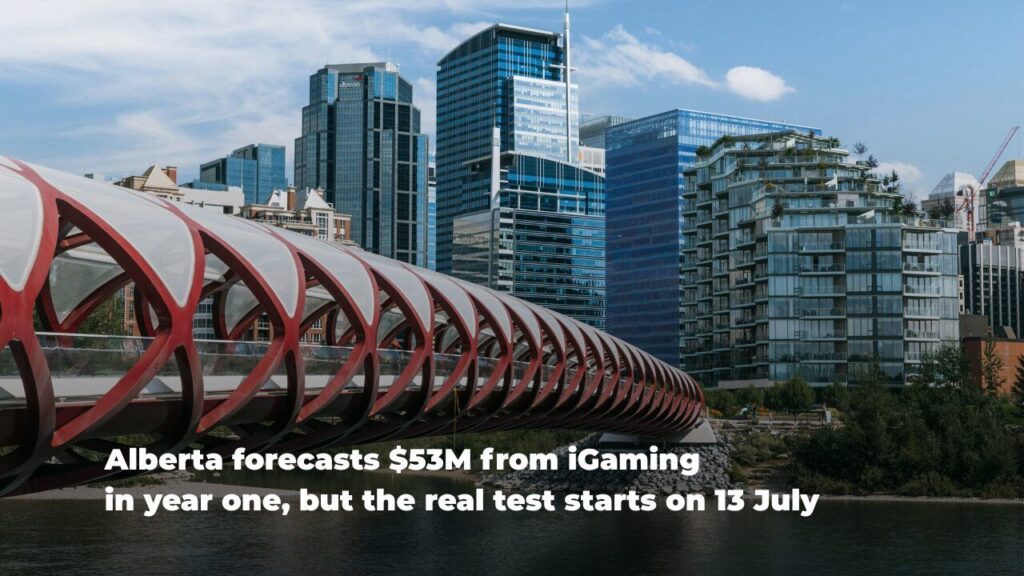
Alberta’s regulated online gambling market opens on 13 July 2026, and the provincial government has already put a number to it. Service Alberta and Red Tape Reduction Minister Dale Nally confirmed the province is targeting approximately CAD$76 million ($53 million) in first-year revenue, pulling together licence fees, tax receipts, and estimates built on the assumption that players currently using offshore platforms will shift to licensed ones.
Nally has not let the revenue projection become the only headline. “We know that gambling will never be safe, it will never be responsible,” he said. “But there are ways to make it a little safer, and there are ways to make it a little more responsible.” The choice to lead with player safety rather than tax receipts is deliberate. Both things matter to Alberta; the question is which one will define what people remember about this launch.
Alberta Is Not Blocking Offshore Sites; It Is Outcompeting Them
Offshore gambling in Alberta is not a fringe problem. Provincial estimates place between 65 and 70 per cent of all online gambling activity on unregulated platforms. Nally has been blunt about the government’s thinking: “We can’t turn off the internet.”
Domain blocking has failed consistently across jurisdictions, and Alberta studied those outcomes. Rather than repeat that approach, the province built a market attractive enough to pull players away from offshore sites on its own terms. Under the new framework, operators including BetMGM, DraftKings, FanDuel, Bet365, and CasinoDays Canada enter a space that was previously held exclusively by the government-run PlayAlberta. More than 40 operators had already registered before the July launch date.
Alberta is also not forcing online operators to partner with land-based casinos, a requirement that has caused friction in several US markets. As Nally has made clear, the province did not want to mandate that online operators must link themselves to land-based venues. Brick-and-mortar venues can collaborate on retail sportsbooks voluntarily, keeping 75 per cent of net gaming revenue from those arrangements if they opt in.
Ontario Built the Model. Alberta Has Studied Every Page of It
Alberta’s framework did not emerge from nothing. Ontario opened its competitive market in April 2022 and quickly became the benchmark every other province measured itself against. A May 2026 Ipsos survey, commissioned by the Alcohol and Gaming Commission of Ontario, found that 91.1 per cent of Ontario players now use licensed gambling sites, a rise of 7.4 percentage points from the previous year.
Players using only unlicensed platforms dropped from 16.3 per cent in 2025 to 8.9 per cent. Ontario Attorney General Doug Downey said the province had become an international leader in building a safe, competitive and regulated online gambling market. Ontario’s first-year government income from iGaming landed at C$87 million. Alberta’s $53 million projection runs below that, whether by design as a conservative floor or simply because Ontario’s player base is larger.
Alberta borrowed Ontario’s approach to advertising as well. The AGLC issued a June 2026 update to its iGaming standards barring land-based casino licence holders from advertising or offering inducements on behalf of registered iGaming operators. Sign-up bonuses and similar offers are restricted to an operator’s own platform or sent directly to players who have opted into receiving marketing.
Player Protection Sits Inside the Licence, Not Appended To It.
Responsible gambling is not a checkbox Alberta left to operator discretion. The Alberta iGaming Corporation confirmed in February 2026 that RG Check accreditation, the independent programme developed by the Responsible Gambling Council, is mandatory for every operator entering the market. Dan Keene, interim chief executive of the Alberta iGaming Corporation, said the requirement exists so that each operator proves its commitment through independent verification, not through its own word.
Before any operator goes live, integration with Alberta’s provincial self-exclusion programme is compulsory. A player is able to unregister from all regulated websites using only one process, and that will eliminate the hassle that was involved in previous opt-out processes. Age verification, deposits, and self-assessment are mandatory on the date of launch, and not some days after. Revenue-wise, 1 per cent of the total gaming revenues goes towards education, prevention, counselling, and treatment. Operators keep more than 80 per cent of the net gaming revenue, while 20 per cent is kept by the provincial government for regulatory purposes.
First Nations Communities Are Not Convinced That Two Per Cent Is Enough
Alberta’s framework sets aside 2 per cent of gross gaming revenue for First Nations communities. Nally has framed the measure as economic reconciliation, suggesting the revenue share can cushion any financial hit to land-based casinos run by indigenous communities. Not everyone accepts that argument.
Trevor Mercredi, Grand Chief of Treaty 8 First Nations, said the current arrangement leaves little visible benefit for his communities. “To say that this is being looked at is something positive; it’s hard for us to see the positive in this right now,” Mercredi stated. The problem stretches beyond income figures. First Nations casinos in Alberta directly fund education, healthcare, housing, and community support programmes. Even a small fall in land-based casino attendance could put real pressure on those services.
Other economists, however, believe that the regulated market would not exacerbate the damage, since unauthorised operators have already for many years been luring away customers from onshore facilities. The native representatives reject this line of thought, stating that the lack of consultation means that the communities had practically no say regarding the manner in which the revenues will come to them. For example, First Nation communities of Ontario get 1.7 per cent of gambling revenue, and controversies about the way this system was established persist. Alberta’s 2 per cent figure is higher; the process used to arrive at it is where the real disagreement sits.
Revenue Projections: What the Numbers Look Like Beyond Year One?
The CAD$76 million ($53 million) figure applies to the fiscal year 2026 to 2027. Alberta’s revenue model projects that figure climbing to CAD$109 million ($77.8 million) by 2028 as operator numbers grow and more players move to licensed platforms. Both projections rest on the assumption that offshore migration happens at scale. Ontario’s four-year track record shows that migration is achievable; getting to 91 per cent licensed adoption took until 2026. Alberta is trying to shorten that curve by launching with more than 40 registered operators and tighter advertising rules already in place. The 13 July date will not resolve every question. What it will expose is whether Alberta’s grey market is as sensitive to competition as regulators are counting on, and whether the brands now entering the market carry enough pull to shift habits that offshore platforms spent years building.
Expert Analysis
Alberta’s CAD$76 million forecast holds up as a reasonable opening number, but first-year figures from new gambling markets rarely capture what the sector becomes once competition properly settles. Ontario’s path is instructive: a cautious launch, slow-building trust, and near-total licensed adoption reached only four years in. Alberta arrives with more registered operators from day one and advertising restrictions already locked in, both of which should reduce the confusion that dragged out Ontario’s early migration period. The number that will actually matter is the grey market share at the 12-month mark. If the 65 to 70 per cent offshore figure barely shifts by mid-2027, the province will face pressure to adopt enforcement tools it has deliberately avoided so far. Mandatory RG Check accreditation and a centralised self-exclusion system put Alberta on a stronger footing than most markets at launch. Whether that foundation converts years of offshore habit into licensed behaviour is the question 13 July sets in motion.
Explore more:
 Share
Share


 60 views