

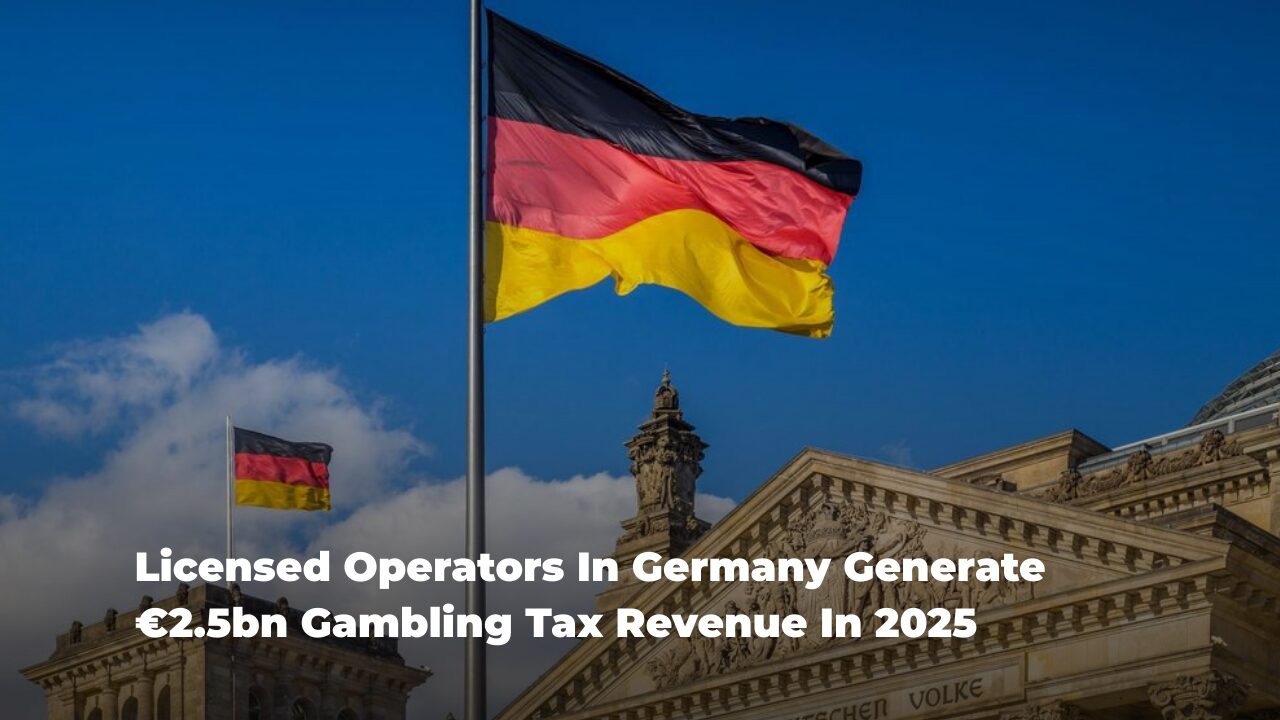
Licensed gambling operators in Germany contributed €2.46bn in taxes to the public budget in 2025, representing a 1% decline from the previous year. While the overall figure suggests lower tax revenues, the market was buoyed by sports betting and online casino operators in the final quarter.
Lotteries remained the dominant contributor, generating €1.79bn in tax revenue. Bookmakers followed with €419.5m, both segments posting a modest 1% year on year decline. Online slots accounted for €214.6m of the country’s budget with a 1% increase, while online poker dropped 7% to €33m. Horse racing tax contributions fell to €6.4m, a little less than the €6.5m accrued in the previous year.
Sports betting powers a late-year rebound
Data compiled by Gaming Intelligence showed that tax revenues rose 1% year on year to €640.1m during Q4, with sports wagering as the main growth driver. Taxes on betting operators increased by 14% to €121m.
Online casino verticals also recorded gains with tax revenue rising by 7% to €55m. For online poker, there was an 18% year-on-year increase to €10.1m. In contrast, contributions from lotteries dipped by 3% to €452.2m.
Third quarter exposes market fragility
Despite the strong finish, the third quarter highlighted the market’s vulnerability. Licensed operators paid €559.5m in gambling taxes during the period, a 6% decline compared to the same quarter in 2024 and the lowest quarterly total of the year. Lottery taxes fell to €418.9m, their weakest performance in two years. However, German lotteries still accounted for roughly 75% of all gambling tax revenue in Q3.
Sports betting revenues fell by 24% to €76.9m and represented 14% of the total quarterly figure. Horse racing followed a similar pattern, with taxes dropping 5% to €1.9m.
Regulator intensifies pressure on illegal gambling
Germany’s Gambling Regulatory Authority, the GGL, links many of the market’s challenges to the rapid growth of illegal gambling. In September 2025, the German Sports Betting Association warned that unlicensed sites now significantly outnumber licensed operators.
During the ICE exhibition in Barcelona, the GGL urged licensed operators to take a more active role in tackling this issue. According to reports from the Gaming in Germany Breakfast event, Head of Enforcement Nadja Wierzejewski outlined a coordinated strategy for increasing pressure on the black market. Measures include issuing prohibitive orders, blocking payments and IP addresses, and actions against the promotion of illegal offers. The regulator also plans to pursue consistent prosecution of all illicit participants across the supply chain.
Furthermore, the GGL stressed that licensed operators have an advantage due to their deep market knowledge and direct relationships with technology and payment partners. By distancing themselves from illegal offerings and selecting partners carefully, legal companies can strengthen enforcement actions.
Regulators maintain that cooperation between authorities and industry stakeholders will be essential to restoring balance in Germany’s legal gambling market.
Explore more:
 Share
Share


 148 views





 Analysis
  Business
  Companies
  Crime
Crime  Finance
  M&A
M&A  Prediction Markets
  Regulation
  Reports