





Key Points
- Lazio has signed a multi-year deal with Polymarket worth over $22 million, ending nearly three years without a main jersey sponsor and bringing back a revenue stream the club had gone without.
- The partnership reaches past branding, with Polymarket serving as “Official Fan Intelligence & Digital Insight Partner,” connecting data analytics to fan engagement and club strategy in a direct way.
- The deal marks a wider move in football toward data-driven commercial models, with Lazio becoming the first Serie A club to partner with Polymarket and connect with global digital innovation trends.
Lazio has brought Polymarket in as its new main sponsor through a multi-year deal worth more than $22 million. That agreement has been in place for nearly three years without a jersey sponsor and brings back a revenue stream the club had been running without. The partnership goes beyond the surface of branding and sets Polymarket up as “Official Fan Intelligence & Digital Insight Partner,” drawing data analytics into fan engagement and club strategy at the same time. On a wider level, the deal reflects a shift underway across football, as Lazio steps forward as the first Serie A club to take on Polymarket and moves toward global digital innovation trends.
Three Years Without a Sponsor Now That Changes
Lazio ran without a main jersey sponsor for close to three years. That gap wore down one of the club’s most dependable sources of income, bit by bit, with no relief in sight. It came after the end of a two-year arrangement with Binance at the close of the 2022/23 season, which cut off the front-of-shirt commercial presence the club had counted on.
That situation has now changed.
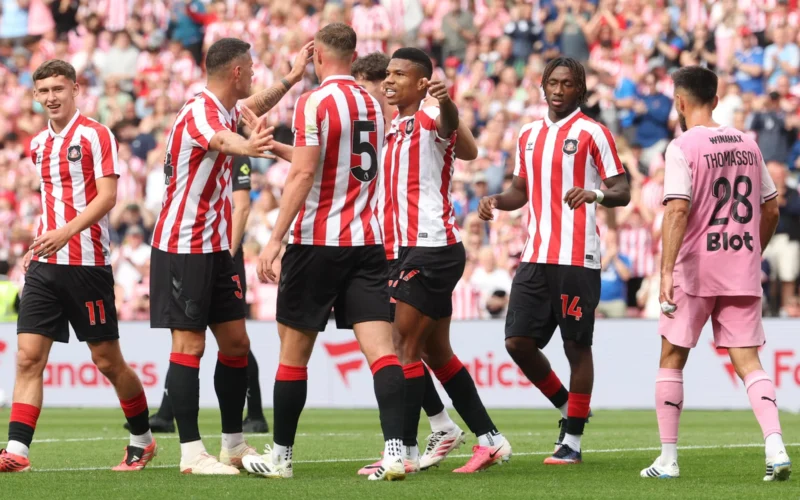
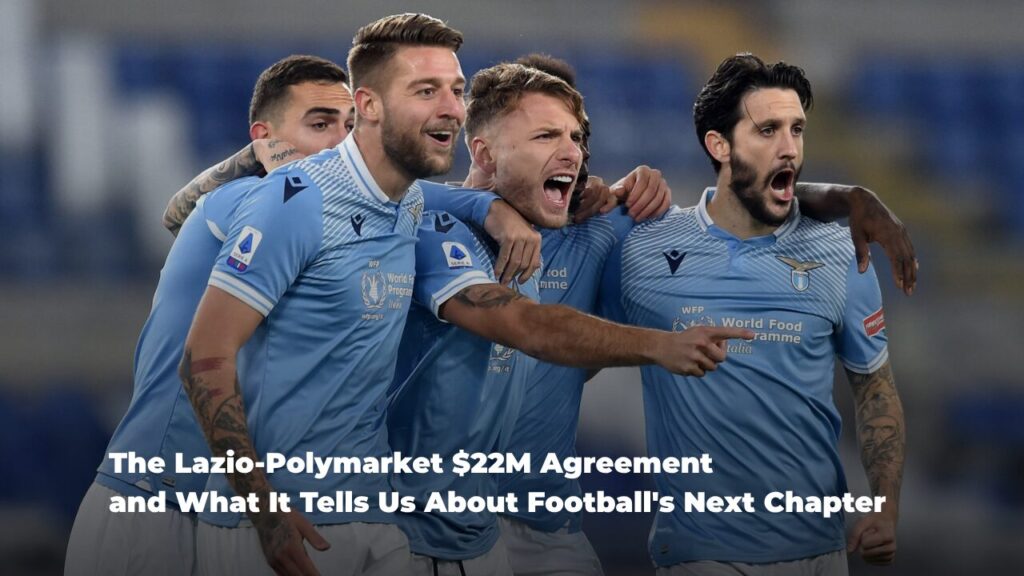
Lazio has confirmed a multi-year deal with Polymarket. The brand shows up on the jerseys from recent fixtures already, the match against Napoli included. The deal covers the rest of the current season and runs through 2026/2027 and 2027/2028, with the option to go on into 2028/2029.
On the financial side, the structure holds clear weight. The total value of the deal crosses $22 million, with performance bonuses and activation incentives sitting on top of that. For a club that had carried this absence in its revenue, the return is felt right away and continues to build.
A Partnership That Goes Deeper Than the Front of a Shirt
At first glance, this could pass as a typical sponsorship. The structure, though, points somewhere else.
Polymarket holds two roles at once: “Main Sponsor” and “Official Fan Intelligence & Digital Insight Partner.” That second role matters. It shifts the logic from exposure to outcomes driven by data. As the partnership develops, the work focuses on bringing data analysis into fan engagement and the decisions that shape club direction. The goal is to create “new forms of interaction between sport, data, and technology,” making fan behaviour something the club can read, measure, and act on. That fits Polymarket’s position as the “world’s largest prediction market,” a platform built to track trends and produce forecasts from aggregated data.
The company’s scale backs that description. It carries a reported valuation near $11 billion, with Intercontinental Exchange the group behind the New York Stock Exchange among its backers. Polymarket’s data already feeds into major global financial systems and appears across economic publications. As that capability enters football, it brings operational intelligence that moves the conversation past traditional metrics like brand impressions.
Lazio Steps into a Select Global Group
This deal places Lazio among a group of European clubs that Polymarket has selected to test this blend of sport, technology, and data. Beyond that, Lazio becomes the first Serie A club to carry Polymarket on the shirt, which holds strategic weight in its own right. Football’s commercial space has not held still. Regional visibility and local sponsorships no longer set the full picture. Clubs now move through a global market where digital reach, data ownership, and fan insight define how commercial success gets built.
Lazio president Claudio Lotito put the thinking behind the deal into words:
Polymarket is a partner that interprets the future, capable of reading and analysing trends with innovative tools. This agreement strengthens Lazio’s path of international development and confirms the Club’s desire to position itself as an increasingly modern, open, and competitive entity in the new landscape of global sport.”
Polymarket’s CMO Matthew Modabber came at it from the same direction:
“Lazio represents a historic institution with a forward-looking vision. We are proud to collaborate with a club that shares our approach to innovation and the enhancement of data, with the aim of building new experiences and new models in the world of sport.”
How the Deal Got Built and Set in Motion?
PalComm Italia took the role of strategic adviser through the process. The work covered negotiation, structuring, and activation, pushing the deal past the point of agreement and into place within the Italian market. Italy’s regulatory framework sits over the collaboration at the same time, and that matters here. The overlap between data platforms and sport comes with rules that direct Polymarket’s tools toward digital analysis and insight, keeping them away from direct market exposure.
How far the partnership can grow in practice depends, in part, on how well that line between progress and compliance holds.
Football Reshapes Itself Around Data
Pull back from the deal, and the wider picture starts to form.
Football has moved past a world built on sponsorship visibility alone. It has grown into a system where data, technology, and fan intelligence feed directly into revenue and the ability to compete. This deal reflects that structural shift. Lazio does not simply sell shirt space any more. It brings a data partner into its operational frame, where the logo on the jersey becomes the visible layer of a commercial relationship that runs much deeper.
Reading the Wider Meaning of Football
-
The Operational Shift for Clubs
This partnership runs on two revenue tracks at once. The immediate return flows from the $22M+ sponsorship value. The long-term value lies in the monetisation of data. As the clubs convert fan behaviour into actionable insights, they acquire bargaining power in areas like ticketing, merchandise sales, and online engagement. The cost involved in investing in technology and expertise cannot be ignored. Clubs that do not adapt will find they cannot extract the full value from this kind of arrangement.
-
The Signal This Sends Across Football
Football moves toward a model where sponsors not only advertise but also operate as partners with a role in club strategy. That shift blurs the line between commercial and operational functions, making space for data platforms, fintech, and technology companies to take positions that traditional sponsors once held. The gap between clubs may grow as a result. Those who move early on data-driven models draw more from each fan interaction. Those that stay with static agreements fall behind.
-
Opportunity Against Risk
Personalisation and scale sit at the centre of the opportunity here. Stronger data lets clubs shape fan experiences, fine-tune pricing, and grow their international presence without the same proportional rise in costs. Regulation and execution bring the risk. Italy holds strict oversight over data use in sport, and a gap between innovation and compliance can limit what a partnership delivers. Pressure on prediction markets in some markets can also bring reputational exposure.
-
The Clubs That Gain and the Sponsors That Lose Ground
Clubs in digital transformation stand to benefit the most, particularly those outside the top financial tier that need new income without the backing of elite-level commercial deals. Data-focused companies gain a way into global sports audiences with high visibility. Traditional sponsors who rely on brand exposure alone face a harder position. Clubs now move toward partners who deliver measurable strategic value, and a logo without a deeper function may not hold that ground much longer.
-
The Path from Here
If Lazio produces results in fan engagement, international reach, or commercial returns similar deals will follow across European football. Deeper integration may come next: live fan analytics, systems built to forecast engagement, and sponsorship structures that respond to performance data as it arrives.
The Final Point
The assumption that a shirt sponsor exists only as a logo has started to crack. Lazio’s deal points to something structural, where clubs begin to treat data as a core asset rather than a by-product of the game. As that shift carries forward, sponsorship changes its own role stepping away from visibility and into intelligence.
Explore more:
 Share
Share


 433 views