





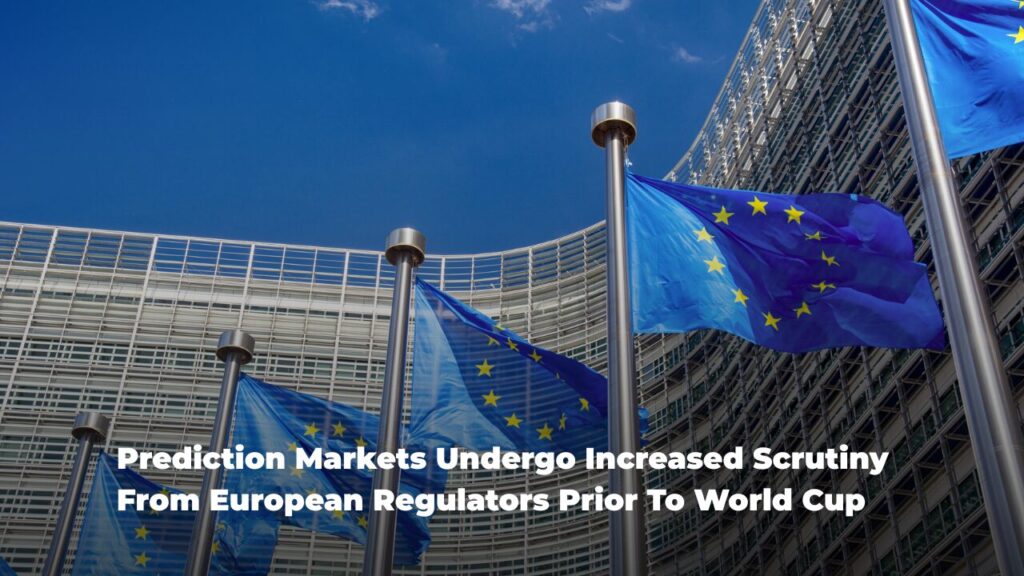
Nine European gambling regulators have issued a joint warning on prediction markets regulation ahead of the 2026 FIFA World Cup. The statement was released by regulators in Belgium, France, Germany, Italy, the Netherlands, Poland, Portugal, Spain and Switzerland.
These authorities said they expect betting activity to rise sharply during the tournament and expressed concerns about the growing popularity of prediction markets, particularly among younger consumers.
Prediction market platforms allow users to speculate on outcomes linked to sports, politics and geopolitical events. Regulators noted that many of these products resemble traditional betting markets while operating under different legal frameworks.
Authorities say consumer protection safeguards cannot be ignored
In their statement, regulators warned that some prediction market platforms may operate without adequate safeguards in jurisdictions where they are not licensed.
Authorities pointed to several risk factors, including 24-hour accessibility, the absence of betting limits, limited time restrictions and insufficient age verification procedures. They argued that these features, combined with social sharing tools and strong online visibility, contribute to harmful gambling behaviour.
Regulators stressed that prediction market operators must comply with licensing and regulatory requirements in every jurisdiction where they offer products. They warned consumers about risks of unregulated platforms, including fraud, blocked funds, insider information abuses and financial volatility.
According to the regulators, these risks are amplified when platforms operate outside established gambling frameworks. Throughout the World Cup, participating authorities said they will monitor compliance with rules covering advertising, sports integrity and player protection. However, they will also take enforcement action where necessary.
Sports bodies urged to verify prediction market partnerships
Beyond operators, the joint statement directly addressed sports organisations. Regulators urged federations, leagues and clubs to verify whether prediction platforms are legally authorised before entering into sponsorship or commercial agreements.
The warning comes as prediction market companies seek higher visibility through partnerships linked to major sporting events. These regulators also pledged to strengthen cross-border cooperation during and after the World Cup through information sharing, exchange of expertise and collaboration on regulatory best practices.
Several authorities confirmed they would increase social media activity during the tournament to promote safer gambling messages and improve consumer awareness. The coordinated approach shows increased concerns around prediction markets operating across countries while regulations stay within national borders.
Kalshi and Polymarket face mounting pressure across Europe
Regulatory pressure is increasing in several jurisdictions. Spain’s Directorate General for Gambling Regulation temporarily blocked local access to Kalshi and Polymarket, classifying the platforms as unlicensed games of chance operating without the required administrative authorisation.
The World Lottery Association has also called for stricter oversight. In a recent position paper, the association argued that any product offering financial returns based on sporting outcomes should be regulated as betting, regardless of whether operators describe users as “traders” or products as “contracts”.
Analysts expect prediction markets to keep expanding rapidly. Bernstein estimates annual trading volumes could reach $1 trillion by 2030. With sports contracts dominating activity, regulators are keen on ensuring future growth does not outpace consumer protection and market oversight.
Prediction markets are under heavy scrutiny from regulators in Europe ahead of the 2026 World Cup. These platforms operate in regulatory grey areas with products closely resembling traditional betting sites. Therefore, regulators across top European jurisdictions like France, Germany, Italy, and Spain have issued a joint statement to express concerns about protecting younger audiences.
 Share
Share


 232 views