






Key Points
- Online casino promotional credits would be tied to physical casino visits, not digital accounts.
- Licences would be restricted to Ohio’s 11 existing casinos and racinos under the revived proposal.
- Rep. Marilyn John’s 2025 estimates put Ohioans’ annual iGaming spend at up to $6 billion, with roughly 85% flowing through illegal operators.
Ohio lawmakers are revisiting online casino legalisation in September 2026, and the version being discussed carries a restriction that sets it apart from every other regulated iGaming market in the US.
Under a framework discussed by State Representative Brian Stewart at an iDevelopment and Economic Association panel, online casino promotional credits would be blocked from digital use entirely. Players could only redeem incentives at Ohio’s physical casinos and racinos, not through any app or website. Stewart described it directly: “Unlike sports betting, which allowed out-of-state companies to offer significant cash promotions on their apps, internet gambling apps under this bill would only be permitted to offer promotions that can be redeemed at existing brick-and-mortar sites across Ohio such as free bets in person, meals, hotels and other perks at those facilities.”
That is not a fringe detail. It is the structural backbone of the entire proposal.
Worth noting: the legislative vehicle for this concept, House Bill 298, was introduced in May 2025 and referred to the House Finance Committee with no subsequent vote recorded. Stewart is now seeking to revive and rework that framework in 2026, not advance an enacted bill.
The Sports Betting Lesson Stewart Does Not Want Repeated
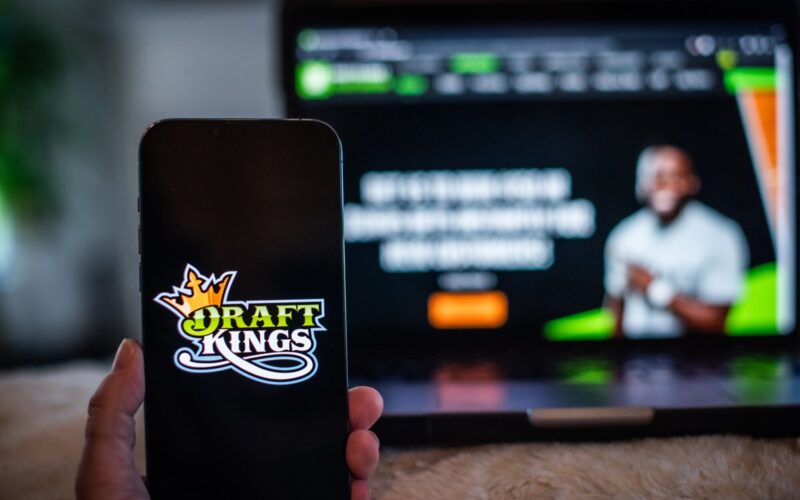
With the introduction of legal sports betting in the State of Ohio in January 2023, the operators realised the highest monthly gross gaming revenue recorded from sports betting by any US state ever since, fueled by more than $320 million of promotional credits being pumped into the market. FanDuel invested more than $169 million in that particular month alone, while DraftKings contributed $86.6 million. This meant that these two firms from outside the state cornered 76% of the betting handle in January 2023, a hold they have managed to maintain into 2024.
Stewart’s proposed ban on digital promotional credits is a direct response to that pattern. The aim is to stop national operators from using promotional spend to dominate market share before Ohio’s existing gaming venues can establish any competitive position.
Licence Wall and What It Actually Means
A second element of the proposal would restrict online casino licences to Ohio’s 11 existing casinos and racinos, properties operated by Caesars Entertainment, PENN Entertainment, Hard Rock and others. No new entrants, no independent out-of-state operators. Stewart has indicated that keeping licences tied to existing operators should reduce stakeholder opposition and sidestep the fractured industry lobbying that has stalled Ohio’s previous iGaming attempts.
The 2025 HB 298 version of this structure set an initial licence fee of $50 million, with a $10 million annual renewal. The gap between that and Michigan’s model is significant: Michigan’s iGaming framework requires a $50,000 application fee plus a $100,000 initial operator licence fee, followed by $50,000 annually. Ohio’s proposed entry cost is roughly 333 times higher than Michigan’s total initial outlay.
There is a quiet contradiction in that design. The operators being offered exclusive access are the same ones who have historically resisted online expansion, citing cannibalisation fears. Tying promotional credits to physical visits is partly an attempt to address that resistance. Whether that satisfies them or simply defers a larger fight is not yet clear.
The Revenue Gap Ohio Can No Longer Ignore
Ohio sits inside a corridor of states generating serious iGaming money. Michigan posted approximately $3.1 billion in online casino gross gaming revenue in 2025, and Pennsylvania hit $3.46 billion. The seven legal US iGaming states together generated more than $3 billion in gross gaming revenue in Q1 2026 alone. Ohio collects none of that.
Rep. Marilyn John, co-sponsor of HB 298, estimated in 2025 that Ohioans already spend up to $6 billion annually on iGaming, with roughly 85% flowing through illegal operators. Stewart projects that a regulated market could generate up to $400 million annually in state tax revenue, though that figure is his estimate and not a guaranteed outcome.
Ohio’s sports betting track record does show the revenue model can work at scale. The state generated $1.04 billion in sports betting taxable revenue in 2025 alone, its most profitable sports betting year on record. Republican lawmakers pushing for long-term reductions in Ohio’s state income tax need that kind of replacement revenue, and online casino receipts fit cleanly into that political calculus.
A Crackdown Climate That Shapes the Proposal
The iGaming discussion arrives during a period of broader regulatory tightening across Ohio’s gambling sector. Authorities in 2026 have conducted raids on illegal strip-mall slot operations across Ashtabula, Sidney and other areas. The Ohio Casino Control Commission has proposed restrictions on credit card deposits for sports betting and is examining prediction market regulation through Senate Bill 430, which would require operators offering sports event contracts to obtain state licences and pay taxes similar to sportsbooks.
The cumulative picture is of a legislature trying to close gaps in regulatory coverage across the board, not simply identify new tax streams.
Expert Analysis
We should be precise about what this proposal is designed to protect, and honest about what it risks creating. The retail-tied promotion structure is, in our assessment, a commercial protection mechanism first. Requiring that casino bonuses be redeemed in person, at restaurants or hotel stays, does not materially improve consumer safety. What it does do is shield the physical gaming floors of Caesars, PENN Entertainment and their peers from the same customer acquisition pressure that FanDuel and DraftKings applied when they entered sports betting.
That is a legitimate political objective. We understand exactly why Stewart built the bill around it. But the risk is structural: a legal online casino product that is more restricted and harder to access than the unlicensed alternatives Ohioans already use does not automatically win on regulation alone. Rep. John’s own 2025 estimate put 85% of Ohio’s iGaming spend in the illegal market. Michigan grew its regulated market to over $3 billion in annual GGR partly because it made the legal product genuinely competitive from day one. Ohio’s proposed framework, at least as currently framed, appears to prioritise keeping existing casino operators comfortable over building a product that can actually pull users away from illegal platforms. Those two goals are not impossible to reconcile, but this bill, at least in its current shape, does not obviously do both.
Explore more:
 Share
Share


 3 views