





Key Points
- DK Crown Holdings filed a PTAB petition on 17 September targeting all 18 claims of Interactive Games’ US Patent No. 12,406,284, a mobile wagering patent with a priority date of 13 February 2009.
- Howard W. Lutnick, now serving as US Commerce Secretary, is listed as an inventor on the very patent being challenged, with his department overseeing the USPTO that houses the PTAB.
- Interactive Games filed parallel federal infringement suits against both DraftKings and FanDuel in April 2026; FanDuel’s earlier PTAB encounter with the same company left one challenged claim standing after a Federal Circuit ruling in July 2020.
Somewhere between opening a sportsbook app and placing a bet, software checks where you are. That check, the one that blocks your wager if you’re in the wrong state, sits right at the heart of a patent dispute that DraftKings has now escalated to the US Patent Trial and Appeal Board.
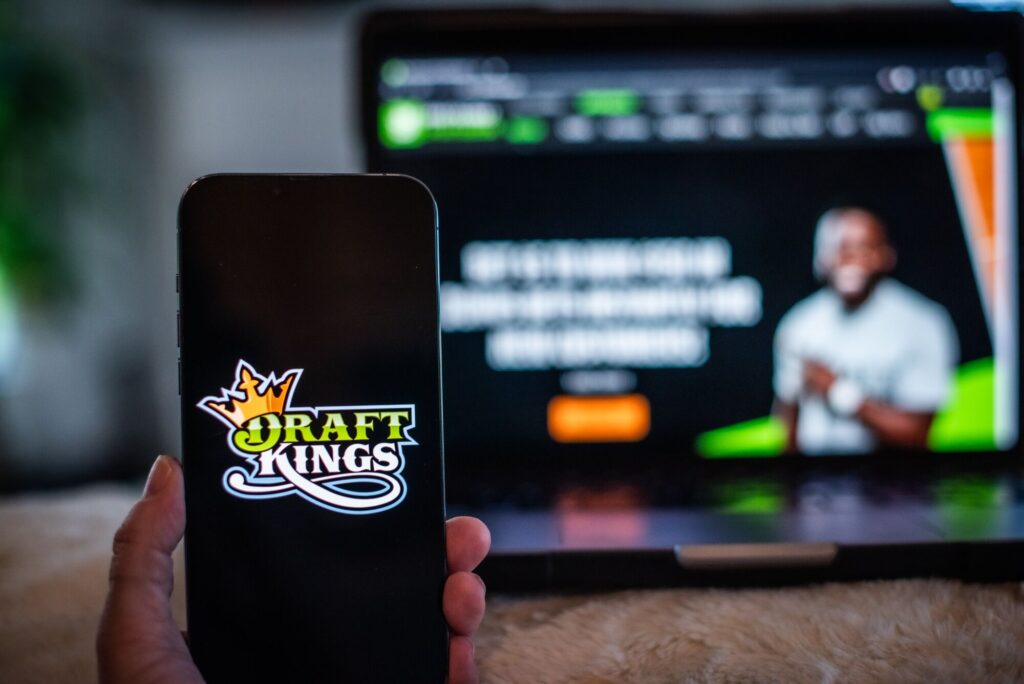
On 17 September, DK Crown Holdings, the legal entity through which DraftKings files patent challenges, petitioned the PTAB to cancel all 18 claims of US Patent No. 12,406,284, owned by Interactive Games LLC. The patent covers a mobile wagering system that combines geolocation verification with how betting and promotional content is displayed on a user’s device. It was issued in September 2025 but traces its claimed priority back to 13 February 2009.
What the Patent Actually Claims?
Claim 1 of the ‘284 patent describes a system in which a mobile phone sends GPS and IP data to a server, which then determines whether the device is within a licensed gaming area. If the phone is outside that zone, the application displays an alert and blocks the wager. The patent also covers how low-priority content, such as promotional material, is formatted and displayed within the app’s interface without interfering with the primary betting content.
DraftKings’ argument is precise: none of this was novel in 2009. The petition points to Nevada’s mobile gaming regulations and technical standards from 2006, which already required that mobile wagering systems restrict activity to approved geographic areas. DraftKings contends that a skilled developer at the time could have combined existing mobile technology, geolocation capabilities, and display logic without any inventive leap. The petition also cites earlier patents covering battery management, ambient-light detection, digital signatures, and device-to-device communications as prior art covering specific elements of the ‘284 claims.
The Federal Case Running at the Same Time
The PTAB petition is directly connected to an active federal lawsuit. Interactive Games filed a patent infringement suit against DraftKings in the US District Court for Massachusetts on 2 April 2026, asserting the same ‘284 patent. One day earlier, it filed a parallel case against FanDuel in New Jersey federal court, also naming British operator Betfair as a co-defendant in that action.
The PTAB proceeding and the Massachusetts lawsuit now run on separate tracks. If the PTAB agrees to institute review and ultimately cancels all 18 claims, that would significantly weaken Interactive Games’ infringement position in court. If the board declines to institute, the federal case continues without interruption. A stay of the district court proceedings is possible if the review is granted, but that remains a procedural question for the court to decide, not a guaranteed consequence of the petition being filed.
DraftKings Has Won This Exact Argument Before
DraftKings has faced challenges to patents by Interactive Games at the PTAB previously, and it has a decision to show for that. In an inter partes review against the US Patent No. 9,430,901 of Interactive Games, the PTAB held that DraftKings had successfully made the claims of the patent obvious and thus non-patentable based on its combination of prior art. This decision, which was made in 2022, set out that combining already existing technologies for mobile wagers and geolocation does not amount to an invention.
This petition will target different claims in a different patent. However, the legal and technological issues will remain similar, as DraftKings has been there and done that at the PTAB.
FanDuel’s Earlier Fight Left One Claim Standing
The lessons learned from the parallel development of FanDuel in relation to Interactive Games are lessons that should be heeded. In a previous Inter Partes Review (IPR), FanDuel managed to invalidate most of the claims in a patent for mobile gambling filed by Interactive Games. However, one claim survived and FanDuel took its case to the US Court of Appeals for the Federal Circuit, which on 29 July 2020 upheld the PTAB’s decision.
That history matters because it shows the PTAB is not obligated to cancel every challenged claim even when most arguments succeed. For DraftKings, anything less than full cancellation of all 18 claims in the ‘284 patent leaves the Massachusetts infringement case with something to work with. DraftKings and FanDuel have also acted jointly in at least one PTAB challenge against a separate Interactive Games patent, an unusual cooperation between direct commercial competitors.
The Lutnick Dimension Is Not Peripheral
What makes this dispute unusually complicated is who is listed on the patent itself. Howard W. Lutnick, currently serving as US Commerce Secretary, is named as an inventor on US Patent No. 12,406,284, the specific patent DraftKings is now asking the PTAB to invalidate. Lutnick co-founded Cantor Gaming in 2006 and served as chairman of Interactive Gaming before stepping down when he was confirmed as a cabinet member. The Commerce Department oversees the USPTO, the agency that houses the PTAB now being asked to review this patent.
As University of Missouri law professor Dennis Crouch noted to Reuters: “Lutnick is the first Secretary of Commerce in US history who is so personally and financially tied into the patent system.” A commerce secretary named as an inventor on a patent being reviewed by a tribunal his department oversees is a structural conflict the system has no clean precedent for. Lutnick divested from his Cantor business interests upon confirmation, and a Commerce Department spokesperson confirmed he “has fully complied with the terms of his ethics agreement.” The question of how USPTO leadership handles any review of this petition, however, remains open.
Expert Analysis: The Real Bet Is on Institutional Credibility
We think the most underreported dimension of this case is not the patent itself, but what the proceeding reveals about who controls the infrastructure of US mobile betting. Interactive Games has now sued both of America’s largest sportsbook operators in the same fortnight, asserting patents on technology that sits inside the basic compliance mechanism every licensed mobile platform depends on. Whether or not DraftKings prevails at the PTAB, the pattern is clear: patents filed when mobile gambling was barely legal are being asserted against operators who built billion-dollar businesses once it was.
We find the Lutnick inventorship genuinely significant, and not because of any impropriety. The issue is structural. A sitting Commerce Secretary named on a patent being reviewed by a PTAB housed within his department is a situation that demands scrutiny, whatever the ethics disclosures say. The USPTO has not publicly addressed how it will manage the institutional dynamics of this review. It should. DraftKings’ petition will reach an institutional decision in the months ahead; the Lutnick question will linger regardless of how that ruling goes.
Explore more:
 Share
Share


 3 views