Key Points
- The Interior Ministry of Turkey confirmed money transactions of TL17.75 billion through bank accounts associated with 177 suspects in a coordinated raid in eight provinces on 14 September 2026.
- Deputy Minister of Interior Affairs Ali Çelik revealed that almost 40 criminal bookies have been busted in the first eight months of 2026, during which over 800 operations were conducted, three times the yearly average for the last five years.
- Officials and addiction experts publicly agreed at a government panel on 10 September that blocking websites without addressing demand only redirects criminal money to the next network.
Eight provinces, 177 suspects, and a money trail that raises serious questions about what enforcement is actually achieving.
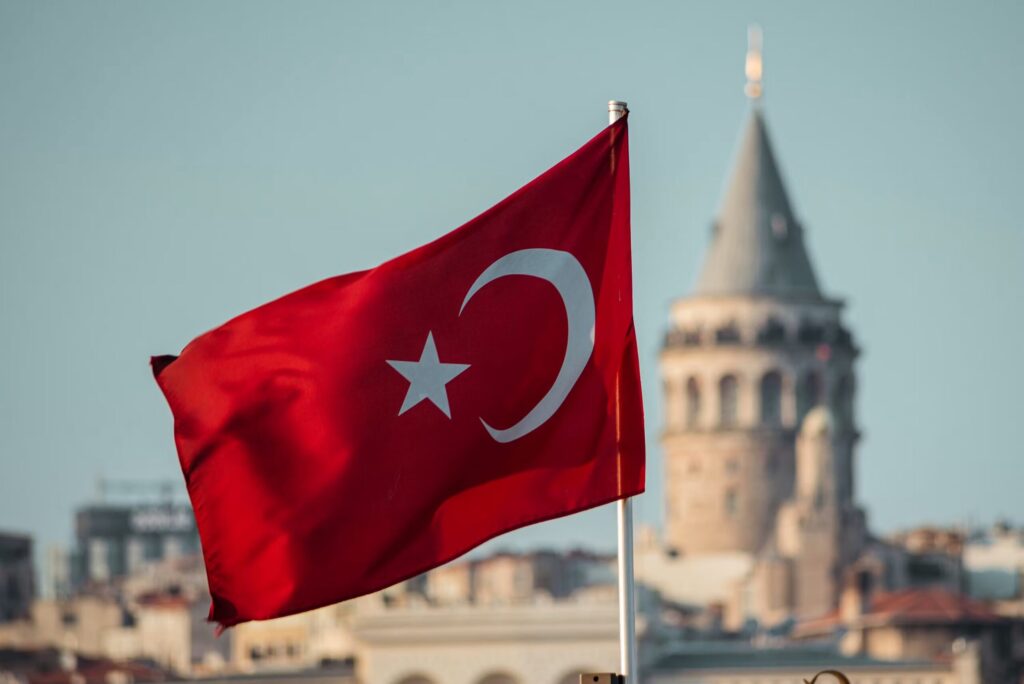
On 14 September 2026, the Turkish Ministry of Interior stated that procedures were started against 177 suspects after simultaneous actions carried out in the cities of Adıyaman, Konya, Manisa, Muğla, Tekirdağ, Siirt, Muş and Çorum. According to MASAK, a total of 17.75 billion Turkish Lira (equivalent to $365.8 million) was moved around the banking accounts of the suspects. Digital information was also seized. Units of Gendarmerie Organised Crime Branches, cybercrime units, and chief public prosecutor’s offices were all involved in the process. The suspects are charged with operating gambling platforms without licences, money transfer and money laundering.
Türkiye’s Law no. 7258 states that unlicensed gambling operation is considered a crime and such an activity is often coupled with money laundering and fraud.
800 Operations, Eight Months – A Number That Demands Attention
This operation in September was not a sudden one. Four days after the announcement of the operation, Turkey’s Directorate of Communications held a governmental discussion on gambling crime and gambling addiction. This is how what Deputy Interior Minister Ali Çelik mentioned in this governmental meeting gives us a new perspective on the September statistics. According to the official record of the governmental meeting that took place on 10th of September, during the first eight months of 2026, authorities have broken down nearly 40 gangs that operated in the illegal betting business in Turkey, and the transactions between these organisations were about 60 billion lira.
Taken alongside a separate April investigation in which MASAK traced transactions totalling approximately 35.8 billion lira across accounts linked to a single network, the September figure is one part of a much larger pattern. These are not isolated operations. They are sequential moves in a sustained campaign.
The Financial Trail Is Now the Primary Target
Something shifted in how Turkey is measuring success. Earlier enforcement campaigns were counted in blocked domains. This one leads with a bank-movement figure, and the agencies listed are financial intelligence units, not telecoms regulators. That change is deliberate. MASAK head Hasan Kaymak told the 10 September panel that his organisation would not allow the financial system to be exploited by criminal networks, and that tracking money flows rather than platform addresses has become the central method.
Interior Minister Mustafa Çiftçi had made his rationale clear earlier that year when he stated in an interview with Habertürk: “Organised criminal structures no longer steal using knives and weapons, but using algorithms and electronic wallets, and we are answering back with them.” In terms of his larger statement, he contextualised it directly in the international environment by stating: “Casinos, junkets, cryptocurrencies and underground banking are the most important components of the money laundering infrastructure behind international organised crime.” The government of Turkey has estimated the value of the Turkish illegal gambling market at up to $60 billion a year, as per Vice President Cevdet Yılmaz.
Between 2006 and 2025, 548,420 illegal betting and gambling websites were blocked, including 84,000 in 2025 alone. The September operation signals that blocking alone has not been the answer.
When Did Football Become Part of the Case?
The illegal betting problem in Turkey has not stayed inside the financial system. In July, Turkish authorities detained 17 football club officials, including four executives from Galatasaray and Besiktas, in raids across Istanbul and nine other provinces. State-run Anadolu Agency confirmed that legal betting platform data from 2020 to 2026 showed the individuals had allegedly placed bets while serving in official capacities. Justice Minister Akin Gurlek stated the government would pursue “any suspicious structure, relationship, or act that undermines the spirit of sport and casts doubt on football’s credibility.” Reuters had reported in November 2025 that Istanbul’s chief prosecutor warned the probe would extend to club chairmen, coaches and commentators, with Interpol and UEFA both engaged.
The reach of this investigation into sport, banking and organised crime simultaneously is not a coincidence. It maps the full architecture of how illegal betting operates in Turkey: the platform collects bets, the financial system moves the money, and sport provides the product the bets are placed on.
Why Addiction Is Now an Enforcement Argument?
The 10 September panel brought together senior officials from MASAK, the Turkish Green Crescent Society, the Council of Higher Education and the Radio and Television Supreme Council. The shared theme was explicit: enforcement and addiction reduction are not competing approaches, they are the same fight at different points in the same chain.
Çelik put it directly: “If we can eliminate this sector, we will also minimise the funds flowing into the hands of the next criminal organisation.” Mehmet Dinç, president of the Turkish Green Crescent Society, extended the argument further, saying more than 50 per cent of free games published on social media are funded by the gambling industry. His description of the illegal betting ecosystem was precise: “It starts with advertisements and continues through social media, sporting activities, influencers, games, mobile applications, payment systems, loans, bets, losses, debt and continued betting.” Shutting down websites, he said, is not sufficient on its own.
Expert Analysis: Turkey Is Running Hard – The Question Is Whether the Finish Line Exists
We find Turkey’s enforcement record in 2026 credible and substantial. The operational figures from the 10 September panel, directly documented by the Directorate of Communications, show a government that has genuinely accelerated enforcement rather than maintained the appearance of it. Tripling the annual operational rate, tracing money rather than chasing platforms, pulling in football, fintech and criminal networks simultaneously; that is a serious campaign by any measurable standard.
The uncomfortable editorial question, and one the ministry’s own figures quietly raise, is whether this level of effort is closing the market or simply documenting how large it is. Vice President Yılmaz estimated the illegal market at between $20 billion and $60 billion. Across the first eight months of 2026, financial transactions traced across 40 dismantled gangs totalled nearly 60 billion lira. The September operation adds another 17.75 billion. These figures are rising as enforcement intensifies. That pattern could mean two things: either the investigations are reaching deeper into the network than before, or the network itself is growing faster than the enforcement can contain it. The government has not presented evidence resolving that question, and we think it deserves to be asked publicly.
It is not in dispute that the ecosystem that Dinç referred to exists. Unlawful gambling in Turkey is not about the actual bets; it is about a social media contest, an influencer, and a debt that cannot be paid. The enforcement that concentrates exclusively on the financial end does nothing to address the demand. It all depends on how Turkey bridges this divide; whether 2026 is considered the year of success or the year of growth.
Explore more:
 Share
Share


 6 views