





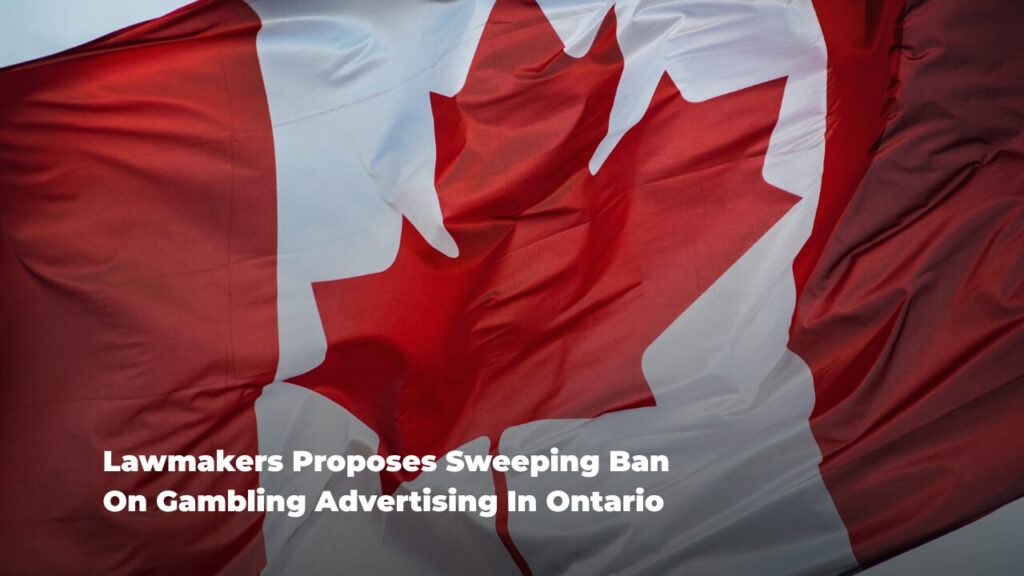
Ontario lawmakers have introduced legislation prohibiting online gambling operators and their partners from advertising within the province. The Stop Harmful Gambling Advertising Act, Bill 107, was tabled on 20 April by Liberal MPP Lee Fairclough to amend the Gaming Control Act, 1992.
If passed, the bill would make it illegal for licensed gambling platforms and affiliated marketing firms to promote their services across any medium targeting Ontario residents. The proposal reflects growing concern over the social impact of the province’s regulated online gambling market, which launched in April 2022.
Supporters argue that the shift to a competitive market has increased exposure to gambling content without delivering player protection measures.
Rising engagement and harm drive policy response
Data suggests a link between market liberalisation and increased gambling-related harm. Calls to ConnexOntario, the province’s mental health and addictions helpline, rose by 144% following the launch of the regulated market.
Between April 2022 and September 2025, 76% of gambling-related enquiries were tied to online platforms. The bill’s proponents also highlight changes in player demographics. Engagement among adolescent boys and young men aged 15 to 24 has reportedly increased, while one in three Canadians aged 18 to 29 is said to have participated in online gambling. Within that group, one in four individuals is reported to have experienced significant harm.
Fairclough made further comments. “It’s creating this public health crisis in front of us. I’m the mom of teenage boys, I see this in their environment, and so many people talk to me about it.
“There just seems to be this targeting, especially of young people and young men. So, eliminating advertising for gambling is really the first step in that.”
Mental health professionals backing the bill argue that advertising volumes, particularly through sports broadcasts and social media, have increased exposure beyond what the original regulatory framework anticipated.
Strict penalties and limited exceptions outlined
The proposed legislation includes significant penalties for non-compliance. Individuals found in breach could face fines of up to C$100,000, while corporations could be liable for fines of up to C$1m.
Repeat offences would trigger mandatory revocation of a supplier’s registration, preventing operators from continuing to do business within the province.
The bill allows for limited exceptions. Media content originating outside Ontario would not be restricted, provided it is not primarily promotional. Editorial or artistic references to gambling would also remain permissible as long as no commercial agreement is involved.
These provisions aim to address enforcement challenges, particularly in regulating cross-border media and content distribution.
Debate centres on unintended market effects
Not all stakeholders support the proposed ban. Research commissioned by the European Casino Association in 2024 found that in markets with strict advertising restrictions, unlicensed operators captured more than 70% of online revenue.
There is another major point of contention. Reduced exposure to licensed operators in Ontario could drive players toward unregulated sites that operate without oversight or consumer protections.
Efforts to reduce harm through stricter controls may alter market behaviour in ways that shift activity outside the regulated system.
Ontario has clamped down against advertising with a new bill to improve player protection. The bill comes with fines between $100,000 and $1m. However, the regulator must be cautious to avoid pushing players to illegal operators.
Further updates on regulatory developments will be available in the Regulation Section.
Explore more:
 Share
Share


 300 views