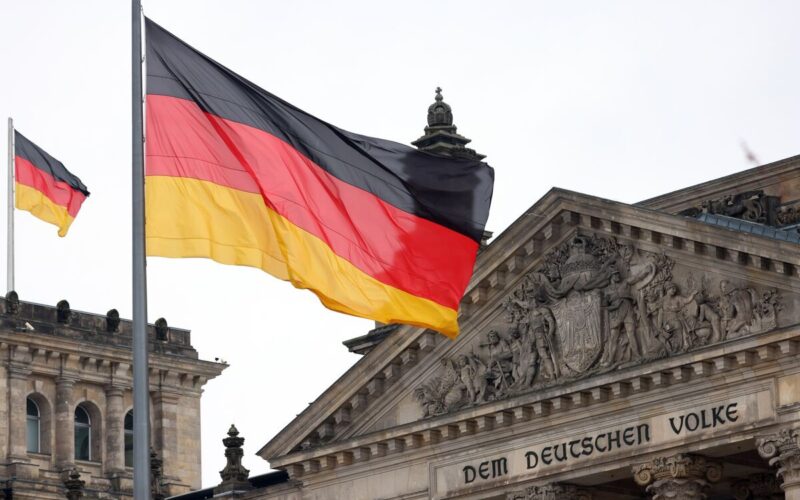








- Germany’s GGL has opened a formal review into whether ADI Predictstreet’s World Cup pitch-side advertising breaches German gambling laws, given that the operator holds no German licence.
- ADI Predictstreet’s branding appeared during Germany’s opening World Cup match, which was broadcast on KiKa, a public children’s television channel.
- Nine European gambling regulators from Belgium, France, Germany, Italy, the Netherlands, Poland, Portugal, Spain and Switzerland have launched coordinated action against prediction markets, with Polymarket and Kalshi already banned across multiple European countries.
Every time Germany took to the pitch at this World Cup, millions of people sitting at home watched the same name repeat itself across the boards: ADI Predictstreet, FIFA’s official prediction market partner for the 2026 tournament. No German licence. No permission to advertise gambling in the country. Germany’s gambling authority has now opened a formal inquiry.
The Gemeinsame Glücksspielbehörde der Länder, known as the GGL, opened the review after German newspaper RND reported that ADI Predictstreet’s branding was reaching German audiences through live match broadcasts. The Abu Dhabi-backed operator received a betting intermediary licence in Gibraltar on 26 March 2026, recorded under the 2005 Gambling Act, making it one of the only formally licensed prediction market operators in Europe. Within days, FIFA named ADI Predictstreet its first-ever official prediction market partner. By 8 June, the platform had gone live, with CEO Dimitrios Psarrakis declaring: “As we go live ahead of the FIFA World Cup 2026, we are proud to deliver a secure, regulated, and globally scalable platform that combines technology, prediction markets, and real-time participation at an unprecedented level.” Germany had a different view of that claim. A Gibraltar licence carries no authority in Germany. Prediction markets are classified as gambling under German law and are banned outright. That is the gap at the centre of this case.
The Branding Landed on a Children’s Channel
The problem was not just that the branding appeared in Germany. It was where it appeared. Germany’s opening World Cup group match was streamed on KiKa, a public children’s television channel. ADI Predictstreet’s boards were visible across the entire broadcast. German gambling advertising rules exist to stop unlicensed products from reaching consumers. When the audience is children, those rules carry even more weight.
The GGL confirmed the review covers two things: whether the advertising breaches German gambling laws, and whether German residents can actually access and use the platform. That second question is where the legal exposure becomes serious. Under the Macolin Convention, illegal sports betting is defined as “any sports betting activity whose type or operator is not allowed under the applicable law of the jurisdiction where the consumer is located.” If a German resident can register and place predictions, the Gibraltar licence becomes irrelevant. German law applies.
Norwegian football magazine Josimar found something that made the GGL’s concerns look well-founded. After ADI Predictstreet went live on 8 June, Josimar reporters registered accounts from multiple European countries where the platform holds no licence. In several cases, a basic VPN was enough to bypass the geoblocks. France’s regulator, the ANJ, had already issued two cease-and-desist notices to the company and added it to its blacklist before the tournament began. Should the GGL confirm violations, the sanctions will not stop with ADI Predictstreet. The regulator can pursue connected third parties too, including payment processors, web hosting companies, and telecommunications providers.
ADI Says Its Branding Was Never Meant for Germany
ADI Predictstreet has pushed back. A company spokesperson told RND: “We operate no marketing or advertising activities targeted at Germany.” Any appearance of its branding during World Cup coverage, the company argued, came from “global sponsorship and media rights arrangements” and carried no specific intention to reach German consumers. German public broadcaster ZDF offered partial coverage for that position. Spokesperson Thomas Hagedorn told RND the network has no control over pitch-side visuals, as those feeds come from the tournament’s host broadcaster, and said the displays complied with Germany’s broadcasting rules under the Media State Treaty. The question, though, is whether compliance with broadcasting rules and compliance with gambling advertising law are the same thing. They are not.
The “global sponsorship” defence has a certain logic. But it has a limit, and ADI Predictstreet’s own commercial decisions make it harder to sustain. In April 2026, DAZN announced a partnership with ADI Predictstreet to embed its prediction markets into live sports streaming across the world. DAZN CEO Shay Segev said the deal would bring “real-time prediction directly into the live viewing experience.” ADI also launched a co-branded World Cup Hub with Fanatics Markets, making the platform available across 23 US states and four territories. A company that builds distribution at that scale while telling regulators it does not target specific markets will find that argument difficult to defend.
The Questions About This Company Go Beyond Advertising
The GGL’s probe did not arrive in a vacuum. Scrutiny of ADI Predictstreet had been building well before the tournament began. Josimar published a multi-part investigation into the company’s background, reporting that frontman Ajay Bhatia paid a six-figure sum to settle accusations of insider trading in India. Josimar also found that CEO Dimitrios Psarrakis had ties to Qatargate, described as one of the biggest lobbying scandals in EU history. The company’s head of anti-money laundering, meanwhile, had accepted a two-year ban on financial activity in Gibraltar after overseeing compliance failures at a previous employer. Josimar further established that ADI Predictstreet received its Gibraltar licence just nine days after the company was incorporated. The Gibraltar Minister for Justice called it “record time.” He said it with pride. Others read it differently.
FIFA’s position is that the partnership was concluded according to its governance standards. The nine European regulators who issued a joint statement this week did not share that calm. Their joint statement warned that platforms like ADI Predictstreet carry “serious risks of illegality, fund blocking, fraud through insider information, and financial volatility,” and that because they are unregulated in most countries, “they can create serious addiction problems.” The statement also told sports federations, directly, to check that any platform they partner with is lawful in each jurisdiction before the contract is signed. That sentence was aimed at FIFA as much as anyone.
Nine Countries Have Now Moved Together
The GGL’s action did not stand alone. The same week, nine European gambling regulators from Belgium, France, Germany, Italy, the Netherlands, Poland, Portugal, Spain and Switzerland signed a joint declaration pledging coordinated enforcement against unlicensed prediction market platforms. The timing, at the start of the World Cup, was not coincidental. The ADI Predictstreet situation is understood to have been a significant factor in prompting it.
Polymarket and Kalshi, two of the most established prediction market platforms in the world, have already been banned across multiple European countries. Spain’s DGOJ is among the most recent to act. The joint statement went further than any single national action had before, warning that “the combination of visibility, accessibility and the viral nature inherent to this type of platform creates a significant addictive cycle,” and pointing to the absence of betting limits, cooling-off periods, and age checks on unlicensed platforms. For marketers, the practical implication is direct. A global sponsorship that places your brand on pitch-side boards at the World Cup reaches every country broadcasting those matches. The GGL has made clear it will judge ADI Predictstreet not on where it chose to market, but on where its branding actually landed and whether people there could access the product. That is a different standard from the one operators assumed when they signed their World Cup deals. Whether you are the sponsor, the broadcaster, or the agency that placed the media, the question regulators are now asking has shifted. It is no longer “did you target this market?” It is “Did your brand appear here, and can people here use your product?” The GGL’s review will be the first real test of where that line sits.
Expert Analysis
The ADI Predictstreet case shows what happens when a global sports sponsorship meets a regulatory system built country by country. Pitch-side advertising at a World Cup goes everywhere the broadcast goes. The “global sponsorship” defence assumes regulators will separate international event inventory from targeted local campaigns. Germany’s GGL is not accepting that separation. Its review will assess whether German residents can access the product, not whether the company ran a campaign in Germany. That shifts the compliance question entirely. For any marketer working with a gambling or prediction market brand that holds international sports rights but patchy licensing, this case is a precedent worth paying attention to. The coordinated statement from nine European regulators makes one thing clear: treating Europe as one audience for broadcast advertising no longer works. Jurisdiction-by-jurisdiction licensing is not a paperwork problem. According to Germany and eight other European regulators, it is the minimum condition before your brand appears on any board that their consumers might see.
Explore more:
 Share
Share


 253 views