






Key Points
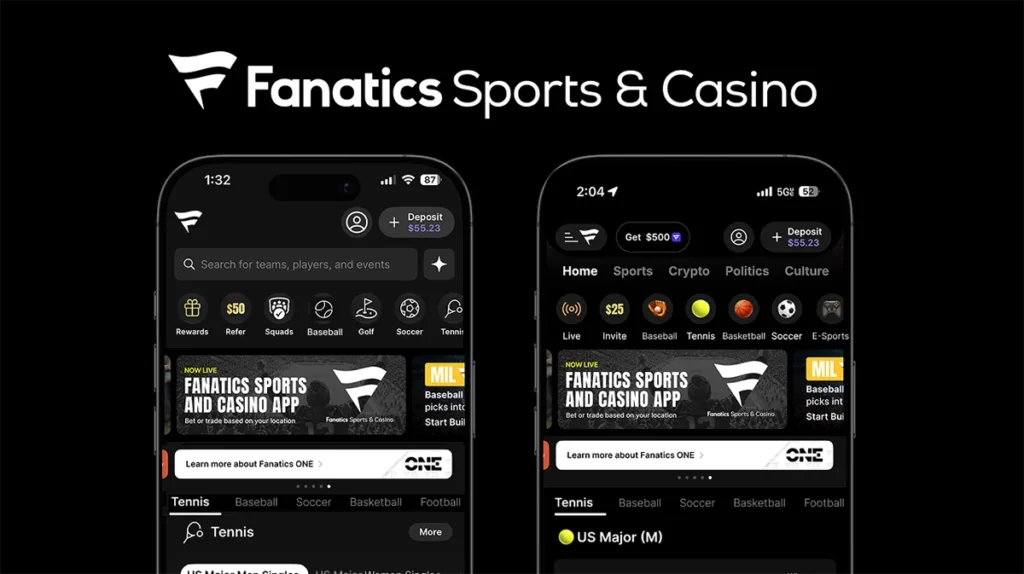
- The Fanatics Sports & Casino app was officially released on September 2, 2026, bringing together all three betting services in a single account and single FanCash balance.
- Fanatics acquired Water Street Labs and CX Clearinghouse from BGC Group in July 2026, giving it full ownership of its own CFTC-regulated prediction market exchange and clearinghouse.
- DraftKings, FanDuel and Caesars all launched consolidated apps in 2026, but none can connect a sports bet to a merchandise ecosystem the way Fanatics can.
There are no other betting apps for jerseys in America. This is precisely why the 2 September 2026 launch of Fanatics Sports & Casino stands out as an event of a completely different league compared to typical announcements about mergers of separate app products under the press release format.
The product combines Fanatics Sportsbook, Fanatics Casino and Fanatics Markets into a single app, single account and single balance of FanCash, which is connected to the Fanatics ONE loyalty program. As Matt King, CEO of Fanatics Betting and Gaming, put it: “With Fanatics Sports & Casino, our fans around America will have the opportunity to use a single app for their experience in betting on the game, trading on the most memorable moments of the game and playing casino games. Moreover, since it is Fanatics, all the bets, trades and games will earn FanCash; we are capable of connecting what our fans like to bet on to what they love in one ecosystem.”
This sentence deserves careful consideration because it describes an innovative retention strategy that has no competition in the race.
The App Works Differently Depending on Where You Are
The product is not one flat experience pushed to every user. It reads location data and adjusts automatically. Fanatics Sportsbook is live in 23 states and Washington D.C.; Fanatics Casino operates in New Jersey, Pennsylvania, Michigan and West Virginia; and Fanatics Markets, its federally regulated event contracts platform, is available in 22 states and four US territories. Cross a state line and the app reshuffles what is visible. The account balance, loyalty status and FanCash total stay exactly where they were.
Existing users of any of the three standalone apps migrate through a standard update. Nothing is lost in the move, including account details, funds, FanCash and Fanatics ONE standing.
A Two-Year Infrastructure Build That Most Coverage Missed
The app is the launch. The story underneath it runs back further, and it is the part most coverage has glossed over.
Fanatics entered sports betting at scale through its $225 million acquisition of PointsBet’s US operations, completed in April 2024. Prediction markets arrived in December 2025, initially built on Crypto.com’s CFTC-registered exchange infrastructure. That third-party dependency ended quietly in July 2026.
On 27 July, Fanatics and BGC Group confirmed an agreement for Fanatics to acquire Water Street Labs and CX Clearinghouse. Water Street Labs holds a CFTC-registered Designated Contract Market licence. CX Clearinghouse is a CFTC-registered Derivatives Clearing Organisation. Owning both means Fanatics can now list its own prediction market contracts, clear trades internally and build product features without waiting on a partner’s approval cycle. The two companies also agreed to develop joint market data products, pairing Fanatics’ consumer scale with BGC’s institutional liquidity and financial analytics.
This is the decision that separates Fanatics from operators still leasing their prediction market infrastructure. DraftKings took the same route earlier, acquiring Railbird Technologies and using its CFTC licence to launch DKeX, its proprietary in-house prediction exchange, on 26 June 2026. Both companies reached the same conclusion: owning the exchange is not optional if you plan to compete seriously in this space.
Every Major Operator Moved in the Same Direction This Year
Super app consolidation became the defining strategic story of US sports betting in 2026, and Fanatics is the last large platform to complete the move.
DraftKings announced its Sports & Casino super app in March, combining sportsbook, prediction markets, casino and lottery products under a single account. By the week ending 21 June, DraftKings Predictions was processing $11.3 billion in annualised total trading volume, a figure heavily boosted by the FIFA World Cup. Flutter Entertainment consolidated FanDuel into a single experience in April, routing sportsbook access to states where betting is legal and FanDuel Predicts to those where it is not. Caesars pushed the same consolidation model without adding prediction markets at all, combining sports wagering and casino under one app.
The operational logic across all four companies is identical: fewer accounts, less friction between products, better cross-sell. What they cannot copy is the part that sits outside the gambling vertical entirely.
FanCash Is Not a Loyalty Points Programme – It Is a Moat
Here is what separates Fanatics from every other operator running this same consolidation playbook. FanCash earned through a prediction market trade, a casino spin or a sports bet can be spent on official jerseys, signed rookie cards, vintage Mitchell & Ness apparel and collectables across the wider Fanatics commerce platform. No other operator controls a merchandise business. No other operator can redirect gambling engagement into fandom spending. The loyalty currency is not a reward for gambling; it is a bridge between gambling and the identity a fan already has before they open the app.
That is a fundamentally different retention mechanism, and it functions entirely outside the gambling vertical. DraftKings can improve its odds algorithm. FanDuel can refine its parlay builder. Neither of them can send a customer a game-day jersey as a loyalty reward.
Expert Analysis: The Controversy Nobody Wants to Name
We think the super app structure Fanatics just launched creates a regulatory argument its legal team should be watching carefully, and we have not seen anyone else raise it directly.
Several state gambling regulators have spent the past two years arguing that sports event contracts, the kind traded on Fanatics Markets, constitute unregulated wagering rather than federally sanctioned derivatives. The CFTC’s position has generally held, and Kalshi successfully defended federal preemption in court. But the legal environment remains genuinely contested.
Embedding prediction markets within a branded sportsbook app targeted at existing sports gamblers and using a common loyalty currency for all three products would create a much simpler story for state regulators. The case for federal preemption is simple if prediction markets are a separate product that operates on CFTC infrastructure. The case for federal preemption would be complicated if the prediction market was embedded in an app that was taking sports wagers and where the same account balance and currency were used for rewarding both sports betting and prediction markets.
We are not suggesting Fanatics has done anything legally wrong. The CFTC framework is real, the licences are legitimate and the company has built proper infrastructure. What we are saying is that the commercial elegance of the FanCash bundle, the very feature that makes this launch commercially superior to every competitor, may be exactly the evidence that state regulators point to when they argue that prediction markets have been functionally absorbed into a gambling product. The infrastructure is owned. The loyalty currency is genuinely unique. The app is live. But the states still blocking prediction markets are watching, and this launch gives them a more specific target than they had before.
Every competitor has built a better casino this year. Fanatics has built a reason to stay that has nothing to do with gambling odds at all. Whether regulators let that structure stand is the question worth following more closely than the app’s download numbers.
Explore more:
 Share
Share


 308 views