Key Points
- Lottomatica absorbs Spanish rival Cirsa in a €2.8bn all-share deal, creating a group with approximately €2bn pro forma adjusted EBITDA and combined revenue above €4.4bn.
- Blackstone stays in, holding approximately 24% of the enlarged company rather than taking a full exit after Cirsa’s July 2025 Madrid IPO.
- Lottomatica shares fell 9.6% on announcement day before recovering fully; Cirsa jumped 17%, exposing a clear divide in how each set of investors read the same deal.
A Merger That Was Coming, But Still Caught Markets Off Guard
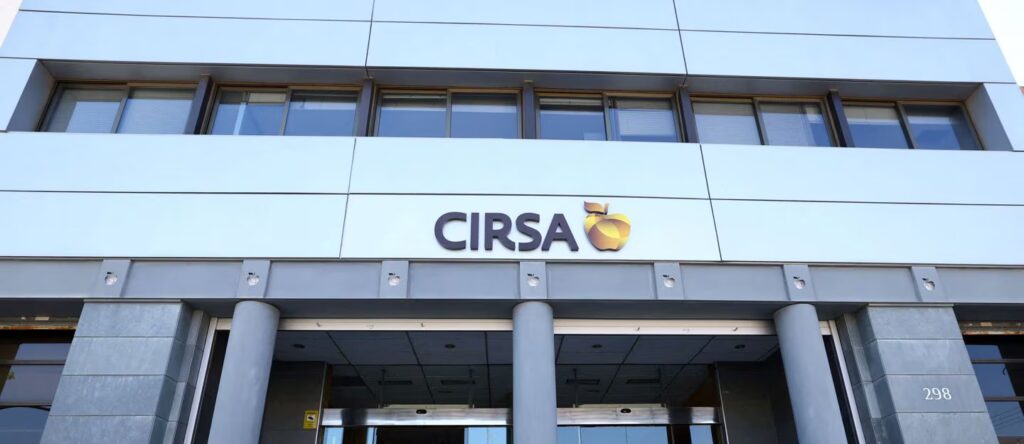
This is not what anyone anticipated happening one morning in September. The binding agreement for the merger between Lottomatica and Cirsa Enterprises was announced by Lottomatica on 2 September 2026. It is done through the EU statutory cross-border merger of Cirsa into Lottomatica as the continuing entity. In return, Cirsa shareholders will be getting 0.668 new Lottomatica shares per each Cirsa share, owning around 32.5% of the combined company while Lottomatica shareholders own 67.5%.
What unsettled analysts was not the logic but the shift in identity. Lottomatica had traded as a clean, Italy-first, online-heavy growth story. Suddenly it was becoming a dual-listed, multi-country operator with a large land-based casino and gaming hall base attached. Markets reacted without hesitation; Lottomatica shares fell 9.6% in Milan within hours while Cirsa surged 17% in Madrid. By the following session, Lottomatica had recovered almost all of that loss, with Italian broker Equita pointing out that the drop had implied zero value from the synergies, a position it called simply not credible.
The Gap Between the Two Businesses Is Exactly the Point
Strip the announcement back to its core, and the logic of this deal is built on one uncomfortable fact: Cirsa is very good at everything except what currently drives value in gaming. Online accounted for 65.3% of Lottomatica’s adjusted EBITDA in H1 2026, at a 57.9% online EBITDA margin. For Cirsa, the comparable online share sits around 13%, with a margin of roughly 24% from digital. Cirsa generates 53% of its core earnings from casinos and gambling halls, precisely the channels that face a structural ceiling.
Pro forma, the merged group settles at 48% online and sports betting, 27% distributed gaming, and 25% casinos. That shift is the intention. Lottomatica plans to accelerate Cirsa’s online conversion using its own proprietary platform and CRM stack, the same tools it used to rebuild itself in Italy. Lottomatica’s own online share was just 2.5% of EBITDA back in 2017. Italy now records online gambling spend of €47 per capita against €35 per capita in Spain, and Lottomatica’s management reads that gap as an opportunity, not a warning. On the investor call, CEO Guglielmo Angelozzi said directly: “These two markets have been growing and will continue to grow very nicely online, Spain even more than Italy.”
Synergies That Look Modest, Perhaps Deliberately So
The combined group has guided €115m of annual pre-tax cash synergies by year three post-completion. Roughly €101m comes from operational cost savings across procurement, technology, trading and risk management, and shared services. The remaining €14m comes from refinancing selected Cirsa debt instruments at Lottomatica’s lower cost of debt, with costs to achieve the full savings estimated at around €120m over three years.
Strategic advisory firm Regulus Partners was pointed out in its assessment, calling the €115m figure “staggeringly unambitious” and warning that without deliberate investment in capturing larger upsides, the combined company risked becoming a “low-growth conglomerate with few synergies beyond comforting linguistic and cultural similarities.” JPMorgan offered a more constructive read, calling the structure “strategically compelling” given Lottomatica uses its equity to acquire a lower-valued asset while retaining 67.5% of the result.
Both readings carry weight. Between H1 2024 and H1 2026, Lottomatica and Cirsa grew revenues at compound annual growth rates of 13% and 11% respectively. Angelozzi described the deal as a “low-risk proposition” on the basis that Cirsa is already well-run and profitable, requiring no turnaround. The conservative synergy figure may simply reflect management’s preference for under-promising, not a genuine ceiling on what the combination can deliver.
What Blackstone Staying In Actually Signals?
The most revealing detail in this deal is not the price; it is what Blackstone chose not to do. The US private equity group took Cirsa to a Madrid stock exchange listing in July 2025, beginning its divestment from roughly 75% ownership. Blackstone had originally acquired Cirsa in 2018, buying out the Lao Hernández family across subsequent transactions. A full exit through this merger was available. Blackstone chose not to take it.
Rolling its stake forward, Blackstone becomes the largest individual shareholder in the enlarged Lottomatica at approximately 24%, nominating two of 13 board seats. A three-month lock-up applies post-completion. That decision, worth reading carefully, signals a view on long-term value creation that the current market price does not yet reflect. The combined company will be headquartered in Rome, with a secondary base for Cirsa operations in the province of Barcelona, dual-listed on Euronext Milan and the Spanish stock exchanges.
As Lionel Assant, global co-chief investment officer at Blackstone, said of the deal: “The merger will create one of the world’s leading listed gaming platforms, which will benefit from greater scale, broader geographical diversification and enhanced capabilities.”
The Capital Return Plan Doing Heavy Lifting
Before the merger becomes effective, Cirsa distributes an extraordinary dividend of €262m, equivalent to €1.56 per share, to its existing shareholders. Once completed, Lottomatica intends to propose a further €744m capital return through a special dividend, a voluntary partial tender offer for its own shares, or a combination of both. Across the three years following completion, the combined group targets up to €4bn in total shareholder distributions, with an ongoing dividend policy set at 30% of adjusted net income.
The pro forma net leverage ratio is expected to be at 2.7x EBITDA by H1 2027, from a target of 2.0 to 2.5x for the steady state. This promise to return capital has a special role to play: It provides Lottomatica investors with an incentive to stay on board through the period of dilution and integration.
Latin America: The Angle Almost Everyone Is Ignoring
Focus has remained mostly on Spain. While Cirsa’s experience in Latin America from its presence in Colombia, Panama, Peru, and Mexico, and its acquisition of the majority stake in Casino Figueira in Portugal has received comparatively little coverage, it warrants much more attention. Cirsa has made over 130 deals since 2015 and created a true platform spanning multiple markets instead of being limited to a single market with international aspirations. H2 Gambling Capital puts its addressable market potential at around €34bn in terms of all territories considered. Regulus believes that replicating Lottomatica’s success in Italy through online gambling in Spain alone could generate another €350m in top-line revenues.
The deal is expected to close in Q2 2027, subject to shareholder votes from both companies and regulatory clearances across antitrust, foreign direct investment, and gaming authorities in multiple jurisdictions. Extraordinary general meetings are targeted for Q4 2026.
Expert Analysis: The Conservative Bet That Could Still Go Either Way
We keep returning to the same tension in this deal. The €115m synergy figure is presented as a three-year target, but Lottomatica’s management has a documented pattern of conservative guidance that it then surpasses. Equita’s own post-announcement calculation showed the market was pricing in zero synergy value whatsoever, which is not a serious analytical position.
The underlying logic is intellectually honest: take a cash-generative, land-based operator with weak digital penetration, apply a decade of proven online conversion experience, and let compounding do the work. We think that argument holds. What we find harder to defend is the implicit assumption that ambition and conservatism can coexist indefinitely at the same time. Regulus is right that without deliberate investment in accelerating Cirsa’s digital shift, the merged entity settles into a large but slow-moving holding structure. Spain’s online market is more fragmented than Italy’s today, but fragmented markets consolidate. If Lottomatica manages this combination rather than actively building it, a domestic Spanish digital winner will eventually emerge without Cirsa, and Lottomatica will have acquired a land-based business at the precise moment land-based profitability faces its sharpest long-term pressure.
Angelozzi’s “low-risk” framing is defensible right now because Cirsa is profitable and well-managed. The risk is not in what Cirsa is today; it is in what the combined entity needs to become. The market’s initial price reaction, however quickly it recovered, was asking exactly that question. The answer arrives after Q2 2027, when integration moves from prospectus to practice.
Explore more:
 Share
Share


 288 views