







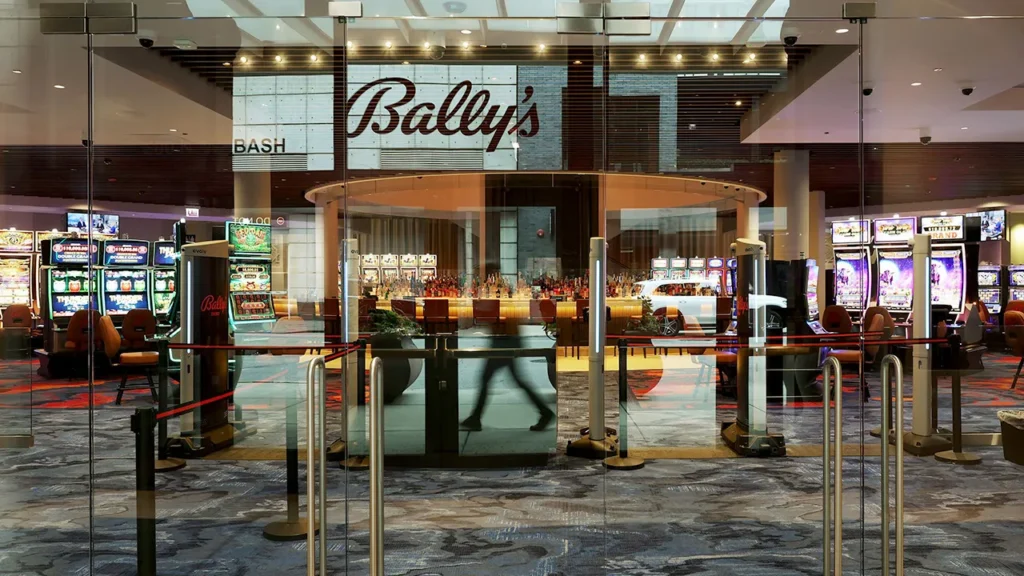
Citizens analysts have questioned whether Bally’s Corporation can complete its development pipeline without selling assets or bringing in new partners. The concern follows Bally’s latest 10-Q filing with the SEC, where the operator said there was substantial doubt about its ability to continue.
Citizens analysts Jordan Bender and Isabelle Slavin said the pipeline remains ambitious, covering a New York casino targeted for 2030, a Chicago project expected to open in early 2027 and a Las Vegas development.
“The situation does not appear dire, and the company reiterated that it is working to secure outside funding for New York, but we do not believe the company has the ability to finish all of its projects without selling or bringing in a development partner at its leverage levels.”
Citizens believe Las Vegas is the likeliest project to be sold or require a development partner. Macquarie said it remains “constructive on the underlying asset base,” with analysts describing Bally’s Chicago, New York and Las Vegas projects as attractive.
Las Vegas development could become the most flexible asset
Bally’s Las Vegas plans relate to development rights at the former Tropicana Las Vegas site. Earlier updates referenced plans for a casino, while more recent comments have focused on “non-gaming amenities.”
This change could support Citizens’ view that Las Vegas may be the easiest project to restructure, sell or develop with a partner. New York could also improve investor confidence if Bally’s secures additional financing.
Truist Managing Director Barry Jonas said renewed funding could help reduce concerns around the company’s financial position, although he described the going-concern language as “not a good look and is rarely seen across our coverage.”
Analysts maintain neutral positions despite lower earnings forecasts
Truist has retained its ‘hold’ rating, while Citizens continues to rate Bally’s as “market perform.” Neither firm has moved to a sell recommendation, citing potential share-price volatility in either direction.
Bender and Slavin wrote: “Moving pieces and project openings, along with ongoing cost-saving initiatives and a lack of guidance, create some level of uncertainty for estimates over the coming years.”
Citizens view the current share multiple of 7.2x consensus 2027E EBITDA as fair value. However, the bank reduced its 2026-2027 EBITDAR forecast from a previous range of $793m to $882m to between $751m and $829m.
Macquarie also maintained a ‘neutral’ rating but cut its price target from $13 to $11. The bank highlighted “a non-binding Investment Fundamentals term sheet for a pre-construction loan and a LOI [Letter of Intent] with a potential equity investor for the NYC project.”
Going-concern warning adds pressure after sharp share-price decline
Bally’s share price has fallen 34% over the past month, with further volatility following second-quarter results. Its adjusted EBITDA declined from €100.2m in Q1 to €84.6m in Q2, which the company attributed partly to UK tax increases. The 10-Q filing increased attention on Bally’s liquidity position.
According to company sources, available liquidity may not be sufficient to meet the requirements of its revolving credit facility based on forecasts. Compliance with those conditions has been temporarily waived until March 2027, while Bally’s explores financing options across the group.
Furthermore, the filing stated that while those efforts continue, “the conditions and events raise substantial doubt about the company’s ability to continue as a going concern.”
The immediate question for investors is whether Bally’s can secure enough outside capital to protect its most important developments without worsening leverage or sacrificing assets.
Bally’s project pipeline looks more dependent on outside capital, with New York, Chicago and Las Vegas all competing for funding. Asides from the assets quality, the company can finance them without stretching leverage further or being forced into asset sales.
Explore more:
 Share
Share


 263 views