





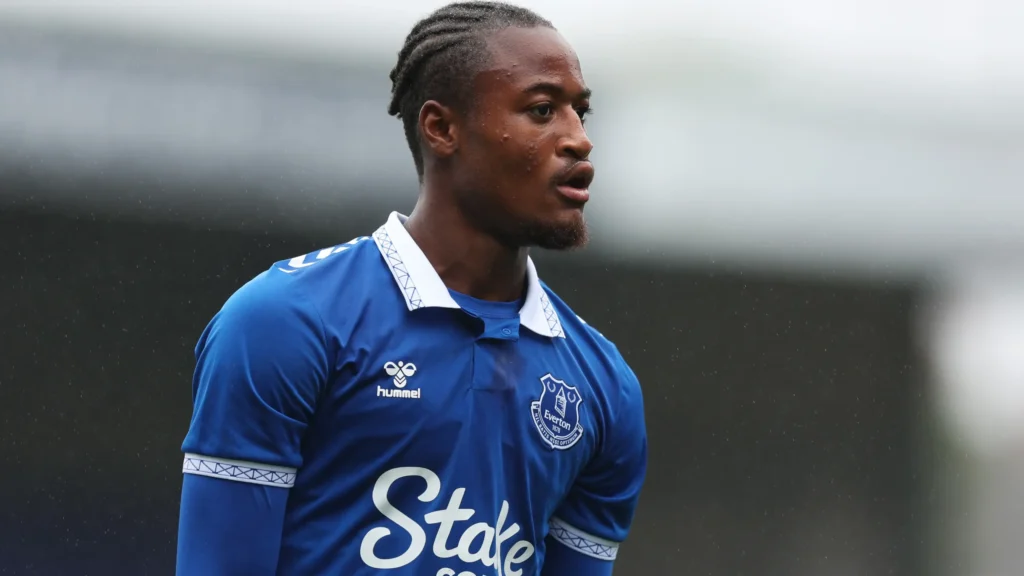
Everton forward Martin Sherif has been charged with breaching Football Association betting rules after allegedly placing 61 bets on football matches between 20 November 2024 and 12 February 2026.
The 20-year-old joined Everton’s youth system from Almere City in 2019 and joined the first-team setup midway through the 2024/25 season, although he is yet to make a competitive appearance. Sherif spent last season on loan in League One with Rotherham United and Port Vale, scoring four league goals across 24 appearances. Both clubs were relegated to League Two.
If the allegations are proven, Sherif would have begun betting on football five months after turning 18, the legal gambling age in the UK. The Liberia-born forward has until Monday to respond to the charges.
During the period covered by the allegations, Everton’s front-of-shirt sponsor was Stake, which is connected to the club as a sleeve partner following the Premier League’s front-of-shirt gambling sponsorship ban.
Sherif case follows several high-profile football betting sanctions
The allegations are among the most notable involving a professional player since Sandro Tonali’s case in 2024. He was banned for 10 months by the Federazione Italiana Giuoco Calcio and received a two-month suspension from the English FA over illegal betting activity in Italy.
Other cases include Nottingham Forest defender Harry Toffolo, who received a five-month suspension in 2023, and then-Brentford forward Ivan Toney, who was banned for eight months.
Both players were sanctioned for betting offences committed as active professionals before establishing themselves in the Premier League. Toney’s case attracted attention because of his rising England profile and the wider debate over betting sponsorship in football.
Charges could revive debate over gambling’s relationship with football
Sherif’s case may again bring scrutiny to the commercial relationship between Premier League clubs and gambling companies.
When Toney was banned, campaign groups highlighted the contradiction of players facing severe sanctions for betting while clubs kept promoting gambling brands on shirts and through sponsorship agreements. Everton’s partnership with Stake gives the discussion relevance.
The FA’s rules apply to players regardless of whether their club has commercial relationships with bookmakers, but cases involving young professionals raise questions about the environment surrounding them.
The Sherif case will reopen an uncomfortable conversation about football’s relationship with gambling. Players are held to strict betting rules, yet gambling brands remain deeply enmeshed in their commercial environment. Therefore, education and early intervention are as important as punishment.
 Share
Share


 231 views