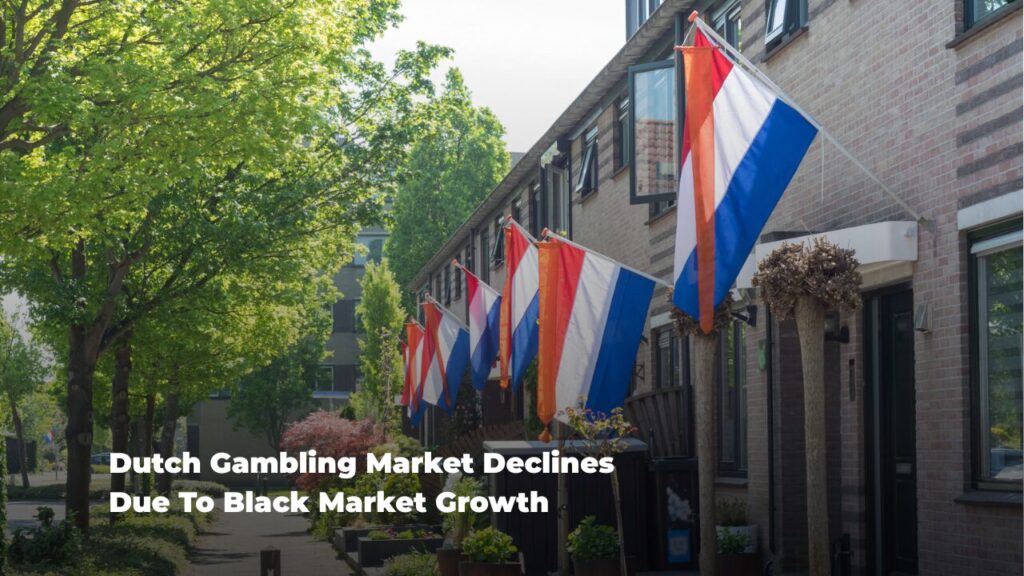
The Netherlands’ online gambling market declined by nearly 20% in 2025, according to figures from the Kansspelautoriteit’s 2025 annual report. The contraction itself is notable, but the more significant gap lies in revenue distribution and the number of players on licensed operators.
In the first half of 2025, about 94% of players used licensed platforms exclusively. Despite that, licensed operators captured only 49% of gross gambling revenue, down from 51% at the end of 2024. This implies that the smaller player segment using offshore sites generate a large portion of the gross gambling revenue.
The figures follow a series of regulatory changes that have tightened conditions for legal operators across advertising, sponsorship and player spending.
Advertising limits and protections reshape market behaviour
The Netherlands completed its ban on sports sponsorship by gambling companies in July. According to the regulator, “almost all public expressions have disappeared”, with only minor exceptions such as club merchandise still carrying gambling logos.
The licensed sector has argued that reduced visibility makes it harder for players to identify legal platforms. However, the data suggests awareness is not the main issue. With 94% of players using licensed operators, most consumers already know where to find regulated services.
The shift reflects a smaller group of players choosing to bypass licensed platforms, likely to avoid deposit limits, affordability checks and other restrictions introduced in October 2024.
The Kansspelautoriteit described this trend as “a worrying development”, noting that players in the illegal market are “much less well protected”.
Top industry voices like Peter-Paul de Goeij have previously raised concerns, stating: “Official figures show that only 49 per cent of online gambling revenue goes to licensed operators, meaning the majority flows into unregulated, illegal channels.” He described the situation as a “disaster”.
Illegal market grows alongside stricter enforcement
The regulator estimates that the illegal online market generated €617m in the first half of 2025, compared to €600m for the legal market. This places unlicensed operators ahead in revenue terms, despite serving a smaller share of players.
Kansspelautoriteit improved enforcement efforts by issuing fines to licensed and unlicensed operators and expanding its oversight of duty-of-care obligations. It also launched the “Disconnect” initiative, targeting the infrastructure that supports illegal platforms. This approach targets affiliates, payment providers, software suppliers and hosting services.
The regulator reported that joint action with platforms such as Google reduced the visibility of illegal advertising from August onwards. Some game suppliers have also restricted access to their content on unlicensed sites through geoblocking.
Policy tightening coincides with market slowdown
The legal market’s decline is linked directly to policy changes. Kansspelautoriteit cited the imposed limits on high spending in October 2024 and a gambling tax increase introduced in January 2025. Based on levy data, the online sector contracted by 18.5% in 2025, compared to growth of 4.9% in the previous year.
The regulatory strategy has become more interventionist, with a stronger focus on reducing harm across financial, mental and social dimensions. At the same time, the data shows that revenue is moving toward the black market.
The Dutch gambling industry is experiencing a decline in revenue across licensed operators compared to illegitimate sites. This is driven by recent policy changes such as gambling tax increase and deposit limits. Kansspelautoriteit will be reviewing strategies to improve revenue by returning the small player segment to its legal market.
Explore more:
 Share
Share


 332 views