






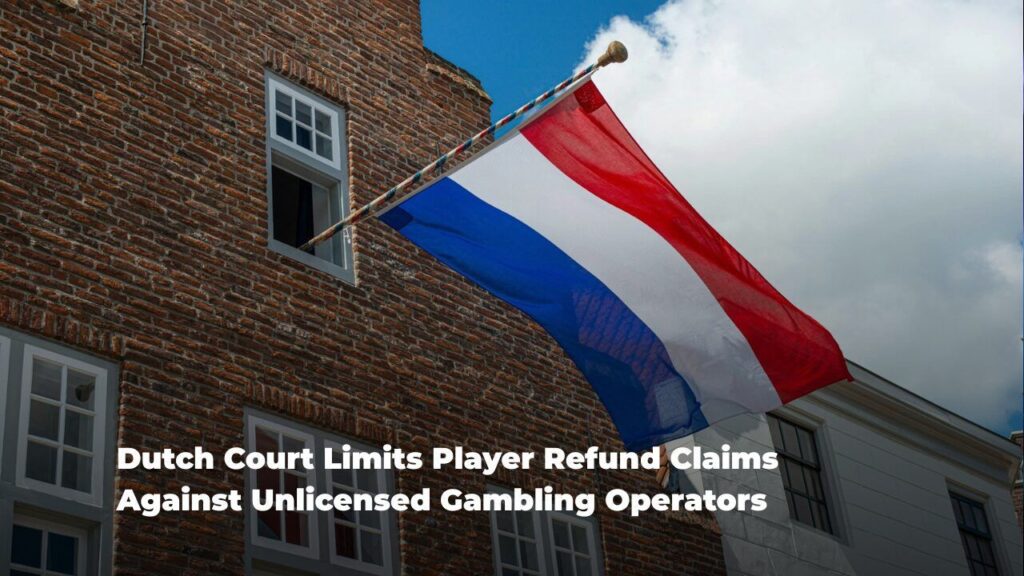
The Netherlands’ Supreme Court has ruled that agreements between players and online gambling operators without Dutch licences are not automatically void under the country’s civil law.
This decision follows two separate legal disputes involving TSG Interactive Gaming Europe and Electraworks Europe, the operators behind PokerStars and PartyCasino respectively. Neither company held a Dutch gambling licence during the periods covered by the claims.
One player sought to recover $139,464.58 allegedly lost on PokerStars between 2006 and 2021. Another claimed repayment of €135,137 lost on PartyCasino between August 2020 and July 2021. Both argued their contracts should be considered invalid because the operators lacked Dutch licences.
Supreme Court Clarifies How Gambling Law Should Be Applied
District courts in Amsterdam and Noord-Holland referred the matter to the Supreme Court in January 2025, asking whether the Netherlands Gambling Act made such agreements void under Article 3:40 of the Dutch Civil Code.
The court ruled that while offering gambling without a licence breaches Dutch law, the legislation was never intended to invalidate contracts between players and operators.
Instead, the Gambling Act focuses on administrative supervision and criminal enforcement. The absence of any specific civil remedy allowing players to recover losses from unlicensed operators became a key factor in the court’s decision.
Judges Reject Public Morality Argument Against Gambling Agreements
The Supreme Court also rejected claims that agreements with unlicensed operators violate public order or morality. Its judges clarified that Dutch gambling policy is to channel gambling activity towards licensed operators.
Licensed gambling contracts are legally enforceable, while the Gambling Act contains no equivalent provision declaring unlicensed gambling agreements invalid. The ruling also confirmed that PokerStars’ peer to peer poker model does not change the legal position regarding contract validity.
Other Legal Claims Against Operators May Still Continue
This decision does not prevent every lawsuit involving unlicensed gambling operators. The Supreme Court said players may still pursue claims based on defects of consent or unlawful conduct where supported by the facts of an individual case.
However, the ruling removes one of the main legal arguments used in refund claims. It confirms that agreements with unlicensed operators are not automatically void under Dutch civil law.
The Dutch Supreme Court has ruled in favour of contracts between players and illegal operators not being an automatic void. It was concluded that the Gambling Act mainly covers supervision and enforcement, but players can still pursue claims in cases of unlawful conduct or consent breach.
 Share
Share


 146 views