Key Points
- The Bombay Club casino in Tallinn Old Town will shut down operations on 30 September 2026, just two years after its launch, as Yolo Group closes land-based gambling operations in Estonia.
- The 2024 consolidated statements of Bombay Group OÜ have shown a €19.31m net loss for the year with €7.96m of sales revenue while total liabilities of the group amount to €146.26m.
- Yolo Group is now placing greater emphasis on business services and technology solutions for international gambling companies, having secured UAE vendor licences through subsidiaries Hub88 and Live88.
The Bombay Club casino operating in Old Tallinn shut down on 30 September 2026. This happened just two years after the opening of the most ambitious project of its kind ever seen in the Baltics. All these developments happen after a series of employee layoffs, scale-backs, and change in overall strategy for the Yolo Group, which owns the casino. The online brands of Bombay Group, Yolo.com, and Bombaycasino.com have also been shuttered as the group withdraws from its B2C gambling activities. Users who have money in Yolo Wallet have been advised to transfer the amount into their personal bank accounts before 30 November.
Although this was stated as a halt according to Bombay’s customer notice, NEXT.io says it understands that it’s actually a continuation of a strategy change at the group level. The Chinese restaurant of the casino, Shang Shi, which received recognition from Michelin guide, will serve its last clients on 15 November.
Why is the Bombay Club Closed?
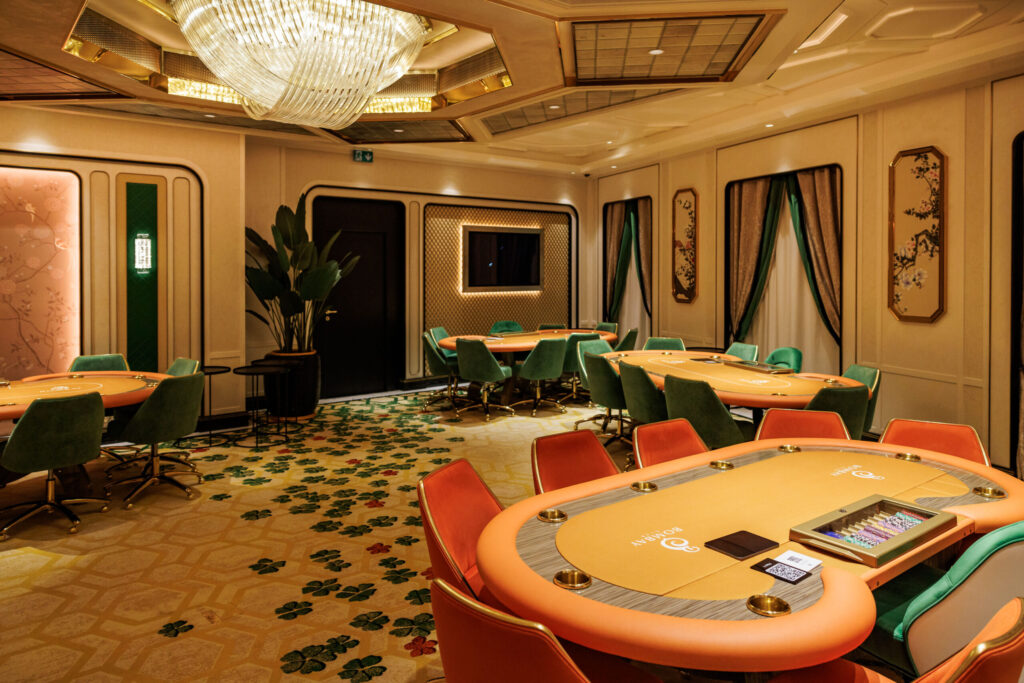
The project was launched in August 2024 after nearly five years of development costing the company an investment worth €75m, including two restored buildings from Old Town at Rataskaevu 5-7, 11 gaming tables, high-roller salons, and Michelin-rated food, all in 5,000 square metres close to Town Hall Square in Tallinn. The project was designed to attract international high-net-worth tourists of high net worth, looking for something exclusive and private along with gaming, making Tallinn a destination city like London, Las Vegas, and Macau. The Estonian domestic market was never the target. “Providing gambling services targeting only the Estonian market has never been in the strategy of the company,” said Maarja Pärt, a Yolo Group supervisory board member.
According to Äripäev, the core operational challenge was a high-overhead luxury venue dependent on guests spending at levels that did not materialise. The group also cited Tallinn’s tax environment as a factor making several high-end restaurant operations difficult to sustain on a daily basis.
What Bombay Group’s 2024 Consolidated Accounts Show?
For the year 2024, Bombay Group OÜ reports total consolidated sales income of €7.96m and total net losses of €19.31m, with total liabilities of €146.26m. These are the consolidated financial statements of the entire group in 2024, during which the casino opened and the hotel was being built out. They do not represent the performance of the casino itself after it was well-established in trade.
In the financial statement audit, there are two separate reservations. One is that management failed to produce an impairment test concerning €45.5m of tangible and intangible assets, and thus the auditor could not conclude whether or how much should be reduced from the value of these assets. The other one is the lack of sufficient evidence on the recoverability of €26.1m of receivables with outstanding periods of time. These reservations do not indicate the inaccuracy of the accounting records; rather, they indicate the incomplete opinion of the auditor on these particular issues.
The Restructuring That Preceded the Closure
The September 2026 closure was the conclusion of a process that had been running for close to a year. In September 2025, Yolo Group announced it was laying off 280 employees across its Estonian operations, citing a decision to concentrate on fully regulated and licensed markets. Pärt stated at the time: “We are consolidating our activities under the single Yolo brand and will focus solely on regulated markets going forward.” In November 2025, Bombay Group followed with a further round of more than 100 job cuts. By March 2026, Bombay Group had dismissed more than half of its remaining 164-person workforce, with management board member Dajana Tiitsaar confirming that daily table games had been deemed economically unjustified, and gaming floors moved to an appointment-only model. Eurofound’s restructuring records note 270 announced layoffs at Bombay Group across the 2025 to 2026 restructuring period, separate from the broader Yolo Group reductions.
Where Yolo Group Is Heading?
The Yolo Group now has its sights set on offering business services and tech solutions to international gambling firms, with their long-term plans also involving regulation of B2C ventures under the name of Yolo.com. In October 2025, the subsidiaries of Hub88 Holdings and Live Online Gaming Services were issued gaming vendor licences by the General Commercial Gaming Regulatory Authority of the UAE. With this, Live88 became the first-ever online live casino studio to receive a licence in the UAE, the first regulated jurisdiction of the Gulf Cooperation Council for gaming. As stated by founder Tim Heath, the licences marked a direction: “These licences are not just regulatory but a statement of intent. Yolo Group will build the future of gaming on the basis of trust, transparency, and innovation.”
The two-Michelin-Key Burman hotel adjacent to the former casino will continue operating, and the five-storey club building will be repurposed for private and special events.
What the Closure Means for Tallinn’s Poker Community
Before Bombay Club, the same ownership group ran Chesterfield Poker Club near Tallinn’s Old Town, hosting the Coolbet Open and the Chesterfield 500, a €50,000 guaranteed tournament, alongside a Bad Beat Jackpot that climbed above €100,000 before the venue closed permanently on 21 November 2025. All operations transferred to Bombay Club at that point, which then scaled back regular gaming within months. Within a single year, Tallinn’s live poker community has lost both venues. Other operators continue serving the regional market; the Kings of Tallinn 2026 Autumn Edition runs 9 to 18 October at Olympic Park Casino, and OlyBet Poker maintains a consistent presence across Baltic and Scandinavian markets.
Expert Analysis: What the Closure Actually Tells Us
The interpretation of the story of the Bombay Club leads us to a conclusion that goes beyond the straightforward interpretation of “the luxury casino did not work.” The 2024 audited consolidated financial statements relate to the year when the casino had just been opened and when the hotel was being constructed, yet, the audit opinion expressed reservations about €45.5m of the company’s assets which were not subject to an impairment test and €26.1m of the receivables which had no proper evidence of recovery. This is a rather impressive number of the company’s unresolved financial questions in light of the fact that the company has only started operations and, moreover, the company incurred losses twice bigger than the total revenues earned for the same period of time.
These financial indicators may well be a result of the initial problems related to the launch of a capital-intensive hospitality business, but whether this is the only reason for the complexity of the company’s financial situation remains unclear. At least, there have been other reasons identified by Äripäev – the structural cost of the operation, and the auditor – the financial structure of the company.
Yolo Group’s shift toward regulated markets and B2B technology services is consistent with where much of the industry is moving. The UAE licences give the group a credible early position in an emerging regulated market. The sharper question, one the Bombay Club closure raises directly, is whether a group built on crypto gambling’s less-regulated era can credibly reposition as a regulated B2B supplier, when its most visible land-based venture ended with a qualified audit and a €19.31m consolidated loss on €7.96m in sales revenue. The UAE market will give a clearer answer to that question than Estonia did.
Explore more:
 Share
Share


 8 views