




Key Points
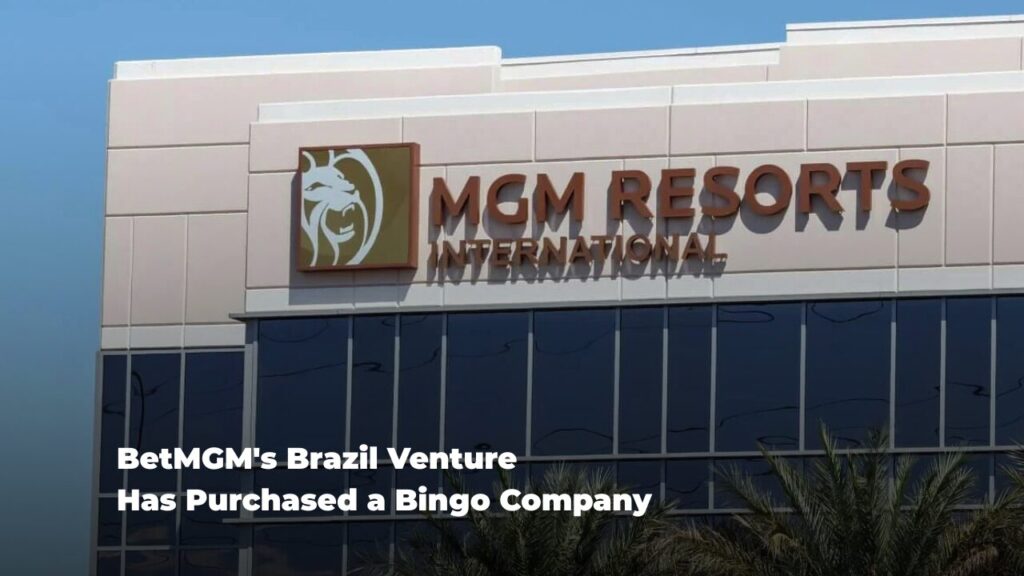
- Boa Lion, the Grupo Globo and MGM Resorts joint venture behind BetMGM in Brazil, has agreed to purchase 100% of Bingão do Brasil, pending competition approval from CADE.
- Luciano Huck, one of TV Globo’s most recognised presenters, is among the indirect investors on the selling side through holding company L.Eva Participações.
- BetMGM holds less than 10% of Brazil’s online betting market, which brought in R$37 billion in GGR across 2025.
Brazil’s betting industry produced a quiet but notable development this week. A notice published in Brazil’s Official Gazette on 9 June confirmed that Boa Lion, the company operating BetMGM in Brazil, had reached an agreement to buy a business called Bingão do Brasil outright. The acquisition covers the full 100% of the company. No figure for the purchase price has been disclosed.
Boa Lion was built by two large companies joining forces. MGM Resorts International, the American hotel and casino group with some of Las Vegas’s most recognised buildings to its name, is one half. Grupo Globo, the largest media company across all of Latin America and a daily presence for around 70 million Brazilians through television, digital, radio, and print, is the other. The two launched BetMGM in Brazil in February 2025, having received a licence from Brazil’s Secretariat of Prizes and Betting the previous December. This acquisition comes less than eighteen months after that launch and marks the first time Boa Lion has bought another business.
Understanding What Bingão do Brasil Is
Bingão do Brasil is not a business with customers, trading history, or an established brand. It has never launched. Its work to this point has been the development of video bingo games, built without a live betting platform or any real player transactions behind them. Purchasing Bingão do Brasil at this stage before it has reached the market gives Boa Lion complete control over the development of those games, from how they are designed to how they are presented to players.
Bingo is not a foreign concept to Brazilians. It has a history in the country, and many people have a personal connection to the game through how they grew up. That existing connection between the game and Brazilian players is what gives this acquisition its logic, making it a position taken with care rather than speed. Approval from CADE, Brazil’s competition authority, is still required before the deal can be completed CADE’s role is to check that no acquisition gives any single company too dominant a position within a market.
The Seller Includes a Name Most Brazilians Recognise
Here is where the story takes on another dimension. Four separate investor groups currently hold Bingão do Brasil, and one of those groups includes a name with wide public recognition in Brazil. Corporate records reviewed and confirmed by InvestNews identify Luciano Huck a presenter known to millions of Brazilians and a regular on TV Globo as a partner within L.Eva Participações, one of the selling parties. L.Eva is registered as a holding company in Brasília, formed in January 2025, and lists Huck alongside businessman Evanildo Paes de Barros Junior and EJR Participações as partners.
The three other selling parties bring different backgrounds to the table. Pipa Ventures is a technology firm that shares its registered office with Bingão do Brasil and appears to include the people responsible for building the product in the first place. FIP AJL II Multiestratégia is a private equity fund carrying over R$300 million in committed capital. Antonio Gouvêa Vieira Filho is the fourth investor.
The Gap BetMGM Is Working to Close
Going back to August 2024 helps explain what Boa Lion is doing today. That was when MGM and Globo announced their partnership, well before Brazil’s regulated betting market had opened. The logic of the partnership was direct: combine MGM’s knowledge of casino operations and LeoVegas technology with the reach of Globo’s audience across Brazil. MGM chief executive Bill Hornbuckle, when the partnership was made public, spoke of the Grupo Globo deal as “a landmark step forward” in the company’s international growth.
Brazil generated R$37 billion in gross gaming revenue across 2025, its first complete year of regulated operations, and it has already climbed to become the fifth-largest sports betting market in the world based on figures from Regulus Partners. That standing for a market that had not appeared on global lists before regulation reflects the speed at which the country moved. Despite this, BetMGM confirmed to CADE that its market share in Brazil currently sits below 10%, with a stated target of reaching that level.
The Legal Structure That Holds the Partnership Together
There is also a legal reason behind how Globo and MGM chose to build their partnership, and it is worth taking a moment to understand. Brazilian betting law requires foreign companies to have a local partner holding a meaningful stake in any business they operate. But a further rule exists, found in Article 18 of Law No. 14,790/2023, that goes a step further than that. It bars betting operators and their connected companies from buying, licensing, or funding broadcasting rights for sports events in Brazil the purpose being to stop a betting company from controlling which matches get broadcast while also taking bets on those same events.
Grupo Globo holds more sports broadcasting rights in Brazil than any other company in the country. That creates a clear tension. The joint venture structure where Globo and MGM stand as partners rather than one owning the other was put together with that regulatory risk directly in mind. It is a legal arrangement built with care, designed for a market where the rules are still being written and put to the test.
How BetMGM Has Kept This Deal Away from a Bigger Debate?
BetMGM was deliberate in its public statement about what this acquisition is, and just as deliberate about what it is not. The company said: “The acquisition of Bingão do Brasil is part of BetMGM’s long-term strategy to expand its digital entertainment ecosystem in Brazil, investing in categories with growth potential within a regulated market.”
It then added: “The operation exclusively involves the online gaming segment, and online bingo is a modality foreseen by Law No. 14,790/2023, regulated by the complementary norms of the Secretariat of Prizes and Bets. The acquisition has no relation whatsoever with the ongoing legislative discussions regarding physical bingo halls or physical casinos in Brazil.”
That second paragraph carries weight. Brazil is currently working through Bill of Law No. 2,234/2022, which could legalise physical casinos and land-based bingo halls across the country. BetMGM is drawing a clear and deliberate line between buying an online game developer and that separate political conversation. The company also made clear it would not be adding further detail about the transaction, in keeping with MGM Resorts’ global policy on such matters.
What to Follow from Here?
For anyone keeping an eye on Brazil’s betting industry, this deal deserves continued attention. Brazil’s regulated market only formally began on 1 January 2025, which means every part of the industry is still in its very early days. The decision to watch for is CADE’s ruling on whether the acquisition can go ahead. That outcome will determine when and how Bingão do Brasil’s games officially become part of BetMGM.
Reading the Deal: What It Actually Signals
The Bingão do Brasil acquisition is small in financial terms but carries real strategic meaning. Video bingo has deep roots in Brazilian culture, and the online format is still finding its place inside the newly regulated market. By buying the developer before it has launched, Boa Lion gains control over the product without the difficulty of acquiring an active competitor. The presence of Luciano Huck on the selling side is also a reminder that Brazil’s entertainment world moved fast to place itself inside the betting economy, building an early investor class that large international operators are now stepping in to absorb. BetMGM’s careful public statement drawing a firm line between online bingo and the physical casino debate shows a company that reads its regulatory environment well and is managing what it says in a market where both the political and legal conditions are still taking shape.
Explore more:
 Share
Share


 308 views