

Key Points
- The application process for land-based casinos was opened by Spillemyndigheden on 3 November 2026, the first formal step to enter the casino market in Denmark this year.
- GGR from land-based casinos decreased by 5.6%, reaching DKK378 million ($58.26 million) in 2025, which was only 3% of Denmark’s total gambling market.
- GGR from online casinos was DKK4.31 billion in 2025, which was 12.1% higher YOY and twice as high as in 2012, accounting for 38% of total.
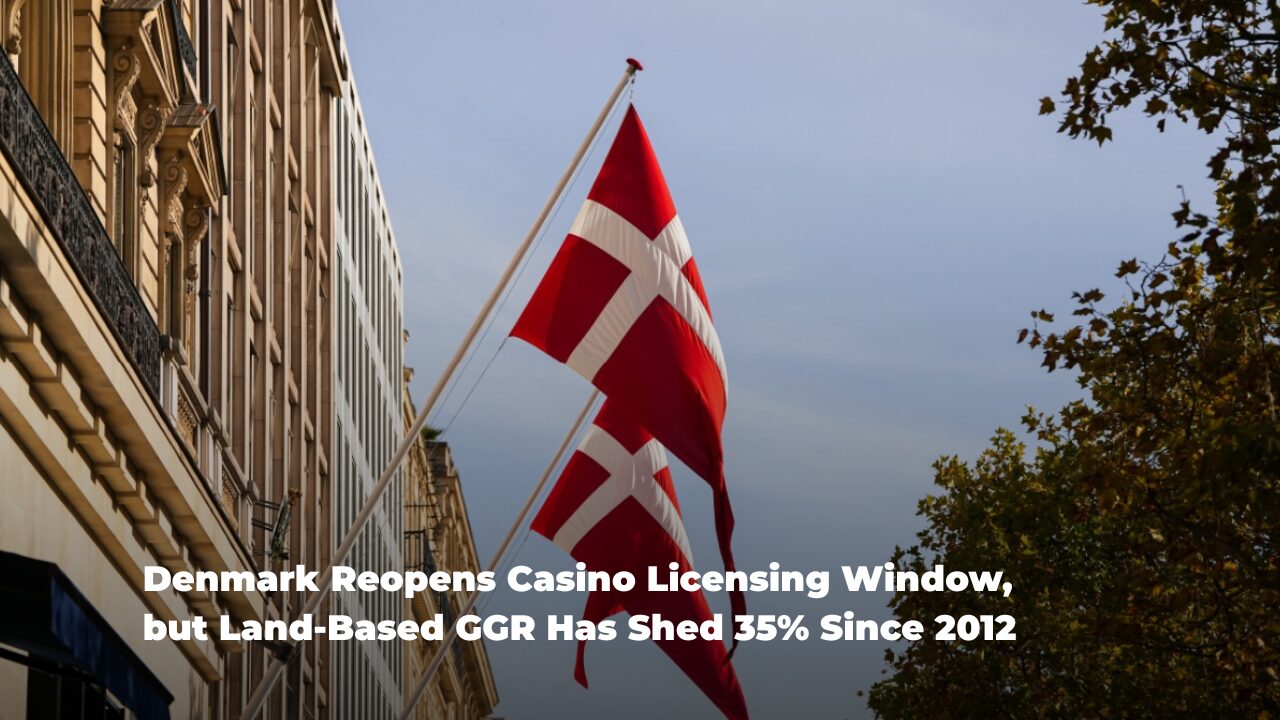
Denmark’s gambling licensing body Spillemyndigheden has announced the opening of a new application period for licenses to run land-based casinos starting from Monday 4 August 2026. This will be open to both new applicants and license holders with 10-year licenses, which will end by 3 November 2026. The opening marks the first official chance for new entrants in the industry for the year. It comes during a time when all available statistics for Denmark’s land-based casinos are falling.
The Application Process and What Spillemyndigheden Is Evaluating
There are seven existing land-based casinos that are operational in Denmark with the following locations: Copenhagen South, Copenhagen West, Helsingør, Odense, Vejle, Aarhus, and Aalborg. According to Consolidated Act No 1182 of 22 September 2025 on gambling, Spillemyndigheden may grant such permits for ten years at the maximum. Each submitted application will undergo an orderly consultation with the municipality, the local police chief, the Ministry of Taxation, and the Ministry of Business and Industry. Consultation with the Danish Maritime Authority takes place when the venue includes activities conducted on Danish vessels.
Spillemyndigheden has published its evaluation criteria alongside the announcement. The regulator places primary emphasis on whether an applicant can be assumed to operate the casino “in a fully professional and financially responsible manner.” Professional suitability, specifically whether the applicant has direct experience in gambling operations, carries significant weight. Financial soundness, meaning sufficient liquidity to cover the operational costs of running a physical casino, is assessed separately. Geographical factors, the proposed customer base, and detailed project descriptions for the venue are also considered, along with full ownership structure and senior management disclosures.
What the 2025 Market Data Shows?
Based on the Spillemyndigheden’s annual report for 2025 titled Spilmarkedet i tal 2025, the land-based casino gaming revenue declined by 5.6% to DKK378 million ($58.26 million). The GGR accounts for 3% of the entire gambling market in Denmark, which amounted to DKK11.5 billion ($1.75 billion) in 2025. The land-based casino GGR has fallen by around 35% in real terms following the partial liberalisation of the Danish gambling regime in 2012.
The wider market told a similar story of contraction across physical and traditional formats. Lotteries declined 6.2% to DKK3.49 billion. Sports betting dropped 11.5% to DKK2.13 billion. Slot machines fell 6.8% to DKK1.18 billion. Newly liberalised land-based bingo, which entered the market on 1 January 2025 following regulatory reform, posted a first-year GGR of DKK30 million, under 1% of the total market.
Online Casino Has Moved to a Different League
In 2025, GGR of online casinos was DKK4.31 billion, showing growth by 12.1% year on year and by 139% over their 2012 figures. Online casinos presently constitute 38% of all gambling activity in Denmark. In 2025, online gambling overall comprised 73% of the GGR for Denmark, up from 70% the previous year and only 33% in 2012. Mobile devices provided 69% of the GGR for online casinos. Slots were the leading form of online gambling, with GGR of DKK3.54 billion or 82%. Roulette and blackjack each accounted for about 6%.
The market structure has shifted so far that physical and digital are no longer in competition for the same players. Denmark’s channelisation rate, measuring what share of gambling spend stays within the licensed market, reached 91.5% in 2024, as SBC News reported covering the 2024 annual figures. Gamblers are not leaving the regulated market; they are choosing regulated online products over regulated physical venues.
The Licensing Round in Context
Spillemyndigheden has not indicated how many licences it expects this round to produce. The previous comparable window for new applicants ran into early 2021 and resulted in no change to the seven-venue total. The current round is partly procedural, as existing 10-year licences cycle out and the regulator is legally required to open renewal and application periods. Whether any net expansion follows depends entirely on the number of credible applications received.
In a separate development, Spillemyndigheden noted that there was a rise of 106.2% in website blocks from 2024 to 2025, which was in relation to unlicensed online gambling sites, as reported by Intergame Online. By the end of 2025, the regulatory body had issued 1,970 licences in all forms of gambling in Denmark.
Denmark’s Tightening Advertising Rules
Now any operator entering or re-entering the Danish market has to deal with a more difficult marketing situation. Earlier this year, the Danish Parliament enacted Gaming Package 1, imposing a whistle-to-whistle ban on advertising for gambling activities while broadcasting live sports events, ranging from 10 minutes prior to the start of the game until 10 minutes after the event. It also forbids gambling advertisements within 200 meters of educational institutions, under-25 individuals in gambling advertisements, and free-play welcome offers.
Denmark’s Tax Minister Ane Halsboe-Jørgensen said: “With Gaming Package 1: A More Responsible Gaming Market, the government, together with a broad majority in the Danish parliament, is taking an important step towards a more responsible gaming market. The work does not stop here.” A second package, Spilpakke 2, covering new digital platforms and formats, is already in preparation.
Responsible Gambling Data Shaping the Policy Climate
The number of persons enrolled in ROFUS, Denmark’s self-exclusion register, had risen to 68,026 by the end of 2025, with an increase of about 12,000 people within the year. The number of men constitutes 79%, and the average age is below 40 years old for 69% of the registrants. Problem gambling hotline StopSpillet recorded 727 calls in 2025, which was the highest number of calls in its annual records ever since it was launched in 2019. 45% of the callers were gamblers below 18 years of age.
The Danish government has separately cited figures showing nearly 500,000 Danish adults experienced some extent of gambling problems, a figure that has doubled since 2016. These statistics sit directly behind the legislative push represented by Gaming Package 1, and they signal that Spillemyndigheden and the government are operating in a regulatory climate where scrutiny of gambling’s social impact is increasing, not easing.
Expert Analysis
The commercial case for new land-based casino investment in Denmark is genuinely difficult to make at this moment. Online casinos generate more than 11 times the GGR of all seven existing physical venues combined. Land-based revenue has declined every year bar brief pandemic-related anomalies since 2012. The regulator’s own language in the application notice, flagging that operating a land-based casino “involves significant expenses,” is not the phrasing of an authority trying to drive speculative interest. More likely, this round will produce renewals rather than expansion. Any operator that does apply will need a specific location rationale, a proven customer profile, and the financial depth to sustain a venue in a market where 73% of all gambling spend now flows through a screen.
Explore more:
 Share
Share


 53 views






 Analysis
  Business
  Companies
  Crime
Crime  Finance
  M&A
M&A  Prediction Markets
  Regulation
  Reports