






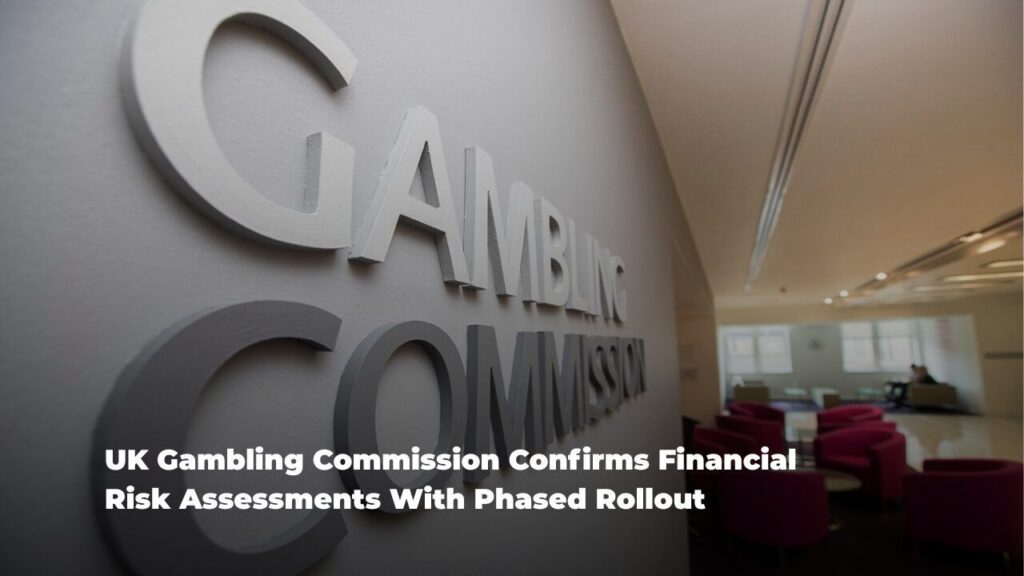
The UK Gambling Commission (UKGC) has confirmed it will introduce financial risk assessments, starting with a phased rollout.
Under the first stage, assessments will only apply to customers aged over 25 who record net deposits exceeding £5,000 within a rolling 24 hour period. The Commission expects fewer than 0.5% of gambling accounts to be affected at this stage.
This higher threshold reflects the regulator’s intention to introduce the system gradually while gathering further evidence on how it works in practice. Sarah Gardner, the UKGC’s acting chief executive, also confirmed an unusual regulatory approach during the early phase.
“We have decided that we will not take any enforcement action where an operator has failed to act following a financial risk assessment.”
Operators and Regulators Will Refine the Process Before Full Rollout
The Commission plans to work with gambling operators, credit reference agencies and other stakeholders to improve the assessment process before introducing stronger compliance expectations.
“We are confident that our approach, using high-quality data, will enable support for high-spending customers in financial difficulties, while reducing friction for customers who are not in financial difficulties by removing the need for unnecessary and unpopular document checks to understand financial risk,” Gardner added.
There have been several delays since first being proposed in the 2023 Gambling Act White Paper. Although the Commission expected to complete its pilot assessment by the end of May, the final decisions were left till after discussions at a board meeting.
The regulator still intends to introduce lower thresholds in the future, with assessments eventually applying when customers record net deposits of £1,000 within 24 hours or £3,000 across a rolling 90 day period.
However, no timetable has been confirmed. Policy director Helen Rhodes said implementation groups will be established over the summer to determine future stages.
“We have deliberately not set out a timetable for later stages,” Rhodes said.
Customer Experience Remains the Biggest Area of Industry Debate
Questions remain about what happens after an assessment identifies someone experiencing financial difficulties. Rhodes said the Commission wants to spend more time developing guidance before requiring operators to take action.
“We’re keen to move the conversation swiftly on to what happens after a financial risk assessment has identified that there are financial difficulties,” she said.
“Our staged approach to implementation will allow us to build guidance for operators and engage with consumers and stakeholders about what is appropriate action when financial difficulties are identified. It’s really important for consumers that we get that right.”
Gambling Minister Baroness Twycross also backed the cautious approach.
“The right balance must be struck so that assessments protect those in financial difficulties from the risk of gambling-related harm but do not create unnecessary burdens for the industry or consumers.”
Industry Questions Whether Checks Will Truly Remain Frictionless
Financial risk assessments have always been presented as a frictionless process. The 2023 White Paper estimated around 3% of gambling accounts would be assessed, while Commission data from the pilot suggested 97% of checks could be completed without customers providing additional documents.
The Betting and Gaming Council argues that friction begins after an assessment flags a customer.
“If a customer is flagged on the basis of inconsistent or incomplete data, the operator must then decide what action to take. In practice, that is where friction appears: further questions, requests for evidence, restrictions or interventions that affect the customer experience in a very real way.”
Pilot Findings Face Close Scrutiny as Programme Moves Forward
The regulator maintains that abandoning financial risk assessments was never considered. According to the Commission, “the board took the view that doing nothing wasn’t an option.” Critics argue that additional customer checks could push some bettors towards unlicensed operators.
Former UKGC executive Tim Miller previously rejected that argument, saying improved data should reduce requests for financial documents.
“For a long time, the only way an operator would get a real understanding of customer would be those financial documents. But we don’t have to rely on that anymore. If financial risk assessments go ahead, rather than being something likely to introduce more document checks, I think it will do the exact opposite if implemented properly.”
With financial risk assessments now confirmed, attention will shift from whether they should exist to whether the Commission can deliver the frictionless experience it has promised.
The UKGC is mandating financial risk assessments to customers above 25 years old with net deposits above £5,000. It will be partnering with operators, and other stakeholders to ensure compliance. Plans are underway to ensure the process is seamless when finally introduced.
 Share
Share


 132 views