





Key Points
- Betfred made an announcement on 31 July 2026 saying it would shut down 132 UK stores and consult on the downsizing of more than 600 jobs due to the increase in Remote Gaming Duty from 21% to 40%, which happened in April 2026.
- The Warrington-based company is believed to have secretly taken ownership of an AGC business, which is small and has a maximum of seven sites in order to get the relevant license, becoming the only retail betting operator in both verticals.
- The adult gaming centre business is facing a think tank’s suggestion for doubling the Machine Game Duty to 40% in addition to the criticism from the new Prime Minister Andy Burnham who called the AGC industry “socially harmful” along with vape shops.

Betfred’s Closure of 132 Shops Is Biggest Wave of Closures Seen So Far in Industry
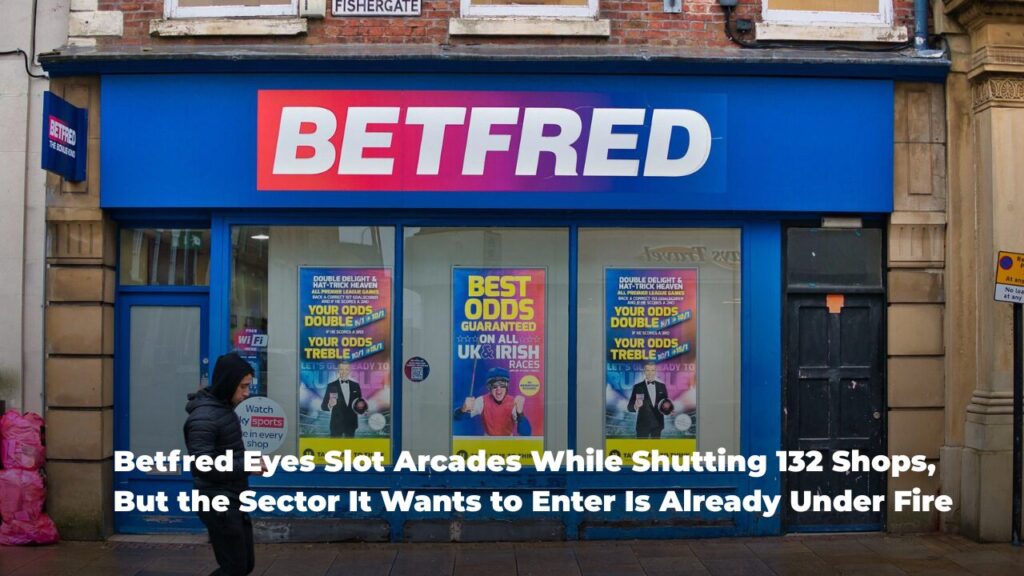
The Betfred company stated on 31st July 2026 that they have launched a consultation regarding the closure of 132 shops which accounts for 10% of their UK presence and puts more than 600 jobs at risk from September. The Warrington-based bookmaker company which was established in 1967 by brothers Fred and Peter Done will end up with around 1,100 shops after completion of the process.
In a statement released along with this announcement the CEO of the company Joanne Whittaker stated: “These are good-performing shops with committed employees and it is extremely difficult to close any of these shops but the current financial and regulatory conditions make it impossible for us to operate all our shops. We need to focus on helping the affected employees and serving the rest of our clients.”
The immediate catalyst is Remote Gaming Duty, which rose from 21% to 40% on 1 April 2026, following the Autumn 2025 Budget under then-Chancellor Rachel Reeves. A further 25% duty on remote sports betting is due from April 2027, exempting only horse racing. Gambling Commission licence fees are also set to rise 25% from October 2026. Whittaker cited the combined weight of higher employer National Insurance contributions, wage inflation, and gambling tax increases as collectively leaving the business “with no choice.”
Fred Done, speaking to the BBC in October 2025, described the tax hike then under discussion as the biggest threat to the industry in his 57 years in business, warning it could put the entire shop estate and approximately 7,500 jobs at risk. Betfred’s closures now represent the sector’s largest single cull since duties were raised, surpassing Flutter’s October 2025 announcement that Paddy Power would close 57 UK and Irish shops, placing 247 staff at risk.
The AGC Gamble: Betfred Buys Into Slot Arcades Through a Small Acquisition
With its retail betting operation contracting sharply, Betfred is understood to be pursuing a pivot into the Adult Gaming Centre (AGC) space, otherwise known as slot arcades. Multiple sources told NEXT.io that the company is exploring operations in the AGC vertical, which would make it the only retail betting shop operator to straddle both sectors.
The plan, as reported by NEXT.io, could ultimately include converting existing betting shops into AGCs, though no concrete decisions have been made on specific locations. Betfred is understood to have purchased a small AGC operation with up to seven land-based sites to acquire the necessary licences, although this could not be independently verified. One retail betting source told NEXT.io: “Good on them. If it keeps shops open and it keeps jobs, good on them.”
AGCs operate under a separate licensing and tax structure from sportsbook betting shops, giving Betfred a mechanism to retain a high street presence without the same duty exposure. Existing leases, trained staff, and retail compliance experience carry across directly. Ladbrokes Coral, prior to its acquisition by Entain (then GVC), briefly trialled AGC operations across three sites in Birmingham. Sources told NEXT.io that the project “didn’t pan out” and was quietly abandoned.
The Sector Betfred Wants to Join Is Already Caught in a Policy Storm
The Social Market Foundation, a London-based think tank that successfully lobbied the previous government to raise Remote Gaming Duty, published a report in July 2026 calling for Machine Games Duty on Category B machines to double from 20% to 40%, matching the rate now applied to online gaming. The SMF’s modelling projects could generate between £275 million and £458 million in annual tax revenue. AGCs, which generate 100% of their income from Category B electronic gaming machines and account for approximately 42% of all such machines in Great Britain, would face the full force of any such increase.
Industry analyst Dan Waugh of Regulus Partners, cited by NEXT.io in June 2026, warned the proposals were not survivable for the majority of businesses, pointing to energy costs, labour inflation, and the cumulative weight of existing fiscal pressures. Estimates circulating in the sector suggest up to 90% of AGCs could close if the duty increase proceeds.
Meanwhile, new Prime Minister Andy Burnham has been explicit about his position. Announcing his “Burnham means business” economic plan on 23 July 2026, the PM singled out AGCs alongside vape shops when speaking to the media, stating: “Adult Gaming Centres on high streets can often bring real harm to communities.” His plan proposes slashing business rates for pubs, clubs, and live music venues from April 2027, funded in part by withdrawing reliefs from businesses deemed to have a negative social impact. AGCs have not been formally listed in the plan, but Burnham’s comments leave little ambiguity about their standing in his government’s hierarchy of high-street businesses.
Burnham’s scepticism pre-dates his time in Downing Street. As Mayor of Manchester, he actively supported local council campaigns to restrict new AGC openings and argued for greater planning powers over such venues. Trade association Bacta has vowed to oppose any attempt to use AGCs as a funding mechanism for the pub rate relief plan, calling Burnham’s characterisation of the sector “a sweeping and unsupported characterisation.”
The SMF’s own report on AGCs noted that almost half of licensed AGCs are located within the most deprived 20% of neighbourhoods in Great Britain, and that the number of centres grew 7% between 2022 and 2024, with a third of new openings concentrated in the 10% most deprived areas. Those figures formed a central part of the SMF’s case for raising Machine Game Duty.
What Happens Next for Betfred and the UK Retail Gambling Sector?
Betfred’s consultation period runs through September 2026, at which point the 132 affected shops will begin to close. The broader retail betting estate continues to shrink; the sector has lost hundreds of shops since its peak of more than 1,600 Betfred locations in 2017.
Whether the AGC expansion materialises, and in what form, depends heavily on the government’s next fiscal move. If Burnham’s administration doubles Machine Game Duty in the autumn budget, Betfred would be entering a sector absorbing a tax shock it spent years escaping in its core betting business. If AGCs escape the hike, or are subject only to business rate increases, the economics of conversion become more viable.
The SMF’s recommendations on Remote Gaming Duty were adopted almost in full by the previous government. The same think tank is now applying the same duty-doubling argument to land-based machines, and Burnham has given no indication he intends to protect the sector.
Expert Analysis
The Betfred AGC move is less a confident strategic expansion and more a contingency hedge. Closing 132 shops while simultaneously acquiring seven AGC licences signals that management sees no viable path to sustaining its full retail betting estate under current and anticipated tax conditions, but is not yet prepared to abandon the high street entirely. Whether the AGC model will still be commercially viable by the time any conversions are complete is the more pressing concern. Regulus Partners estimates up to 90% of AGCs could close under a 40% Machine Game Duty rate. Betfred would be walking into that environment with fresh licences and no operating history in the sector.
Explore more:
 Share
Share


 252 views