






Key Points
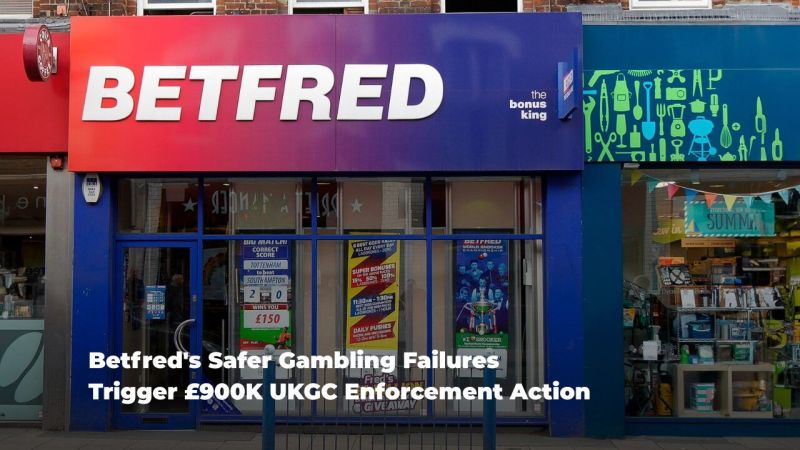
- The UK Gambling Commission has ordered Petfre (Gibraltar) Limited, the company behind Betfred.com, to pay £900,000 in lieu of a financial penalty over social responsibility failures.
- A seven-day gap built into Betfred’s safer gambling review process meant one customer lost £17,900 in 24 hours after being flagged, with no further action taken.
- This marks at least the third UK regulatory penalty for the Betfred operator since 2022, a pattern the Commission says it expects the wider industry to take note of.
There was an oversight in the Betfred compliance team’s fishing net, and the angler got caught. Petfre (Gibraltar) Limited, which operates the betting website betfred.com, has been instructed by the UK Gambling Commission to pay £900,000 following an investigation by the commission into social responsibility failures in its policy and procedure.
A customer crosses a deposit trigger. Someone reviews the account. A decision gets made: no further action required. Then the money starts moving again, and within a single day this person has lost £17,900, with nobody stepping back in to check. That’s not hypothetical. According to the Commission’s own published statement, it happened, and it happened because the operator’s own systems wouldn’t let staff flag that account again for another seven days.
Where the System Broke Down?
Strip away the regulatory language and the failures sit in a few uncomfortable places. Petfre, the investigation found, never built sufficient automated processes capable of catching the early markers of harm, things like erratic spending patterns or hours logged at the tables. Worse, where those markers did surface as something the Commission calls “strong indicators,” there was no mechanism forcing immediate, automatic action. Everything still leaned on a human noticing in time.
Then there’s the seven-day rule itself, arguably the most damning detail in the whole case. Once an account got flagged and reviewed, the system simply wouldn’t raise it again for a week, regardless of what the customer did in the meantime. A person could keep losing, keep showing every sign of harm, and the operator’s own software would stay quiet about it until the clock ran out.
John Pierce, the Commission’s director of enforcement, didn’t mince words about what that gap cost. “Diligent implementation of effective policies and procedures is the cornerstone of safer gambling in Britain,” he said. “The Commission found that Petfre didn’t have sufficiently effective procedures in place, meaning some customers displaying markers of harm were not contacted quickly enough.”
A Penalty, But Also a Pattern
Credit where it’s due, Petfre didn’t dig its heels in once the Commission came knocking. The operator moved fast, building interim controls and rolling out an action plan with regular updates back to the regulator. Pierce acknowledged as much. “While the gaps we identified were unacceptable, the licensee acted swiftly to implement interim mitigating controls to address our immediate concerns,” he said. “They have since delivered an appropriate action plan and taken significant steps to assure the Commission that their current operating model meets our requirements.”
Cooperation only goes so far when you’re a repeat name on the Commission’s list, though. This isn’t Petfre’s first rodeo, not by a long way. Back in September 2022, the operator was fined £2.87 million for AML and social responsibility breaches, a case in which one customer lost £70,000 within ten hours, a single day after opening their account. Then, in a separate ruling last year, the Commission fined the operator £240,000 after finding slot games that didn’t display players’ net position correctly and, more troublingly, dressed up some losses to look like wins. A clearer shape starts to emerge from the pattern: an operator that keeps fixing problems after they’ve already caused harm rather than catching them before.
Pierce’s closing line in the statement reads less like routine regulatory boilerplate and more like a warning shot aimed past Betfred entirely. “The failure to implement an effective monitoring framework to identify and contact consumers at risk of harm at pace has resulted in a significant regulatory settlement,” he said. “We expect all operators to learn from this case and read the public statement to ensure they do not make the same mistakes.”
Why Does This Land Now?
Timing is also important in this case. While the Commission has generally been less vocal regarding enforcement since 2026 compared to the period between 2022 and 2025, when it hit a high point in terms of its activities, this particular Betfred settlement came just days after another small fine. The company known as Stakelogic, based in Malta and a developer of slot machines, had to pay £122,835 because some of its games were spinning too fast. Two cases in quick succession, after months of relative calm, suggest enforcement hasn’t slowed so much as paused for breath.
What’s striking is how familiar the £900,000 figure feels against Betfred’s own history, and how small it looks against the industry’s biggest settlements. Entain paid £17 million in 2022. William Hill’s owner, Evoke, handed over £19.2 million in 2023. Betfred’s running total across multiple cases doesn’t come close to either, but the frequency is what stands out. Few operators have returned to the Commission’s enforcement list quite this often in such a short window.
A spokesperson for the company has previously told trade press that Betfred “fully co-operated with the investigation and swiftly put in an action plan to remedy the identified failings,” adding that the business remains “committed to ensuring a safe gambling experience for all our customers.” Whether that commitment holds up under the next compliance review remains to be tested, and given the pattern so far, another review may not be far off.

Expert Analysis
The seven-day gap is the detail worth sitting with the longest. It wasn’t an accident or an oversight buried in a spreadsheet somewhere, it was a built process, deliberately coded into how Betfred’s systems handled flagged accounts. That distinction matters to regulators and should matter to the public too. A missed warning sign is a failure of attention. A system that actively prevents staff from re-checking a customer for a week is a failure of design, and design failures tend to repeat themselves until someone is forced to rebuild from the ground up. The Commission clearly believes Petfre has started that rebuild. Whether it sticks will likely only become clear the next time a customer’s spending pattern starts to look like trouble.
 Share
Share


 194 views