Key Points
- 2nd October 2026, three senior judges decided by unanimous vote that English law will be the one to decide Aviator’s argument that a previous court ruling should stand.
- The ruling effectively overturns a May High Court win for Spribe, but it still doesn’t say who actually owns the famous aeroplane logo.
- The judgement in the case also reveals that Spribe actually agreed that foreign copyright laws would pretty much be the same as UK law, which could have a big impact on the upcoming court case.
Aviator Win Appeal Court Ruling in Spribe Copyright Case
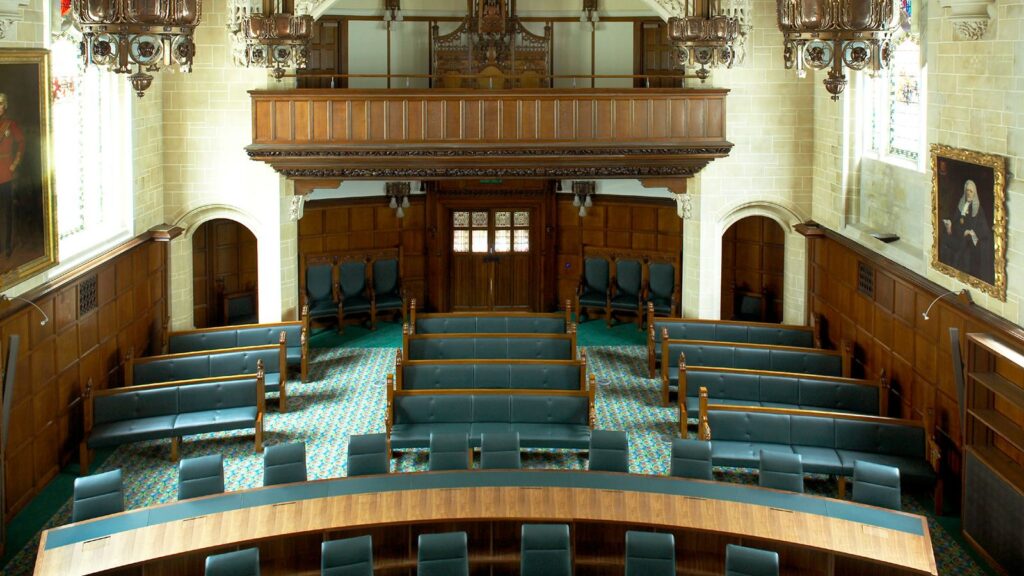
Do rulings made in Tbilisi actually have a say in what happens in a London court case? The UK Court of Appeal has made its ruling and has made Aviator the winner, for now.
In the judgment, Lord Justice Arnold made it clear that English law is the one that gets to decide whether a court in Georgia has already made a ruling that’s binding on Spribe, and he got backing from his two colleagues, Lord Justice Miles and Lady Justice King.
-
What the Appeal Court Decided?
Issue estoppel is a bit of a tricky concept, but basically it means you can’t keep on arguing a point that a court has already decided is wrong. Aviator wanted this rule to apply to a ruling they got from a court in Georgia, a ruling that was actually against Spribe, which had appealed against it and lost.
-
Why Does the Choice of Law Matters So Much?
The stakes are high here because Aviator is claiming copyright in a bunch of countries, and in the UK and Gibraltar too. Under Spribe’s approach, the ruling in Georgia would have been tested against the laws of all those other countries one by one. Some legal systems might treat earlier rulings very differently from the English law they were hoping for.
-
What the High Court Decided in May?
Back in May, the High Court decided in favour of Spribe. Deputy High Court Judge Michael Tappin, now Mr Justice Tappin, ruled that the EU’s old rules about foreign law were still to be applied. It means that the question is still very much open, who does actually own the aeroplane logo.
Why the Appeal Judges Ruled Against Spribe’s Theory?
Spribe’s core reasoning was straightforward. Estoppel impacts the determination of liability, so it should belong to the law of the claim. However, according to Lord Justice Arnold, Spribe “confuses the nature of the rule with its effect.”
In other words, the court ruled that the effect of a prior judgment does not fall within Rome II at all. If it did, he stated, it would be considered procedural, and as such, would be covered by the exception of Article 1(3).
In addition, the court mentioned some of the weird consequences that Spribe’s theory could lead to. For example, the same issue would be subject to different laws in contract and tort, and even an English judgment would get its effects determined by foreign law. An English rule gets rid of the mess. Also, the ruling notes that IP cases do not require a separate analysis.
The judgment has wider implications than just gambling. Extending its ruling from Nicholls v Mapfre, the court ruled that Rome II should be interpreted neither broadly nor narrowly. A number of prior first-instance judgments will no longer be valid because of the ruling.
What Aviator Did Not Win?
Nothing in the judgment proves that Spribe plagiarised Aviator’s artwork. Furthermore, the court did not establish whether or not the findings of the Georgian court actually amount to an estoppel. Spribe will have to argue the validity of each of the conditions under English law.
As far as the underlying facts, there are serious disagreements on their part. According to the judgment, in January 2019, a company affiliated with Aviator introduced a crash game in Georgia, using software developed by Spribe. In June 2019, design agency Bambuk Design Studio created the artwork used by Spribe independently.
At the moment, Spribe has an interim injunction, effective since July 2025, restraining Aviator from introducing a crash game in the UK until the hearing. At the same time, Aviator claims that the UK trademarks owned by Spribe were obtained illegally, in bad faith and in breach of copyright. In addition, Aviator argues that Spribe cannot use UK goodwill because Spribe trades without a Gambling Commission licence.
There is one important fact in the judgment that could impact the upcoming trial more than any headline. Spribe agreed that the court may presume that the relevant foreign copyright laws are the same as UK law.
The State of the Dispute, Where We Stand
-
The Trouble Starts in Georgia
It all began in Georgia where Aviator’s lawyers were claiming that a 2024 court ruling had awarded their client a massive $330 million. On top of that, the same court had invalidated Spribe’s local trademarks, deeming them to have been registered in bad faith.
-
A Mixed Bag in Brazil
However, things took a turn in Brazil, with courts having gone in opposite directions. First up, on 15 April 2026, a Pernambuco court ordered Betnacional to stop using the Aviator name, pending a full hearing. But just a day later, São Paulo appeal judges knocked back Spribe’s attempt to get an urgent stop on Aviator Studio Brazil, citing doubts over who actually owned the Aviator trademark. There’s also a separate case, brought by prosecutors in Brasília, where a judge gave Spribe 10 days to block any illegal sites offering the Aviator game.
-
Spribe Has a Few Wins Elsewhere
Spribe, however, seems to have done a bit better in smaller markets. In Malta, a court provisionally found that Aviator Studio’s branding was too close to Spribe’s EU marks to avoid confusing players. And in Curaçao, the Court of First Instance invalidated IR 1822051 and IR 1827771 after Aviator LLC failed to turn up to court. The ruling also mentioned that Spribe has filed over 120 oppositions worldwide.
-
What’s Coming Up Next
NEXT.io reported that a case management conference is scheduled for 15 October and that will help clarify the road to trial. Earlier reports suggested that a full ownership trial might happen in late 2026 or early 2027, but that could still change. When NEXT.io approached Spribe for comment, they politely declined.
Expert Take: Aviator Got the Rulebook, But Both Sides Have Questions to Answer
We think calling this ruling Aviator’s victory is a bit premature. But we also think Spribe’s supporters might be underestimating how much has changed in favour of Aviator.
For us, the really key bit in the judgement isn’t about how the Rome II rule will play out. It’s actually the bit where Spribe agreed to assume that foreign copyright laws will be treated the same as UK law. Then there’s the English estoppel test to navigate, which could effectively decide the case in London.
The timeline in the judgment also raises questions for Spribe that it’ll have to answer at trial. For starters, its artwork arrived five months after Aviator’s game, which claimed to be using software that Spribe built. Spribe will have to explain that one. And, of course, there’s also the question of whether Aviator independently came up with its game, or copied Spribe’s work.
Aviator isn’t off the hook either. It skipped the Curaçao hearing and let Spribe win by default. And the Curaçao ruling also linked Aviator to Spribe’s former Georgia and Armenia licensing partner. We think that raises a fair question: did Aviator’s rights actually come from a licensed relationship with Spribe?
In our view, the Georgian findings now carry real weight in London and both companies know it. The appeal didn’t answer who drew the aeroplane first, but it did decide on which rules to use to figure that out, and that might turn out to be just as important.
Explore more:
 Share
Share


 4 views