





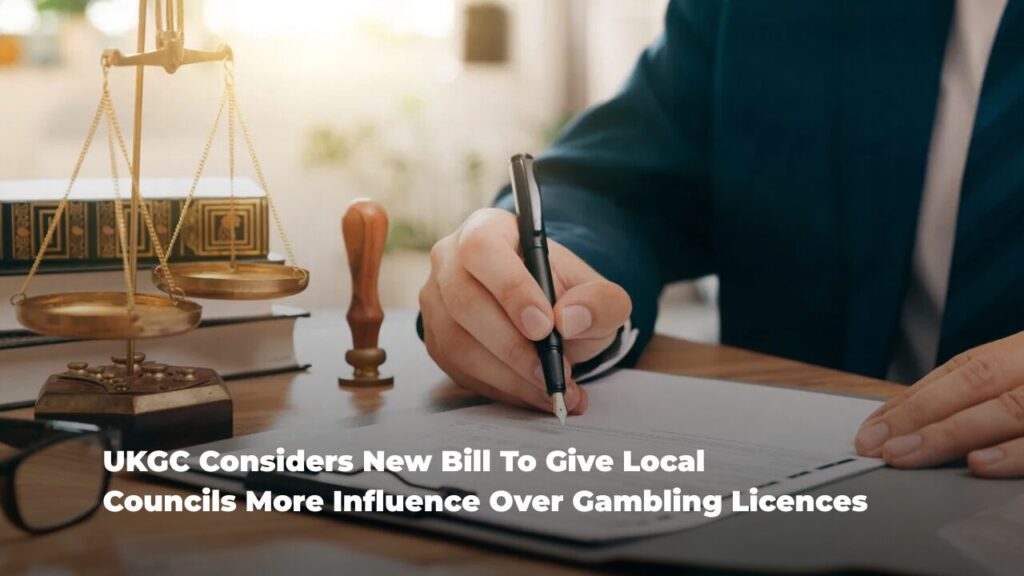
The UK Gambling Commission is working on legislative reforms that give English councils power to influence gambling licensing decisions. Speaking at the Institute of Licensing Gambling Conference, Director of Policy Ian Angus said the English Devolution and Community Empowerment Bill is moving steadily through Parliament.
“Government has, of course, committed to exploring how to give local authorities the power to carry out gambling impact assessments when looking at licensing decisions in your communities,” Angus said. “Both of these have been moving forward in Parliament recently, and we expect them to make it into law.”
Gambling Impact Assessments could reshape local approvals
A major part of the reforms is the introduction of Gambling Impact Assessments (GIAs). These assessments would allow councils to examine gambling harm levels in specific areas before making licensing decisions. Under the proposed framework, they could use local evidence to reject applications where risks are considered too high.
However, businesses would retain the right to challenge decisions. “There will be scope for applicants to assert that their application is reasonably consistent with the licensing objectives and should be granted,” Angus noted.
Before GIAs can influence decisions, councils must first include them within their official Statement of Principles.
Gambling Commission preparing guidance for councils
The Gambling Commission aims to work with the Department for Culture, Media and Sport to support councils once the legislation is finalised. Angus explained that the regulator will issue guidance to ensure assessments are applied consistently across different regions.
“When the Bill has completed its passage through Parliament and become law, the Commission will work with DCMS to produce guidance using robust evidence to inform meaningful consultation,” he said.
The regulator also linked the reforms to broader enforcement efforts after the Gambling Act Review targeting illegal gambling and online operators. According to Angus, the Commission’s enforcement capacity has increased following an additional £26m in Treasury funding.
“This funding will certainly allow us to upscale our activity. This will give us a capability now to do a lot more in the land-based space than we’ve been able to do before,” he stated.
Tax changes and market pressure continue to affect operators
The proposed reforms arrive during a difficult period for UK gambling operators in the UK, already dealing with major tax increases announced in the government’s latest Budget. From April 2026, Remote Gaming Duty increased from 21% to 40%, with additional betting duty reforms expected in 2027.
Angus noted that these changes are already influencing operational decisions across the sector. “Given recent announcements by various leading gambling operators, we are now expecting to see a number of gambling premises close,” he said.
Despite tighter regulation and economic pressure, gambling participation in Great Britain remains stable. According to the Commission’s Gambling Survey for Great Britain, 48% of adults reported gambling within the previous four weeks. Angus noted that lottery participation heavily influences those figures. “When lottery draws are removed, 18% had gambled in person, compared with 16% online,” he said.
The survey also showed that 2.7% of respondents fall within the highest risk category for gambling harm. Angus described the figure as “statistically stable.” He stressed that councils will remain central to the future regulatory framework.
“Local authorities have a crucial role in the regulation of gambling across the country,” Angus said. “You are a vital source of intelligence and data for the Commission.” The regulator added that it will keep supporting councils through training, guidance and operational assistance.
The UKGC is proposing reforms that empower local councils to assess gambling impact before operators can receive licensing. Their aim is to prevent gambling activities in communities where it could result in harm. This move is the UK’s latest in a series of reforms including an increase in remote gaming duty.
Explore more:
 Share
Share


 295 views