





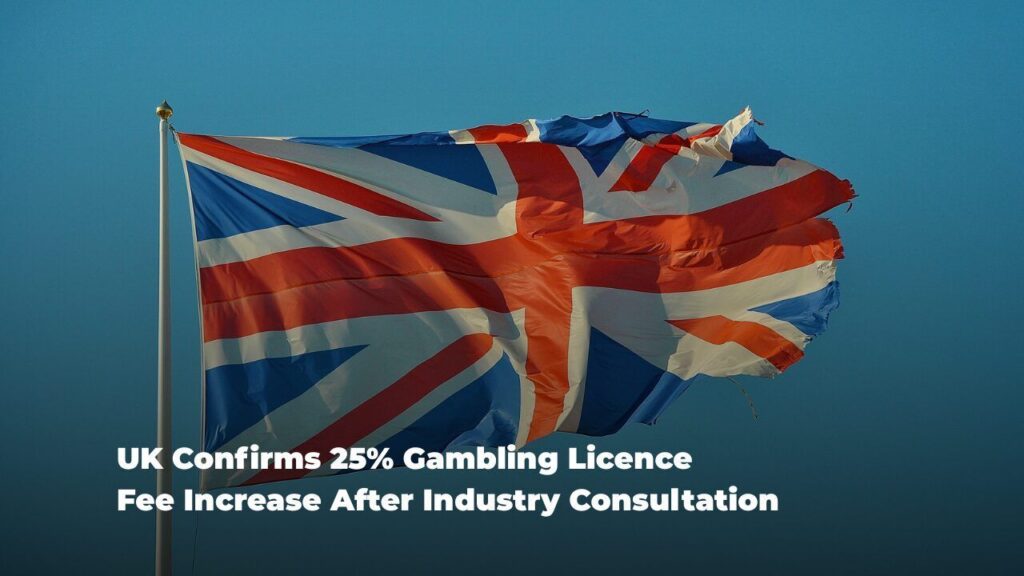
The UK Department for Culture, Media and Sport (DCMS) has confirmed a revised package of Gambling Commission licence and application fee increases, with the new charges taking effect from 1 October 2026.
The decision follows a public consultation between 27 January and 30 March, attracting 47 responses from operators, suppliers and industry representatives. Earlier this year, DCMS proposed three possible approaches, including a 20% increase, a 30% increase, and a 20% increase plus an extra 10% levy for tackling illegal gambling.
Following the consultation feedback, the department rejected all three proposals and settled on a standard 25% increase across most licence categories. The government previously said higher fees were needed to address funding pressures on the Gambling Commission and action against illegal operators.
The announcement comes only months after higher gambling taxes increased overheads for many licensed businesses.
Most Gambling Commission Fees Will Increase From October
The revised structure introduces a 25% increase for operating licence fees, application fees, first annual fees, personal licences, licence variations and corporate control changes. First annual fees will remain at 75% of the standard annual fee. Supplementary operating licence fees and single machine permit fees will also rise by 25%.
However, there will be several exceptions. Fees for society lotteries will stay unchanged, allowing more funds to support charitable and community causes. Ancillary society lottery licence fees will also stay at existing levels.
On course bookmakers will move to a different charging model for general betting operating licences. Instead of calculating fees based on operating days, charges will now be linked to gross gambling yield.
DCMS estimates that 44% of operators in this category will pay lower fees, while another 53% will experience only modest increases, typically around £22.
Government Rejects Dedicated Illegal Gambling Fee Proposal
The consultation also considered introducing an additional fee to fund enforcement against illegal gambling operators. DCMS decided against this approach.
Instead, the Gambling Commission will deliver its illegal gambling strategy using separate government funding. Earlier this year, HM Treasury committed £26 million over three years to improve enforcement against unlicensed operators.
The department said licence fees remain based on the principle of cost recovery, with charges to cover the Commission’s operating costs. According to DCMS, the regulator currently faces an annual funding gap of around £4 million.
Even after the fee increase, the Commission will still need to deliver approximately £8 million in efficiency savings over the next five years. For the largest remote and land based operators, annual licence fees are set to stay as six figure sums due to the size of their businesses.
Industry Raises Concerns Over Growing Regulatory Costs
Most consultation responses opposed any increase in licence fees. Operators argued that recent duty increases and the introduction of the statutory levy had significantly boosted the cost of doing business.
Some respondents also questioned whether applying the same percentage increase across different licence categories accurately reflected regulatory costs or levels of gambling risk.
When DCMS first proposed increasing licence fees earlier this year, Bethan Lloyd, senior associate at Wiggin LLP, told iGB that although the additional costs would be difficult for operators, “[this] isn’t going to be the straw that breaks the camel’s back”.
The revised fee structure will now be implemented through secondary legislation before coming into force on 1 October 2026.
The UK DCMS has run a consultation to confirm its 25% increase of the gambling license fees from October. After reviewing responses from operators, suppliers, and other industry stakeholders, the body will be sticking to its initially proposed percentage. This license fee rise has affected operators due to higher overhead costs.
 Share
Share


 59 views