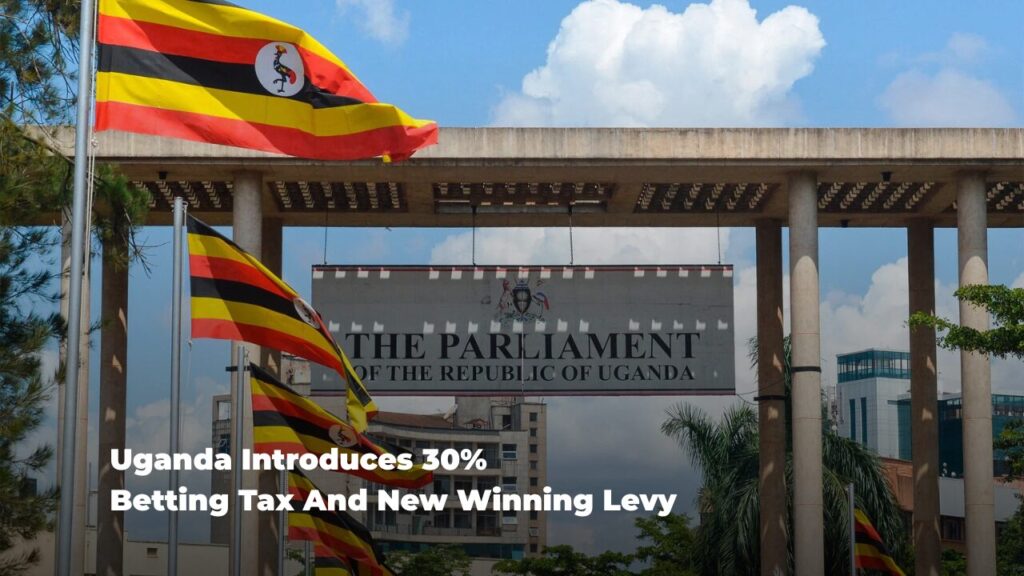
Uganda will implement a new gambling tax framework from 1 July 2026 after approving updates to its gaming legislation. The reforms, introduced through the Lotteries and Gaming (Amendment) Bill 2026, establish a flat 30% tax on gross gaming revenue across all segments.
This replaces the previous distinctions between betting and other gaming activities. At the same time, the Income Tax (Amendment) Bill 2026 introduces a 15% withholding tax on player winnings, calculated after deducting the original stake.
The combined approach expands taxation across both sides of the market. The government seeks to standardise rates and increase revenue capture from the rapidly-growing sector.
New tax structure removes previous distinctions in the market
The revised framework applies a uniform 30% tax to all gaming revenue after payouts. Under the previous system, sports betting was taxed at 20%, while casinos and other gaming activities were taxed at 30%.
The new structure eliminates the differences between betting and gaming, treating all verticals equally. Players are also directly impacted by a 15% withholding tax, which will be deducted from winnings before distribution.
These reforms increase the effective cost of participating in the market, while showing the government’s commitment to stricter regulation through taxes.
Government targets revenue growth from expanding gambling activity
Uganda is looking to increase revenue collection ahead of its 2026–2027 budget cycle, with gambling identified as a scalable tax base. The sector has expanded due to rising smartphone penetration and increased access to online platforms. This has transformed gambling into a consistent source of daily transactions, making it easier to tax.
Authorities view the previous system as under-optimised in relation to the market’s size. The new framework aligns with a wider pattern across Africa, where governments are generating revenue through taxation.
Operators and players face margin pressure and behavioural shifts
The immediate impact of Uganda’s new gaming tax regulations will be felt by operators and players. Operators will face a higher tax burden, which makes it necessary to alter prices and promotions. This leaves smaller operators most exposed. Larger firms with stronger balance sheets can adjust, but the end result is market consolidation.
For players, the 15% withholding tax reduces how much they receive from wagers. This will discourage several players from betting, while others may seek unlicensed alternatives with more lenient regulations.
Compared to other African markets, Uganda’s approach is aggressive. Kenya applies a 5% tax on betting account transactions, while Lagos State in Nigeria has introduced a 5% withholding tax on winnings. Uganda’s combined 30% gross revenue tax and 15% player tax places it at the upper end of the spectrum.
Outlook depends on balance between revenue and market sustainability
The broader reform package includes measures beyond gambling. Software royalties are now taxed, expanding the digital tax base. Lower-income earners paid Shs335,000 and below benefit from PAYE relief, while the reduction of tourism investment thresholds from $5m to $1.5m opens the sector to smaller developers.
Higher taxes will boost government revenue instantly. But in the long term, the results will be decided by the industry’s continued profitability despite steep taxes and where players choose to place their wagers.
Ugandan authorities have proposed new reforms in its gambling industry, imposing higher taxes on gross gaming revenue and a levy on player winnings. This will create more revenue generation opportunities for the government. But on the flip side, it might impact small operators negatively and push players to consider unlicensed sites.
Explore more:
 Share
Share


 394 views