Key Points
- Shuffle holds only a Curaçao licence; its product is not legally accessible to UK consumers.
- The DCMS consultation on banning unlicensed gambling sponsorships closed on 9 September, two days before this deal was announced.
- Under the government’s preferred option, any ban would apply from August 2027, meaning existing multi-year deals would have to cease, not run freely to expiry.
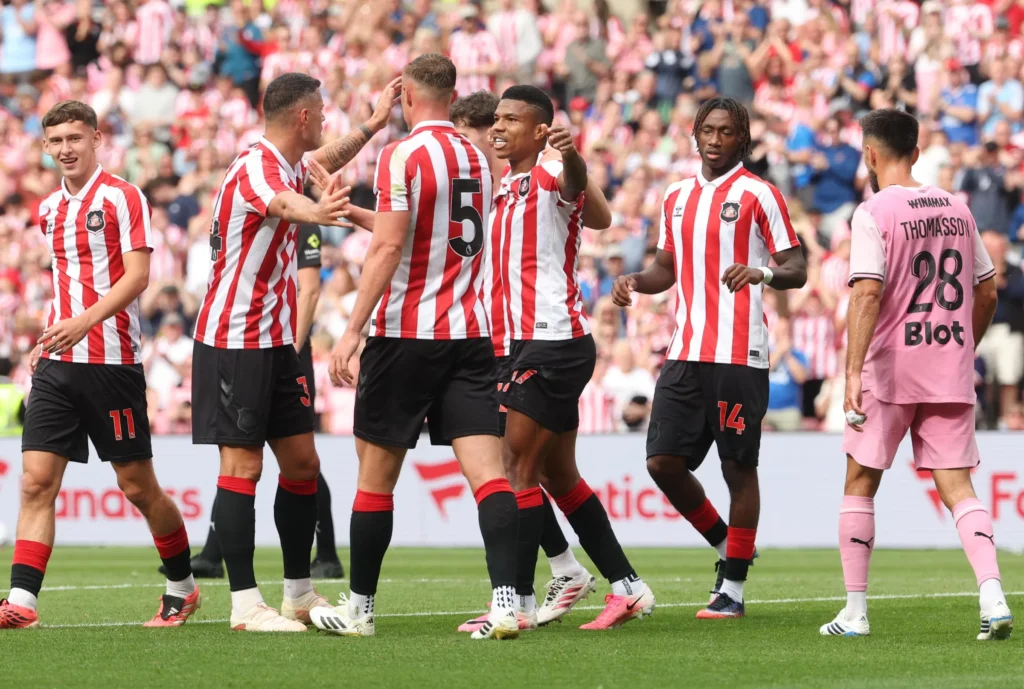
Sunderland revealed that Shuffle will act as their official sleeve partner on 11th September 2026. This agreement is multi-year in nature and includes the Premier League, FA Cup, Carabao Cup, and UEFA Europa League competitions, with the branding being showcased on first team shirts in the 2-0 home defeat to Arsenal on 12th September 2026. The agreement in itself does not seem extraordinary but when looked at from the context of the time it was announced, it poses an interesting question regarding the reasons behind the club signing up with a platform which does not hold the UK Gambling Commission licence.
What Shuffle Actually Is, and What It Is Not?
Shuffle is a crypto casino and sportsbook licensed in Curaçao. The company running it, Natural Nine B.V., possesses licence number OGL/2024/1337/0628 issued by the Curaçao Gaming Control Board. It even creates its own cryptocurrency called SHFL as well as supports Bitcoin, Ethereum and other popular crypto tokens. What it does not possess is a licence from the United Kingdom Gambling Commission. Therefore, its products are illegal for citizens of Great Britain. It means that fans of Sunderland, namely, can use neither its services nor the product that will now be promoted on the sleeves of all the team shirts.
According to Scott McCubbin, who is the Chief Commercial Officer of the club: “We are thrilled to announce Shuffle as our Official Sleeve Partner. We have seen a real synergy between our brands which both aim to be leaders and compete at the top level”. Noah Dummett, one of Shuffle’s founders, added the following statement: “We have much in common, we both want to be the best and will stay here as recognised brands”.
Both statements are built entirely around international scale and ambition. Neither touches on the domestic regulatory picture, and that gap is worth noticing.
The Consultation That Closed Two Days Before the Announcement
This consultation, which suggested that gambling firms that have not been licensed should not be allowed to sponsor or advertise themselves through any English sports club, was made by the Department for Digital, Culture, Media and Sport on 15 July 2026. This consultation ended on 9 September 2026, at 11:59 pm, while Sunderland had announced their new sponsor Shuffle on 11 September 2026.
The government’s consultation is explicit about its two proposed implementation routes. Its preferred option is a fixed ban date in August 2027, ahead of the 2027/28 football season, under which all physical unlicensed gambling sponsorships would have to cease regardless of active contract lengths. The alternative would allow pre-existing contracts to run until a hard deadline in August 2028, but only contracts in place before the legislation passed. Under neither option does a multi-year deal signed in September 2026 automatically run free of obligation. The government’s own preferred position would require Sunderland to end the arrangement before the 2027/28 season begins, should legislation follow.
Entain CEO Stella David had publicly warned officials in writing that clubs were likely to be finalising new deals during the government’s delay, and that silence from the DCMS risked appearing like approval. The Sunderland statement confirmed that fears were justified. DCMS will be responding to the consultation at some point later in 2026, and, after that, any secondary legislation will need to be ratified by Parliament.
Sunderland Are Not Alone, But the Timing Sets Them Apart
It is estimated by the DCMS consultations that roughly 40% of the Premier League clubs had sponsorship or advertising agreements with gambling operators who did not have licenses for gambling in the 2025/26 season. As early as September 2026, Entain had written to 10 named Premier League clubs requesting that they terminate such agreements, and the named clubs were Fulham, Everton, Ipswich, Newcastle, Chelsea, Aston Villa, Coventry, Nottingham Forest, Tottenham, and Crystal Palace, with Sunderland not on the list, hence its timing.
Everton’s trajectory is the clearest precedent. Stake served as Everton’s front-of-shirt sponsor until the voluntary Premier League ban came into effect at the start of 2026/27. Stake then surrendered its UK licence, meaning the front-of-shirt arrangement had to end. Everton’s response was to move Stake’s logo to the sleeve. Sunderland have now followed a structurally identical route, replacing their previous sleeve partner with an operator that similarly holds no UK Gambling Commission licence.
The voluntary front-of-shirt ban was agreed by Premier League clubs in April 2023 and positioned as a meaningful step toward reducing gambling advertising. What it produced, across much of the league, was a redistribution of the same brands from one position on the shirt to another.
Sunderland’s European Return Adds a Different Commercial Dimension
Sunderland’s first European campaign since the 1973-74 Cup Winners’ Cup gives the Shuffle partnership a reach that a domestic-only deal would not. Their 2026-27 UEFA Europa League league-phase fixtures include AZ Alkmaar, Dinamo Zagreb, Jagiellonia Bialystok, and Milan, among others. Every broadcast of those matches distributes Shuffle’s sleeve branding across continental audiences, many in markets where Curaçao licensing is the standard operating model. The DCMS consultation, by its own scope, covers physical advertising at sporting events within Great Britain. UEFA broadcasts reaching audiences elsewhere fall outside that jurisdiction.
According to the statement by the club, the partnership will also include “exclusive content, fan engagements, digital campaigns, and influencer marketing” that is referred to as “new methods for Shuffle to connect with the passionate and global fanbase of the Black Cats.” International context is the business reasoning behind the deal; the partner company receives massive visibility in the markets where their product operates legally.
Expert Analysis
We find the regulatory choreography here harder to ignore than most coverage has been willing to say directly. A government consultation closes on a Tuesday. A Premier League club announces a multi-year deal with an unlicensed gambling operator on the Thursday. The two events are not separated by weeks or months; they are separated by one working day.
The DCMS consultation document itself acknowledges that the existing legislative framework creates a gap, noting that unlicensed operators’ websites can be accessed via VPN even where geo-blocking is in place. The consultation also flags money-laundering vulnerabilities identified in the National Risk Assessment of Money Laundering 2025, which names football clubs and agents as a specific area of concern. Against that backdrop, Sunderland’s announcement does not look like a coincidence of timing. It looks like a club reading the regulatory window carefully and moving before it closes.
What the DCMS does next matters. If it proceeds with the preferred August 2027 implementation, Sunderland will face a decision inside 11 months: either Shuffle obtains a UK Gambling Commission licence, or the sleeve arrangement ends before it has run a full season. The club negotiated a multi-year deal knowing that timeline exists. Either they expect Shuffle to seek UK authorisation, or they expect the legislation to stall, or there is a contractual mechanism we have not been told about. One of those three things is the real story, and none of the official statements come close to addressing it.
 Share
Share


 2 views