Key Points
- Between January and September 2026, inspectors found no problem accessing Dutch gamblers on 27 unlicensed sites, and they did it 41 times.
- Everyone’s on notice: The order is for both the Malta and Cyprus arms of Endorphina, the company in question.
- There’s no fine, but the clock’s ticking, Endorphina has six weeks to object before the instruction takes hold.
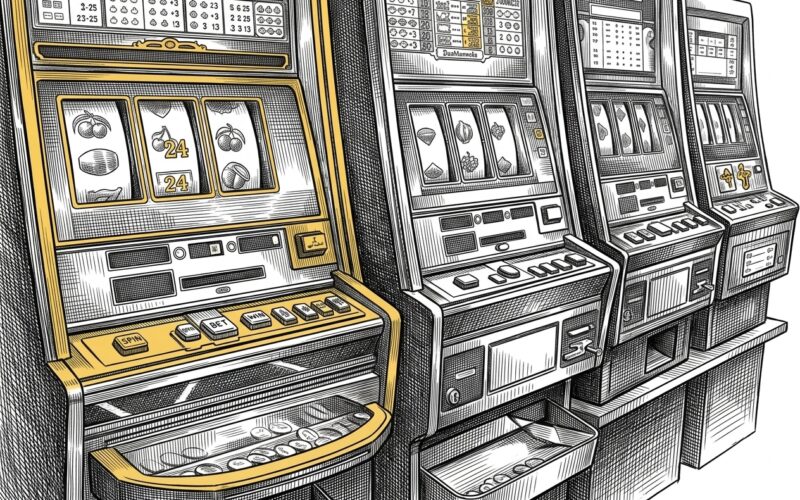
Two months after Endorphina promised to block access from the Netherlands, Dutch inspectors got creative. They set up eight unlicensed casinos and played Endorphina’s slots to see if they could get in, and lo and behold, they faced no barriers. The regulator, the Dutch Gambling Authority (KSA), issued a binding order against Endorphina as a result.
The instruction was made public on 2 November, and it names not one but two companies within the Endorphina group: Endorphina Limited in Malta and Endorphina Ltd. in Cyprus.
The regulator has been keeping an eye on the supplier for six months. That included meetings, friendly warnings and written responses.
Inspectors Spent 41 Hours Gaming on 27 Unlicensed Sites
The KSA were at it for three rounds. First off, they checked in between 12 January and 19 February. On that first run, they managed to play 15 games on 11 sites.
Then in June, they went back in for another look on the 8th, 10th & 17th. This time, they played 18 games on 18 different sites. And finally, in September, they checked in on the 29th and 30th, when they found 8 sites, all playing 8 games each.
So, in the end, inspectors managed to play 41 games on 27 different websites. And the weird thing is, they found no technical barrier to stop Dutch gamblers from getting in. Some websites featured in more than one round, which explains why the number of sessions was higher than the number of sites.
The regulator’s list has 28 sites altogether, but one was a no-show. So that leaves 27 websites with 41 documented play sessions.
The September checks also showed that getting in was still easy even after Endorphina said it had restricted access in July. You’ll recall, The COOP reported on this in July, that Endorphina told the KSA on 23 July that it had restricted access “within available technical possibilities”.
Six Long Months of Chit Chat Ended With a Binding Order
It’s been almost five years since Endorphina first got certified to supply games in the Dutch market. And now, the country’s gambling regulator is clamping down on them with a binding order.
The trouble started on 2 April when the regulator first reached out to Endorphina through the contact form on the website. The regulator sent the inspection findings on 15 April, and then on 16 April, they had a face-to-face meeting. On 29 April, the regulator also sent Endorphina a list of licensed operators.
But things started to get messy when the regulator asked Endorphina to cough up some information and Endorphina refused, citing confidentiality clauses in its contracts. The regulator issued a warning on 13 May, and Endorphina sent a written response the next day. Then on 5 June, the supplier insisted that their own investigation showed they weren’t deliberately helping out black market sites.
What Endorphina Must Do Under the Instruction?
According to the KSA, the supplier must take measures that would prevent Dutch players from accessing its games via the unlicensed gambling websites. To do this, the supplier could implement certain technical measures, amend its contracts or do both.
In its decision, the regulator makes no distinctions between the two Endorphina companies. According to it, the split of the supplier is “irrelevant for the purposes of this binding instruction”. In addition, the KSA did not need to prove that Endorphina aimed at providing access to its games in the Netherlands.
As stated by the company’s Atlas in Pimlico, the basis for the instruction is Article 34n of the Betting and Gaming Act.
There was no fine. However, the supplier has six weeks to lodge an objection. Yet, an objection will not prevent the instruction from being in force.
The two weeks of compliance expired on 2 November, which is the same day as the order publication.
The instruction refers to number 23210.001/01.414.929. The publication decision of the KSA with the number 01.414.933 explains why the regulator decided to publish the order. The main goal was to set standards for other suppliers.
Regulators Are Targeting Suppliers, Not Just Operators
This action by the KSA is just one example of the efforts of regulators to block access to the unlicensed gambling websites and the games offered there.
As an example, one can mention the decision of Britain’s Gambling Commission made on 23 July regarding Evolution. The supplier had to pay £4.75 million for games available on the six unlicensed websites.
However, in the Netherlands, the regulator acted differently. Eleven days before the public announcement of the Endorphina order, the KSA fined EOD Code SRL about €37.25 million.
The operators have already been fined; however, at the moment, only instructions are provided to the suppliers without any fines. In addition, regulators target companies that support unlicensed gambling businesses. On 24 February 2024, the KSA fined DigitalOcean under Article 34n because of its hosting services for unlicensed affiliate websites.
Expert analysis: The Lack of a Fine is the Better Tool
We think that the lack of a fine is a significant issue here. The KSA has introduced a ruling that monitors Endorphina’s compliance with the regulator, rather than bringing an end to the situation with a financial penalty.
In our opinion, the September tests were the worst in this case. They occurred after Endorphina claimed in July to have limited access for Dutch gamblers to its products. However, inspectors were still able to play the provider’s games without any technical hindrance.
There is no point in a company’s compliance policy, if it fails to block access by Dutch gamblers to its games on unauthorised websites.
The evidence doesn’t suggest that Endorphina was willing to make its products accessible in the Netherlands. The stance of the KSA is that it does not need to prove such an intention. It is doubtful whether the defence of blaming the operators downstream would remain reasonable in the case when there is no need to prove the supplier’s intention.
In Britain, a £4.75 million agreement was reached with Evolution. In this case, the Dutch regulator is pursuing another objective: games should not be loadable for the Dutch on unauthorised gambling websites.
 Share


 4 views