






Key Points
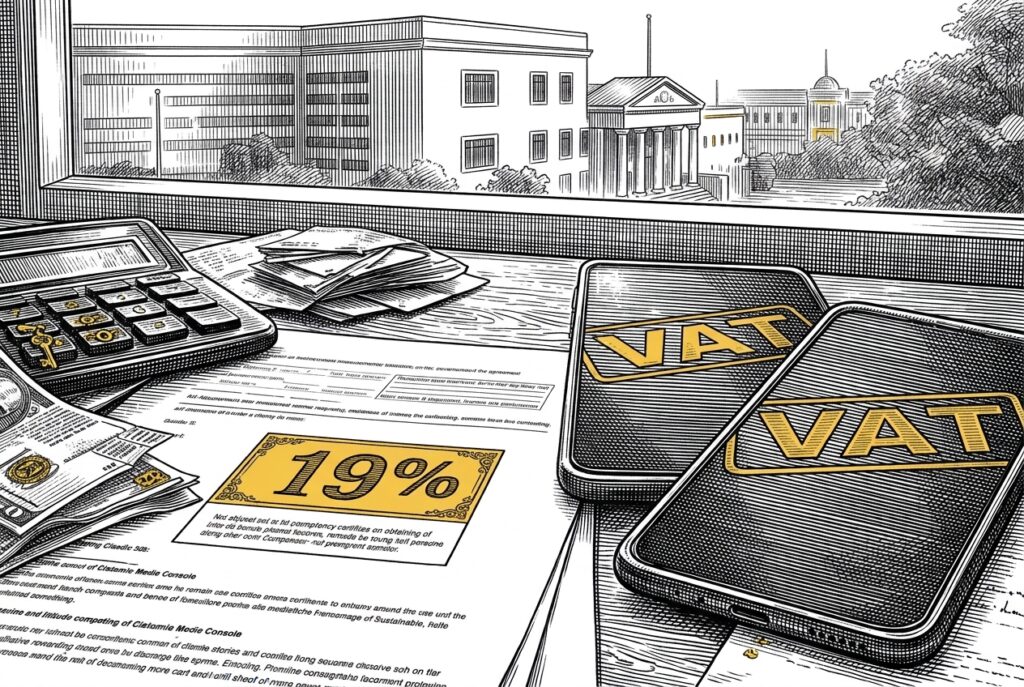
- Bill 477 is a proposal to reintroduce 19% VAT on online betting deposits and hike the tax on prizes to a whopping 30%.
- The Finance Ministry reckon that the VAT will rake in a cool COP 2 trillion in 2027, a hike from their July forecast of COP 1.7 trillion.
- With the government really needing to get this done, the ordinary Congress sessions come to an end on 16 December, and they’re trying to get approval before the end of the year.
A COP 119,000 deposit into a betting account in Colombia would leave a player with COP 100,000 to place a bet under Bill 477, because the remaining COP 19,000 would be eaten up by VAT.
We’ve seen this tax before and it’s still a hot topic of debate, and the government has some new stats from the gambling regulator to back them up. However the industry is not convinced these figures tell the whole story, and it’s likely to influence how lawmakers vote on this bill.
Bill 477: Putting VAT on Online Betting Back on the Table
This is the Ley de Rescate Económico, a 106-article economic rescue package that Bill 477 is a part of. It hit Congress on Thursday, 29 October and Article 41 of it suggests slapping the standard 19% VAT rate on online betting, but leaving lotteries out of it. It looks like the taxable base for this would be deposits. So cash, bank transfers, or even cryptos sent to a betting account would all count.
The tax is taken out of the deposit rather than added on top, and that’s what makes it a bit tricky. The operators would have to split the deposited cash by 1.19 to see how much is left after VAT, which would leave a bettor with COP 84,000 after placing a COP 100,000 bet. Some early reports said the amount after tax would be around COP 81,000, but that was a wrong calculation, as it was just subtracting 19% directly from the deposit.
The bill also would hike the tax on prizes, Article 52 says that lottery, raffle and betting prizes are going to be taxed at 30% instead of 20%. This is on top of DIAN already setting a threshold of 48 tax units for withholding, so some smaller prizes are dealt with separately. The government estimates this will bring in a nice COP 198 billion in 2028.
Why the Government Needs to Get This Done Before the End of 2026?
Betting tax is just one part of this economic rescue plan that they’re trying to get through. According to the Rio Times the government is looking to axe or slash about COP 40 trillion to COP 45 trillion, that’s around 2.2% of the country’s GDP.
The Vice President José Manuel Restrepo says about 70% of this will be spending cuts, and the remaining balance will come from tax measures, and without the bill, Colombia’s fiscal deficit would be running at 9.4% of GDP in 2027.
Restrepo also said that if they can’t get it passed before the end of this year “Colombia will be in default come next year.”
Why Does the Government Want Approval Before the End of 2026?
Betting tax is one part of a wider economic rescue plan containing 106 articles. According to a Rio Times reporting, the government is targeting adjustments worth COP 40tn to COP 45tn, equal to 2.2% of GDP.
Vice President José Manuel Restrepo says spending cuts would account for about 70% of the adjustment, with tax measures covering the rest. The government warns that without the bill, Colombia’s fiscal deficit would reach 9.4% of GDP in 2027.
Restrepo told local media that without progress before the end of 2026, “Colombia will enter default next year.”
Congress’s ordinary sessions end on 16 December under the constitution. The government can still call extraordinary sessions after that date, so 16 December is a political target rather than a legal deadline.
Colombia Has Tried Several Variations of the Tax
VAT on deposits for online gambling was first introduced in Colombia in February 2025 under Decree 175. The legislation went into force on 22 February 2025 and applied to all players from Colombia.
By April 2025, Colombia’s gambling association, Fecoljuegos, reported that the gross gaming revenue of the online segment had dropped by 30%. It should be noted that the figure was estimated and not verified. The legal guide published by Chambers reported a 46.6% decrease in Coljuegos’ proposed settlement for July 2025 compared to July 2024.
On 8 December 2025, a Senate committee rejected nine to four the law establishing the permanent character of the tax. The government then passed Decree 1474 under a state of emergency. The new version of the tax removed the application to deposits and applied the 19% rate to gross gaming revenue.
This change was appreciated by Fecoljuegos, which stated that the tax burden decreased from more than 70% of net income to around 34% of gross income. The percentages refer to two different tax bases and therefore cannot be compared to each other.
Later, the Constitutional Court blocked the government’s attempts to use the measure. On 29 January, it suspended the effect of Decree 1474, about a month after it went into force. The court later overturned Decree 1390 in April and Decree 1474 due to it, under ruling C-079 of 2026.
Reimbursement of indirect taxes collected during the period when the decree was in force can be obtained if operators can prove that they made such payments.
Another state of emergency was declared in March after flooding affected eight regions. Under Decree 0240, a 16% consumption tax on online gambling is now applicable. It applies to deposits, but its tax base is the gross gaming revenue for two-month periods. It should be noted that the tax does not apply the 16% rate to every deposit as was claimed by some media.
In July, the outgoing Petro government made its last attempt to introduce the tax. Its tax bill provides a 19% VAT on online gambling services and estimates the amount of collected taxes to reach COP 1.7tn in 2027. According to the proposal, online services enjoy “preferential treatment” compared to offline gambling venues without the tax.
Operators are Willing to Pay Up, but Far from Sold on this Proposed Tax
Evert Montero Cárdenas, head of Fecoljuegos, told NEXT.io that Colombia has built a regulatory foundation that it’s imperative they preserve. And that new tax proposal could really pile it on, especially for the smaller and medium-sized companies who just don’t have the resources to handle that sort of thing.
Montero Cárdenas also pointed out, “We are well aware that there’s a need to bring in more revenue, and we’re more than happy to chip in and pay our fair share.”
Fecoljuegos is working on an alternative proposal to take to the table. They’re looking at different tax rates for online and land-based gambling, but as yet haven’t made any formal proposals.
Investors were reacting to this bill before Congress had even got round to discussing it in committee. Rush Street Interactive shares took a pretty big hit, about 11%, midday on 30 October, according to Casino.org.
Still Plenty to Play For in Congress
Colombian gaming law firm Sora Lawyers has taken a close look at the betting provisions in Bill 477 and the Petro government’s tax reform that got voted down back in 2025. And their take? Bill 477 is basically just rehashing that old proposal.
Montero Cárdenas is putting to rest suggestions that operators are planning to pull the plug on Colombia. “It’s far too early to be saying that operators will up sticks and leave the market,” he said.
The bill’s also got some procedural hurdles to clear. Still no sign of the committee report being published, and no call for an emergency vote has been made. And we all remember the two previous attempts at tax reform that tanked in the economic committees back in December.
The lawmakers still have the power to change things or even scrap the gambling provisions. So by the time Congress gets around to voting, Article 41 could be looking a lot different.
There’s also outside pressure coming in from elsewhere. Around the end of September, President Abelardo de la Espriella asked the IMF for more help. And the IMF just so happened to be ready to lend a hand with a “homegrown reform program”
From the Rio Times, Colombia hasn’t signed up to a loan, and the IMF isn’t backing any specific tax plan.
Expert Analysis: Figures for Different Tax Periods Are Used on Both Sides
It is our view that the strongest argument of the finance ministry is its weakest one. As reported by Coljuegos, the amount of online sports-betting collections increased by 84.24% to COP 473bn for the period January-August 2026. Most of the increase is attributed to the World Cup, although there is no men’s World Cup in 2027.
Such an increase allows government officials to claim that the sector is able to cover a more expensive tax. However, we consider this to be false due to the fact that the 2026 increase occurred in the context of the gross gaming revenue tax.
The clearest example showing the effect of deposit tax on the market could be considered 2025 – the first year of introducing it in Colombia. The industry claims that the new regulation has harmed the businesses. Neither 2025, nor 2026 figures are sufficient since they are measured during different tax periods.
However, the 16% revenue-based tax from Decree 0240 is a known model available for the finance ministry. Then why does it want to introduce the old system once again?
It may be a good argument to achieve tax parity with land-based gambling venues. Revenue-based tax also could help the finance ministry reach this goal. The certainty of revenue receipt, whatever the operator’s profitability is, is the main advantage of deposit tax as pointed out by Sora Lawyers. We believe this is the main reason for the ministry acting under a tight deadline.
The proposed increase of the prize tax should be considered as well. Although we do not agree that VAT and prize tax together constitute double taxation because they relate to different actions, we have not found any estimate of the total payment by a regular winner in published sources.
Parliamentarians should require such a calculation before voting on the bill. However, players will figure this out anyway.
The blocking provision of the bill should be carefully analysed as well. Article 93 of the bill regulates the operators – either Colombian or foreign – that have failed to implement the necessary technical measures. It means that this provision is related to the operators’ non-compliance with the requirements and is not a general prohibition of offshore gambling sites.
 Share


 7 views