





Key Points
- Google eliminated 270.7 million gambling ads from 8.3 billion total removals, along with 24.9 million advertiser accounts, proving its determination despite some infringements continuing.
- Gemini AI blocks more than 99% of ads that violate policy from appearing, shifting from mere keyword monitoring to the identification of intentions based on behaviour and campaigns.
- Regulatory bodies of the UK, Brazil, the Netherlands, and Australia put increased pressure on unauthorised operators and apps.
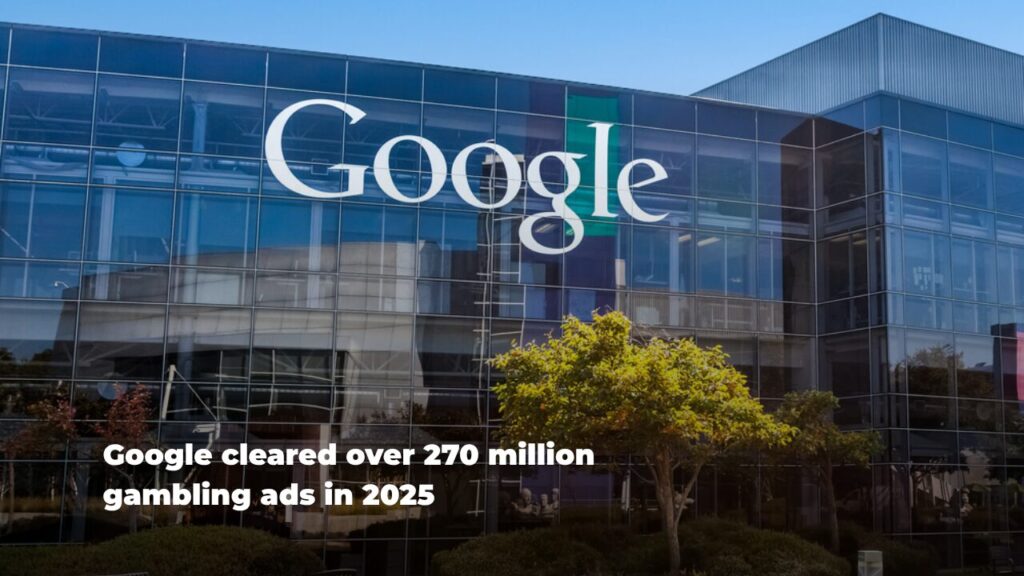
Google cleared more than 270 million gambling ads in 2025, within a broader action of 8.3 billion removals and 24.9 million account suspensions, while regulators increased pressure over accountability gaps.
Enforcement Scale Shows Industry Strain
Numbers appear fast and shape the view.
In 2025, Google cleared 8.3 billion ads worldwide, and inside this number, 270.7 million gambling ads were banned and removed. Another 123.9 million gambling ads faced restriction instead of removal, placing this category high in policy violations. These figures shift the discussion. Detection is not the main issue anymore, and the scale of activity defines the problem. When millions of gambling ads get flagged in one year, the data shows organised efforts to bypass rules.
Enforcement extended beyond ads.
Google suspended 24.9 million advertiser accounts and removed 602 million scam ads during the same period. On publisher platforms, 9.7 million gambling and gaming page violations were detected, ranking fifth in breaches. Each number adds pressure on the system. The pattern continues, and activity stays high, forcing ongoing intervention.
AI Moves from Detection to Intent Control
Earlier systems depended on keyword checks.
Over time, this method lost strength as tactics changed, leading to a shift in enforcement style. Google now credits its AI system Gemini for improved action. The system studies large data sets to predict behaviour before violations appear. “Our models analyse signals like account age, behaviour, and campaign activity to stop threats early,” said Keerat Sharma. He added more detail. “Our teams used AI before, and Gemini extends that work. Models study signals and understand intent, helping block harmful content before it appears.”
The process changed direction.
Instead of reacting after violations, the system works to stop them before exposure. More than 99 per cent of policy-breaking ads get blocked before users see them. This shift changes the enforcement nature. Success now depends on prediction accuracy at scale, which brings new challenges.
Regulators Increase Pressure Beyond Platform Reach
Enforcement improves, but pressure from regulators rises faster. Authorities in the UK, Brazil, the Netherlands, and Australia question how unlicensed operators still reach users.
Focus moves beyond visibility. Accountability becomes central.
Brazil shows this shift clearly. The Ministry of Justice asked Google and Apple about illegal betting apps in app stores. These apps lacked approval from the Secretariat of Prizes and Bets but remained available. Regulators asked for details. They requested full lists of betting and casino apps, screening methods, and enforcement systems. At the same time, independent checks found these apps, showing a gap between controls and expectations. Scrutiny also covers social platforms. Meta and X face review over influencer promotion of illegal gambling products. Standards have changed. Effort alone does not satisfy regulators anymore, outcomes matter now.
Policy Changes Move Toward Pre-Approval Systems
Google has started tightening ad policies, mainly across Europe. Google Ireland applied stricter rules from March 2026. Advertisers received warnings about losing certification or facing rejection after repeated violations.
This shift changes the risk structure.
Instead of facing penalties later, advertisers risk removal from the system itself. One issue remains unclear. Google did not explain whether the removed ads came from licensed operators, unlicensed platforms, or both. This lack of clarity creates concern. If licensed operators face action, enforcement may be too wide. If not, questions remain about how unlicensed actors continue operating.
Main Conflict, Enforcement Strength vs Transparency Gap
The system shows progress on the surface.
Detection improves, AI expands, and enforcement increases. Transparency remains limited. Without clear data on affected parties, stakeholders cannot judge fairness or effectiveness. Meanwhile, regulators keep raising expectations. Platforms no longer act as neutral systems. They now serve as gatekeepers responsible for blocking illegal access. Two pressures shape the space. Platforms focus on scale and automation, while regulators demand accuracy and accountability. This gap creates friction.
Expert View, Industry Impact and Direction
Gambling operators face rising compliance costs.
Advertising moves from marketing into a risk area, requiring stronger controls and constant monitoring. Reliance on large platforms becomes unstable. Repeated violations can lead to certification loss, creating risk for operators dependent on one platform. A structural shift takes place. Large platforms act as extensions of regulatory systems, especially where enforcement is limited. This change may drive consolidation. Large operators adapt faster than smaller or unlicensed ones. Opportunities appear for compliance tools, AI verification systems, and licensed operators aligned with rules.
Risks also grow.
AI errors may block legitimate advertisers, while unlicensed operators may shift channels. Different regulations across regions add complexity. Impact spreads unevenly. Regulators and compliant operators gain an advantage, while smaller and unlicensed players face pressure. Even legal advertisers may face difficulty under strict enforcement. Attention shifts forward. Regulators will likely demand better reporting, while platforms must show accuracy, not only scale. The key question has changed. The issue is no longer removal ability, but whether the correct ads get removed.
Explore more:
 Share
Share


 398 views