






Key Points
- Flutter’s LSE delisting kicks in on 3 August 2026; 31 July is the last day shares trade there, leaving NYSE as the only remaining venue.
- FanDuel commands a 39% slice of the US online sports betting market and brought in roughly 42% of Flutter’s entire Q1 2026 revenue.
- The UK’s Remote Gaming Duty nearly doubled from 21% to 40% in April 2026, and Flutter puts the potential EBITDA damage at up to $540 million by 2027.
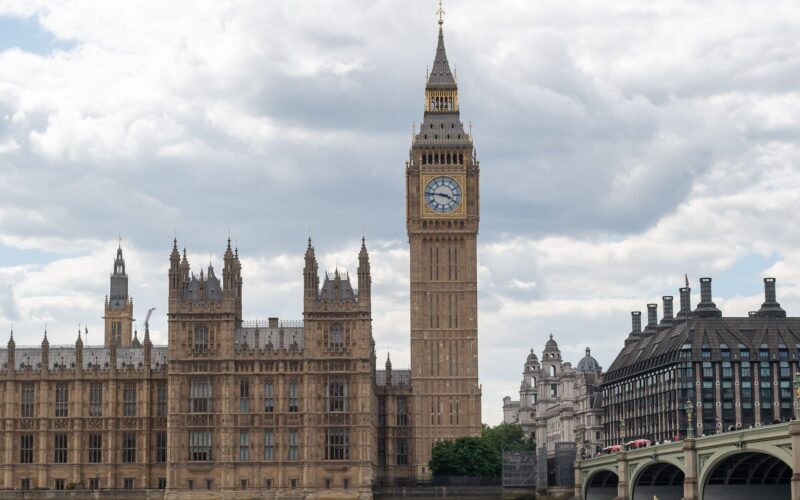
Flutter Entertainment is done with London. On 12 June 2026, the world’s biggest online sports betting and iGaming company made it official; its shares left the London Stock Exchange on 3 August, with 31 July being the last day anyone can buy or sell them there. From that point, one exchange holds Flutter’s shares, the New York Stock Exchange, trading under the ticker FLUT.
This is not routine paperwork. It holds a majority stake in such prominent entities as FanDuel, Paddy Power, Betfair, and Sky Bet. To see such a heavyweight in the gambling sector ignore one of the best-known exchange sites out there is an obvious message telling you everything you need to know about where the cash is flowing, where the growth happens, and which way the gambling industry in the UK is headed.
Two Years in the Making
To really understand this moment, go back to January 2024. Flutter put its shares on the New York Stock Exchange that month, and by May it had already named New York its main listing. London dropped to second place, the fallback option.
CEO Peter Jackson did not dress it up. “When I look at the volumes of trading that I see in the States, it’s significantly higher than we see on a European exchange. With those higher volumes you’ll see investors being able to take bigger positions in a US business,” he told Bloomberg at the time.
London was already shrinking in the frame. Then came the Q1 2026 earnings call on 7 May, where Jackson told shareholders Flutter was actively questioning whether a London listing still made sense. Five weeks later, the answer was in.
Flutter decided that thin trading volumes on the LSE, stacked on top of the cost and regulatory weight of maintaining the listing, left no case for staying. A formal request went to the UK Financial Conduct Authority to pull its shares from the Official List, and the LSE received a separate request to remove Flutter from its main market.
The Numbers That Made the Decision Easy
Flutter’s comfort in leaving London traces back to a single brand: FanDuel. In the first quarter of 2026, Flutter’s US arm pulled in $1.76 billion in revenue, with the US accounting for roughly 42% of group revenue of $4.3 billion, a 17% jump from the year before. FanDuel commands 39% of the entire US online sports betting market; no other sportsbook comes close.
Jackson was measured but clear in the Q1 results statement: “The US market, and FanDuel’s leading position within it, represents one of the most significant growth opportunities in our industry.” With the FIFA World Cup running across June and July, Flutter sees that window opening wider still.
Flutter’s sportsbook brands stretch across players in the US, England, Brazil, Canada, Australia, and Scotland, and Jackson has said the company is ready to process as many as 100,000 bets per minute during the busiest World Cup moments.
New Faces, Same Destination
The London exit follows a sharp reshuffle at the top. In May 2026, Amy Howe stepped down as CEO of FanDuel after five years in the role. Christian Genetski, previously President of FanDuel, moved up to run the US business, while Dan Taylor took on the position of President of Flutter Entertainment as a whole.
These are not ordinary reshuffles. Flutter is deliberately building its leadership architecture around America, placing the people who know the US market best at the front of its most valuable operation.
What the UK Is Doing to Push Operators Out?
While Flutter’s next chapter takes shape in America, the UK keeps raising the cost of staying. The Remote Gaming Duty, which applies to online casino products, climbed from 21% to 40% in April 2026. That is nearly twice what operators had been paying. Another increase is coming for online sports betting in April 2027. Flutter’s own official statement put the damage at $320 million off its EBITDA in 2026, climbing to $540 million in 2027, and that is before any savings measures are counted.
Flutter is not carrying this alone. Evoke, which owns William Hill, announced it would shut roughly 200 betting shops across the UK, pointing straight at the tax increases as the reason those locations can no longer pay their way.
Other operators have pulled back their UK spending or quietly run the numbers on whether staying makes sense at all. The fear spreading through the industry is straightforward; when the cost of doing things properly gets this steep, customers find their way to unlicensed sites that pay nothing and answer to no one, and the whole system ends up worse for it. Flutter’s connection to the LSE stretches back to Betfair’s IPO in 2010, sixteen years ago.
Flutter’s London shares fell roughly 48% in 2026 so far, pushed down in part by prediction market platforms that are dragging attention and trading volume away from the traditional sportsbook model.
FanDuel’s Next Move: Prediction Markets
Flutter is not watching that competition from a distance. In December 2025, FanDuel and derivatives marketplace CME Group launched FanDuel Predicts, a platform that lets users trade on the results of sporting events, financial readings, and cultural moments, anything from a Federal Reserve interest rate call to the scoreline of a football match. That puts FanDuel squarely up against platforms like Kalshi and Polymarket, which have been flooded with activity during the World Cup. Bernstein, the Wall Street research firm, reported that prediction market bets on World Cup matches jumped from $2.2 billion on 11 June to $4.8 billion on 12 June alone. One day.
Meanwhile, DraftKings, Flutter’s closest US rival, disclosed that annualised trading volume on its prediction markets product hit $3.1 billion in May, up 34% in a single month. The race has started, and Flutter is running it from New York.
What Shareholders Need to Do Now?
Anyone holding Flutter shares through the London Stock Exchange is working against a deadline. After 31 July, trading in London stops. Flutter has put together guidance for shareholders caught by this change; the full FAQ for LSE holders sits on Flutter’s official investor page, with helpline contact details and clear instructions for anyone holding Computershare depositary interests on what needs to happen before the cut-off.
For the broader gambling industry, the message in this delisting cuts sharper than any press release. One of the most powerful companies in the sector weighed what London offers against what New York offers, and chose. The UK tax burden, the thin trading volumes, the shrinking pool of investors; none of it made staying worth the trouble. Flutter joins a growing list of companies that reached the same conclusion, and few people in the industry believe it will be the last.
Expert Analysis
Flutter’s departure from the LSE is not a surprise; it is the natural endpoint of a journey that began the moment FanDuel locked in its position as America’s top sportsbook. When close to half your revenue comes from one country, when your fastest-growing product lives there, and when the exchange you are leaving cannot match New York for liquidity, investor depth, or analyst attention, the dual listing quietly stops serving any purpose. It becomes a bill. The UK tax increases pushed that calculation along, but they did not create it. What Flutter is really signalling to the market is something larger: the next chapter of this company, prediction markets, World Cup momentum, NFL season growth, gets written in dollars, traded on Wall Street, and followed by American investors. London was a chapter worth having. The book has moved on.
Explore more:
 Share
Share


 292 views