





Key Points
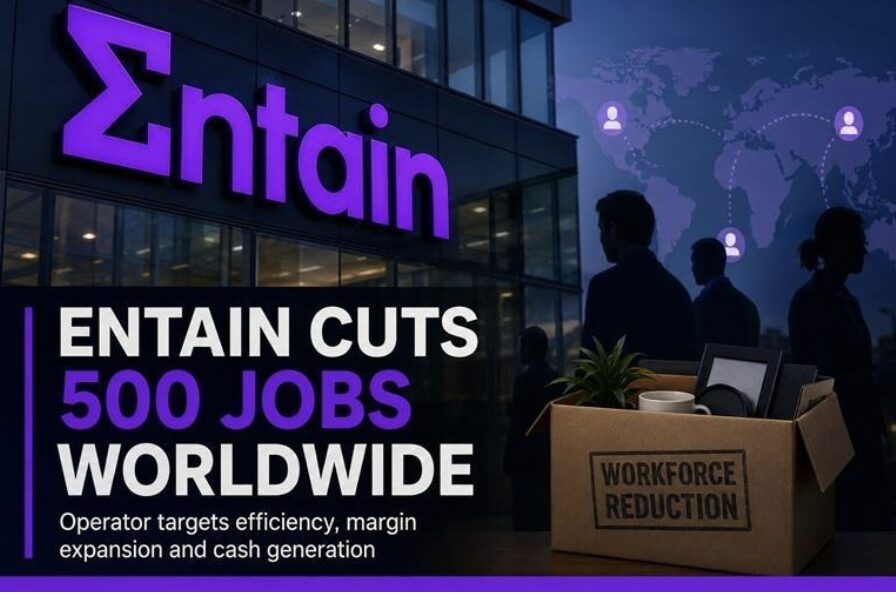
- Entain has confirmed 500 job cuts across corporate functions and product and technology teams, led by CFO Michael Snape, who formally took the role in March 2026.
- The company has explicitly denied the cuts are a response to the UK Remote Gaming Duty rising from 21% to 40% in April, framing them as a broader operational efficiency drive.
- The redundancies follow Entain’s approximately €425m partial exit from its Central and Eastern Europe joint venture and come ahead of Q2 and H1 results due on 13 August.
Some Colleagues Were Already Gone Before the Announcement
Entain has confirmed it is removing around 500 positions across the group. What separates this from a routine corporate statement is a detail buried inside an internal email from CEO Stella David, reviewed by NEXT.io: some of those employees were already gone before the news reached the public.
“We’ve been planning these changes for a while, and they are well underway, which means that sadly, we have already said goodbye to some colleagues, with further impact on people over the months ahead,” David wrote to staff.
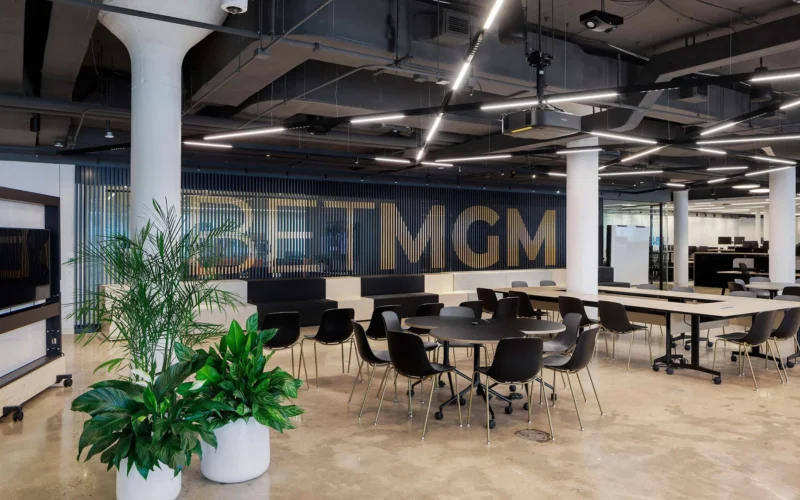
Roles are being removed across people, finance and governance, as well as product and technology. Entain declined to break down numbers by team or geography, and did not confirm whether positions linked to its BetMGM joint venture in the United States are included. What the company did confirm is that this is a group-wide restructuring, not a retreat from any single market.
An Entain spokesperson told NEXT.io: “As part of our ongoing focus on enhancing Entain’s operational efficiency and agility, we’ve begun implementing organisational changes which will regrettably impact a number of roles across the group over the months ahead. These changes will help make Entain a stronger, better business and are further demonstration of our strategic focus on maximising shareholder value. We are consulting with all those affected to support them during this process.”
The New CFO and His First Major Call
In February 2026, Michael Snape was appointed Entain’s CFO Designate, before officially assuming the Group CFO position, along with membership of the company’s board, on 6 March, filling a position that had been left vacant when Rob Wood left the role after 13 years of service.
Snape is not a gambling industry insider. He came from International Distribution Services, a global logistics company where he was group CFO and led its de-listing and sale. Before that, five years at Walgreens Boots Alliance as CFO of Boots, No7 Beauty and International, with earlier stops at Tesco, the John Lewis Partnership’s Waitrose division, and J Sainsbury. When his appointment was announced, CEO David said he brought “seasoned leadership, financial and operational expertise, and international experience.” The 500-role efficiency programme is his first significant structural decision.
Snape said on joining: “I am thrilled to be joining Entain at such an exciting time in its growth and transformation story. I look forward to working with Stella, the Board and the leadership team to deliver value for all Entain’s stakeholders.”
Analysts had already flagged that his lack of direct gaming experience was worth watching. Goodbody’s David Brohan described the CFO succession as broadly neutral, noting Wood’s success in delivering earnings improvements. Citi anticipated a mildly negative initial response given Wood’s long service and sectoral familiarity, while pointing out that an established succession plan should limit lasting concern.
The Tax Question Entain Keeps Deflecting
The denial has been consistent. From April 1, 2026, Remote Gaming Duty in the United Kingdom has practically doubled from 21 per cent to 40 per cent, representing perhaps one of the largest percentage hikes ever to be imposed on the online casino industry. A second hike is set for April 1, 2027, with a new 25 per cent remote betting levy becoming applicable. Entain has previously estimated these changes will add approximately £200 million to annual costs, and in March said group-wide savings would offset more than half that figure.
The first reports about the job cuts by Reuters appeared on 16 July. According to Bloomberg, the job cuts were seen as an Entain measure that entailed cutting about 2% of its staff members because of UK taxes. However, Entain has rejected Bloomberg’s claims and stated that the job cuts are an efficiency measure.
Whether the distinction holds under scrutiny is worth considering. Regulus Partners regulatory expert Dan Waugh warned when the new duty came into force that operators face a potential spiral: cutting costs to protect margins risks undermining the revenue those costs were generating. “There is that risk of a spiral effect: where the more operators cut costs to address falling revenue, the more that the revenue falls,” he told NEXT.io in April.
Entain is not alone in this position. Rank Group confirmed its own redundancies in recent weeks. Flutter Entertainment, owner of Paddy Power and Betfair, also confirmed layoffs earlier in 2026. William Hill parent Evoke had already announced marketing cuts ahead of an acquisition approach from Bally’s Intralot. A pattern is forming across the UK sector, regardless of how individual companies choose to label their actions.
The CEE Sale and a Balance Sheet Under Strain
The job cuts arrived roughly three weeks after a separate strategic move. On 25 June, Entain agreed to sell a 20% stake in its Central and Eastern European business to its joint venture partner EMMA Capital for approximately €425 million, made up of €395 million payable on completion and an additional performance-linked payment in early 2027.
Valued at roughly €2.1 billion, or about ten times the EBITDA, the deal puts Entain CEE, which runs STS in Poland and SuperSport in Croatia, at a price of roughly that much. Expected to be completed in the fourth quarter of 2026, pending regulatory approval, it will reduce Entain’s stake from 67.5% to 47.5%. The Juroszek family, holding the remaining 10%, has assigned its voting rights to EMMA under a separate agreement.
Net proceeds are directed at reducing group debt, which stood at £3.64 billion at the end of 2025. The sale is expected to deliver around £20 million in annualised interest savings. Entain confirmed it is evaluating all strategic options for a full exit, with future proceeds earmarked to bring group leverage below three times EBITDA before any capital is returned to shareholders.
CEO David described the transaction as “a decisive first step towards Entain fully exiting Entain CEE,” adding it “reflects our ongoing focus on maximising value for shareholders.”
Prediction Markets and a Second Front of Pressure
Tax costs are one problem. The rise of prediction market platforms is another. Reuters reported that Entain cited growing competition from prediction markets as a factor pressuring its traditional sportsbook business, platforms allowing users to trade contracts linked to sporting and event outcomes. These have expanded rapidly in the United States and are beginning to compete for the same customers as Ladbrokes and Coral.
The Gambling Commission has previously stated that prediction market products offered in Great Britain would generally require an appropriate gambling licence, but the sector continues to expand, and the competitive dynamic is real. Legacy operators are being asked to defend margins on two fronts simultaneously: regulatory costs squeezing domestic revenues and newer platform models pulling at customer attention.
Entain’s share price has tracked the difficult operating environment. In the 12 months to mid-July, shares fell 41%, trading down 1.5% at £5.59 on the day the redundancies broke publicly. Market capitalisation had narrowed to approximately £3.68 billion, barely above the group’s debt burden.
What Will the 13 August Results Settle?
The Entain Q2 and H1 2026 results will be released on 13th August. The efficiency program and CEE sale will likely receive considerable attention, with analysts keen to see evidence that costs are headed in the right direction and margin trends are holding up despite the higher duty regime.
David’s internal memo to employees was clear about the trade-off involved: “Meeting our strategic objectives of growth, margin enhancement and cash flow generation means making tough choices at this time so that we can invest in future growth. While tough choices are always hard to make, I want to be open and honest about the changes we are implementing.”
Further organisational changes are expected in the months ahead. For a company that went to lengths to distance the cuts from UK tax policy, the speed at which departures had already begun before the public announcement suggests the timeline was driven by more than an abstract efficiency agenda.

Expert Analysis: Efficiency Drive or Something Harder to Name?
Entain’s framing is deliberate, and it deserves a close reading. A new CFO from outside the gambling sector, arriving into a business facing a £200 million annual cost increase, working within a company already signalling shareholder value as its organising priority, is going to pursue structural rationalisation. Whether that is labelled an efficiency initiative or a tax response is largely a matter of presentation.
What makes this particular restructuring worth watching is scope. Cutting product and technology teams alongside corporate functions suggests Entain is rethinking how the business is built, not simply trimming to offset a bill. Snape’s background delivering operational discipline across large, complex international companies points to a longer-term agenda than a reactive cost reduction.
The 13 August results will offer the first real test of that narrative. If the CEE debt reduction flows through, margins hold, and the efficiency savings materialise, the restructuring argument gains credibility. If revenue softens under reduced investment, the spiral that Regulus Partners outlined in April becomes far harder to dismiss as a fringe concern.
Explore more:
 Share
Share


 219 views