
Key Points
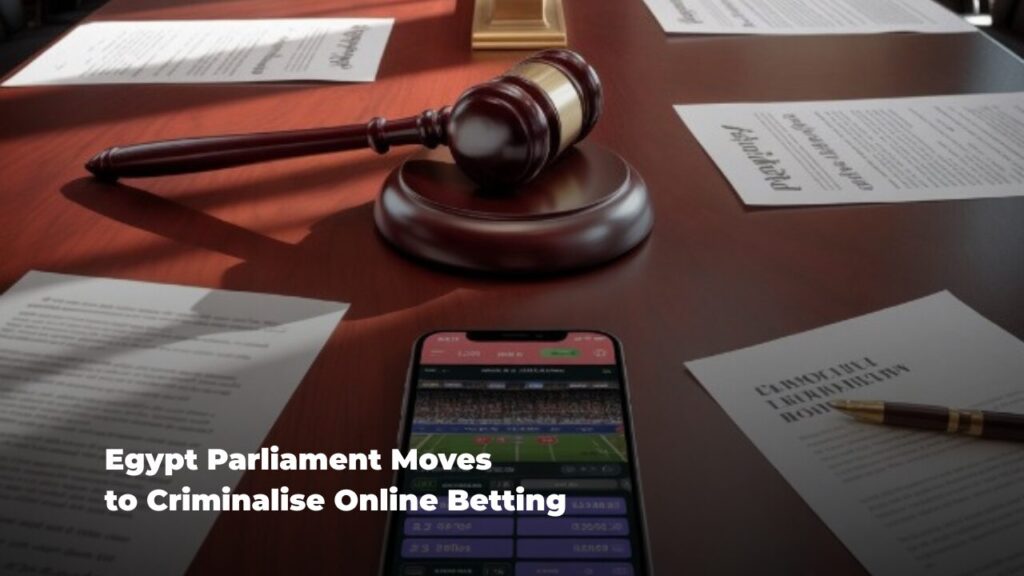
- Egypt’s government is considering changes to the Cybercrime Law, which will officially consider online betting apps as crimes, and can result in punishment by serving life sentences if such activity involves organised criminal groups or massive fraud.
- About 80% of all betting websites have been blocked, and in September 2024, 1xBet was banned from Google Play and the App Store, while MelBet was one of the targets for the crackdown.
- The government’s amendments are expected after Eid al-Adha but no official text has appeared on the parliamentary agenda as of late June 2026, and key questions around VPN liability and payment intermediaries remain unresolved.
Egypt’s gambling ban is not new. The Civil Code voids gambling contracts outright. The Penal Code criminalises the activity itself. Foreign passport holders get one narrow carve-out: licensed hotel casinos. On paper, nothing else is permitted.
The internet was never a factor in such an equation. Such legislation was made with brick and mortar in mind, and no effort was ever made to modernize such legislation with respect to the new market environment. Sportsbooks in Arabic language became available, attracted customers using influencer marketing, sent funds abroad and Egyptian legislation didn’t have anything to say about this.
Those people who wished to gamble just used a Virtual Private Network, used another gambling website and transferred money through whatever means possible. The topic was addressed by the parliament multiple times, but never enforced. This is the gap that now needs to be closed.
Parliament Sets Its Sights on Betting Apps
Ahmed Badawi, who chairs the House of Representatives’ Communications and Information Technology Committee, confirmed in May 2026 that the government is drafting Cybercrime Law amendments that would, for the first time, name electronic gambling directly in Egyptian legislation.
Articles 25 and 27 of the existing law already penalise illegal electronic applications linked to cybercrime, but online betting sits outside their scope. The revised text, as Badawi has described it, would fix that directly, with penalties that scale based on how serious the offence is judged to be.
At the extreme end, where organised criminal networks or large-scale fraud are involved, life imprisonment is being discussed. The amendments reach further than gambling alone. Cyber extortion is included, and so is the deliberate circulation of false information, specifically the kind designed to stoke public anxiety or instability. Sharing such content could carry criminal consequences under the new provisions.
A Blocking Campaign Already Under Way
None of this is happening in isolation. While parliament works on the legislative side, regulators have been running a parallel technical campaign. By February 2026, Badawi said the National Telecommunications Regulatory Authority and the Supreme Council for Media Regulation were targeting around 80% of online betting applications for blocking, using technical reports compiled alongside his committee.
The most glaring victim to date has been 1xBet. The Russian-based company had invested countless hours developing its fan base in Egypt via social media and influencer marketing, but was ultimately banned from Google Play and the App Store in September 2024 following mounting pressures from parliament. MelBet became the next focus by early 2026. Badawi has made the position plain: this is not a general crackdown on digital services. Platforms operating outside Egyptian law are the target. And those that get blocked, he has said, will not be coming back.
What the Penalty Framework Could Look Like?
The government is writing its own text rather than picking up an existing draft. Even so, a bill tabled in January 2025 by MP Martha Mahrous, deputy chair of the same committee, gives the clearest available picture of where things are heading. Mahrous put the problem bluntly in a television interview: “We are facing a kind of addiction, and scientifically we treat the young person as addicted to these practices.”
Her draft laid out penalties across three tiers. Agents and anyone effectively managing operations on behalf of bettors would face two to five years in prison alongside fines from EGP1 million to EGP5 million, roughly $20,000 to $100,000. Payment facilitators sit lower on that scale: up to six months’ imprisonment and fines between EGP50,000 and EGP200,000.
Those running, sponsoring or actually building the platforms face the heaviest end: two to five years and fines from EGP5 million to EGP10 million. The government is not copying Mahrou’s draft directly, but Badawi’s description of the executive amendments includes life sentences at the worst extreme. That would place Egypt’s regime among the harshest for online betting across the entire region.
Key Questions Still Without Answers
The momentum is real, but several questions remain unanswered that will determine how many teeth this legislation actually has. VPNs are the most obvious problem. Millions of Egyptians already use them to reach blocked platforms, and no official draft has said anything definitive about liability for users who keep doing exactly that. Fines for end users are reportedly being considered, though nothing has been put into formal legal text.
Payment intermediaries sit in similarly murky territory. The Mahrous draft would hold facilitators liable only where they could be shown to have known a transaction was linked to gambling. Banks and processors have not explained publicly how they would even identify that in practice, let alone how they would comply with it.
As of late June, parliament’s agenda carried no date for debating or voting on the amendments. Badawi had pointed to the period after Eid al-Adha as the likely submission window, and the holiday came and went in June. No draft appeared on the agenda.
What Does This Mean for Offshore Operators?
Egypt’s prohibition has not stopped money from flowing. According to the iGamingToday website, GGR for iGaming was estimated to be about $125 million monthly as of early 2024, most of which was contributed by the sports betting segment. The revenue from this amount is virtually non-existent in Egypt since there is no way of capturing it, whether through licensing or taxation.
However, the situation in the broader region makes the case more serious. According to the Data Bridge Market Research report, the Middle East and Africa sports betting market size is estimated to reach $6.86 billion in 2024, with growth forecasted till 2032 due to the widespread use of smartphones and digital payments.
If the amendments pass in the shape Badawi has outlined, Egypt stops being a market where prohibition is nominal and starts being one where it is backed by specific criminal law. Operators, local agents, and the payment channels that connect them to Egyptian users would all face legal exposure. The ban on gambling has always existed. What is changing is whether the state now has purpose-built tools to actually enforce it.
Expert Analysis
Egypt’s proposed amendments mark the sharpest escalation in the country’s approach to online gambling since its prohibition framework was first established. What separates this from the blocking campaign already running is scope: the explicit targeting of financial intermediaries, not just platforms. Pulling apps from stores is a speed bump; criminalising the payment infrastructure that keeps offshore operators connected to Egyptian users is a different level of deterrence entirely. Whether the final law extends that reach to VPN users and end-user liability will decide if this becomes a comprehensive enforcement system, or one that stops short at the operator and agent level.
Explore more:
 Share
Share


 287 views