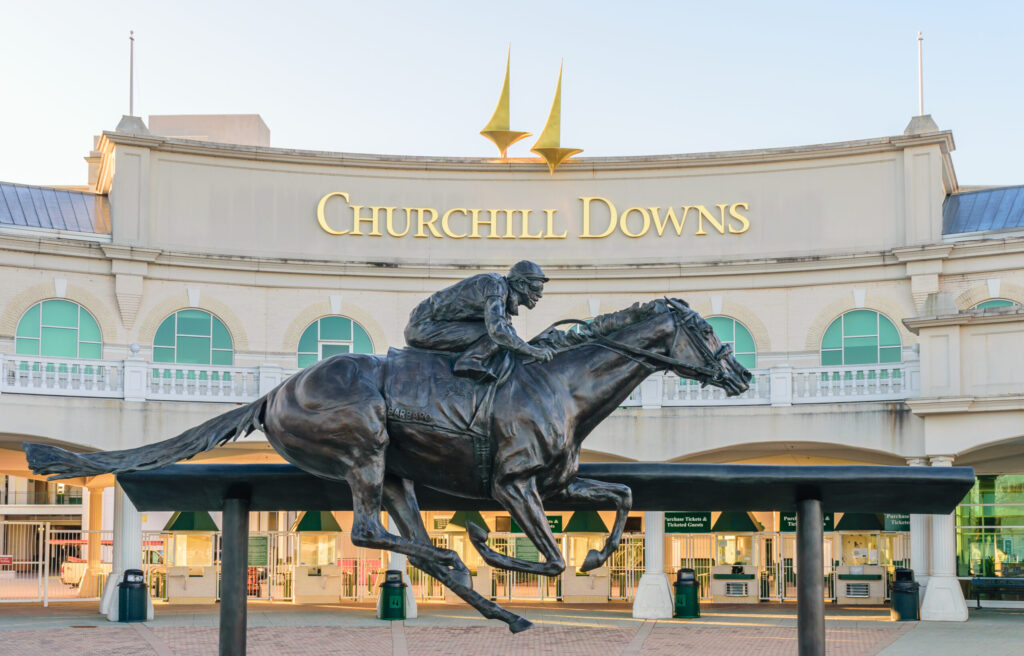
Churchill Downs has asked the US Federal Trade Commission to conduct an independent review of the Horseracing Integrity and Safety Authority.
The letter was signed by chief executive William Carstanjen and sent to FTC chairman Andrew Ferguson and commissioner Mark Meador. Churchill Downs cited two controversies. One involved unusual results and wagering activity linked to horses connected to Fair Hill Training Center, known as the “Fair Hill Five”.
The other concerned alleged unauthorised access to confidential horse health records through the HISA Portal.
“HISA’s legitimacy depends on confidence that it is transparent, accountable, technologically competent, and subject to meaningful oversight,” Carstanjen said. “The recent controversies have further damaged that confidence.”
Fair Hill Five and portal access raise separate integrity questions
On the Fair Hill Five issue, Churchill Downs said HISA later disclosed that a trainer connected to the case had tested positive for a banned substance over a month earlier. This information was not made public until after the wagering activity had drawn concern.
HISA has separately charged Marshall Gramm with multiple rule violations, including fraud, over alleged access to confidential information. Churchill Downs said: “We do not seek to excuse, minimise, or prejudge any alleged misconduct by Mr. Gramm or anyone else.”
“If an individual knowingly accessed and used confidential information for an improper purpose, that conduct should be investigated and addressed through appropriate procedures,” It added.
Churchill Downs questions HISA’s handling of portal vulnerability
HISA chief executive Lisa Lazarus initially denied that leaked material came from the portal.
In a 15 June article, she said: “Most importantly, the screenshots of [past performances] circulating online could not have come from the HISA Portal … this information did not come from HISA.”
HISA later confirmed that the data had come from its portal, according to the letter. Churchill Downs argued that HISA focused on Gramm’s alleged conduct without explaining how the system allowed the access, how long the vulnerability existed or whether other users had viewed similar information.
The letter also noted that HISA is funded through mandatory racetrack assessments borne by the Thoroughbred industry. Those costs have exceeded $250m, with around 12% spent on technology.
“We stand ready to cooperate with the Commission and to support a credible review process that provides the industry, the wagering public, and all racing stakeholders with the answers they deserve,” Carstanjen said.
Churchill Downs is pushing the conversation beyond individual integrity breaches toward HISA’s governance and technology controls. If confidence in the regulator’s systems weakens, the body will be under pressure to show that regulations apply to internal processes as strongly as it does to racing participants.
Explore more:
 Share
Share


 204 views