





Key Points
- SkyCity completed the NZ$74.5m settlement of its Auckland headquarters and Victoria Street properties on 1 September 2026, sold to Mainland Capital and Russell Property Group.
- Reported EBITDA crashed 44.2% to NZ$120.5m in FY26, with net debt sitting at NZ$591m at year end.
- Two unsolicited takeover bids, including one from Oaktree Capital, were received in May but disclosed only in late August, raising questions about what the board chose not to say.
A casino operator selling its Auckland office building is not, on the surface, extraordinary news. Read slightly deeper, and a more interesting story emerges.
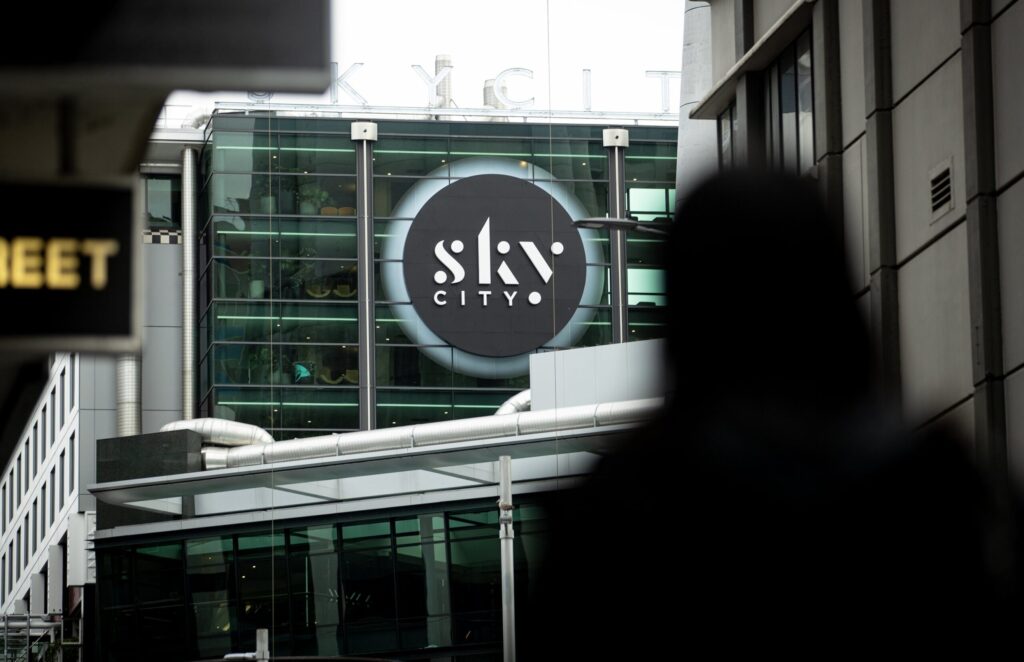
SkyCity Entertainment Group confirmed settlement of the NZ$74.5m (€37.9m) sale of its 99 Albert Street office building and adjoining Victoria Street investment properties in Auckland on 1 September 2026. The buyer is Christchurch-based commercial property manager Mainland Capital, operating in a joint venture with Russell Property Group. Most outlets have reported that they cleaned up and moved on. What they have not dwelled on is the identity of the building itself: SkyCity’s own Auckland headquarters, a 17-level office tower the company purchased for NZD$47m back in 2017. Selling it now, at NZ$74.5m, is technically a 58% gain. Given what the rest of the FY26 numbers look like, that profit is doing a lot of heavy lifting.
NZ$74.5m Settled, But the Target Is Much Larger
The Albert Street deal is one component of a broader asset monetisation programme SkyCity launched alongside its NZ$240m equity raise in August 2025. The full programme, which also covers a non-binding agreement to sell the group’s Grand Hotel in Auckland, is expected to generate NZ$275m to NZ$300m in gross proceeds by December 2026, with all funds earmarked to reduce debt.
The Grand Hotel deal, struck in July 2026 with an unnamed overseas buyer, still requires sign-off from New Zealand’s Overseas Investment Office. Financial terms remain confidential, though Forsyth Barr has estimated the hotel’s value at around NZ$200m, with some market activity pointing toward NZ$250m. SkyCity is targeting cash receipt by late 2026. Until that settles, the programme’s headline target remains partially unresolved.
The Albert Street property itself had a longer journey to this point. SkyCity disclosed heads of agreement for the properties in May 2026, the sale reached unconditional status in July, and settlement was confirmed on 1 September via an NZX filing.
FY26 Results Paint a Harder Picture
CEO Jason Walbridge described FY26 as a year of progress: “In FY26, we implemented carded play across our New Zealand casinos, opened the NZICC, advanced our asset monetisation, exceeded our cost-out targets, continued preparing for the regulated New Zealand online gambling market, and settled in principle the outstanding major regulatory issues in Adelaide.”
Progress, indeed. Profitable progress, however, less so. Revenue for the year was down slightly year-on-year at NZ$822.7m, while EBITDA was down by 22.3% to NZ$181.6m and net profit was down by 46.9% to NZ$38m. EBITDA, when adjusted for accounting reasons and remediation expenses relating to Adelaide, was down even more sharply at 44.2% to NZ$120.5m. Net debt at year-end was NZ$591m. Walbridge is aiming for cost savings of NZ$30m on an annualised basis in FY27 rising to NZ$70m by FY28. Walbridge will not be issuing FY27 earnings guidance due to macroeconomic uncertainties.
The Adelaide Fine That Never Fully Disappeared
SkyCity’s regulatory situation in South Australia has been grinding for years, and the FY26 results have brought it into the sharpest focus yet. Under a non-binding in-principle agreement with South Australia’s Liquor and Gambling Commissioner Brett Humphrey, SkyCity Adelaide will pay an A$21m fine in three instalments over two years, with the first payment due within 28 days of a legally binding tripartite agreement being signed.
This agreement was not yet finalised when the FY26 results came in. But as the company declares Adelaide to be resolved on its public accounts, the money has not yet entirely left the bank, nor have the obligations for compliance been cemented. The above-mentioned fine has come after a separate three-year investigation, conducted by the former Supreme Court Judge, Brian Martin, whose report found serious systemic issues at SkyCity Adelaide between 2016 and 2022, including anti-money laundering and counter-terrorism financing requirements that were, in his words, woefully inadequate because revenue was given more importance than compliance. “A $21 million fine is possibly one of the largest fines in the state’s history, if not the largest,” noted the South Australian Premier Peter Malinauskas.
Two Takeover Bids Were Quietly Rejected in May – Disclosed in August
This is where the story gets genuinely worth interrogating. SkyCity confirmed on 25 August that it had received, and rejected, two unsolicited acquisition proposals in May: one from a special situations fund managed by Oaktree Capital Management at NZ$0.70 per share, and a second from an unnamed party at NZ$0.75 per share. Based on SkyCity’s 1.103 billion ordinary shares, those proposals valued the company’s equity at approximately NZ$772m and NZ$827m respectively.
The board’s statement was firm: “The Board unanimously determined that these proposals did not adequately reflect the underlying value of the company, and that the conditions were problematic. Accordingly, the parties were advised that SkyCity was not prepared to proceed.” The conditions attached to both proposals included restrictions on SkyCity entering binding agreements to acquire or dispose of assets, which would have directly obstructed the monetisation programme already running at the time.
The second bidder, reported by the Australian Financial Review to be Sam Arnaout’s Iris Capital, owns Casino Canberra and Lasseters Hotel Casino. Oaktree, for its part, has previously attempted acquisitions of both Crown Resorts and Star Entertainment, two Australian casino operators that found themselves under sustained financial and regulatory pressure. Neither of those bids succeeded, yet the pattern is worth noting. Oaktree tracks distressed casino assets with precision.
Expert Analysis: The Real Argument Nobody Is Having
We keep returning to the same tension in this story, and it is one that most coverage has quietly sidestepped. SkyCity’s board rejected both takeover bids on the grounds that they did not reflect the company’s underlying value. That is a board’s right, and there is nothing improper about it. What is worth pressing on is the timing of the disclosure. The proposals arrived in May. They were disclosed only on 25 August, roughly three months later, after media speculation forced the company’s hand. During those three months, the Albert Street sale was completed, the Grand Hotel heads of agreement was announced, and FY26 results were published.
We are not suggesting anything improper occurred. What we are saying is that a company carrying NZ$591m in net debt, reporting a 44.2% fall in EBITDA, and actively selling assets including its own headquarters, chose to stay quiet about two acquisition approaches for three months. Investors making decisions across that period did so without that context. That is the conversation the market should be having more directly. The board may well be right that neither bid reflected genuine underlying value. Oaktree’s own track record of bidding on pressured casino assets without success suggests it calibrates low, knowing rejections are expected. But the opacity of the process, and the fact that disclosure came only after press speculation, sits awkwardly against a company that is simultaneously asking shareholders and the market to trust its strategic execution. What happens at the October annual meeting will say a great deal about whether that trust holds.
Explore more:
 Share
Share


 255 views