Key Points
- SkyCity’s board unanimously rejected two confidential acquisition proposals in May 2026, including an Oaktree Capital offer at NZ$0.70 per share and a second bid, later confirmed as Iris Capital’s, at NZ$0.75 per share.
- The bid conditions, not just the prices, were a central problem. Bidders demanded an asset freeze that would have stopped SkyCity’s entire NZ$275m to NZ$300m property sale programme.
- SkyCity’s FY26 net profit collapsed 37.6% to NZ$18.2m, and its NZ$590.7m net debt position makes the board’s “undervalued” argument a credible but risky position to hold.
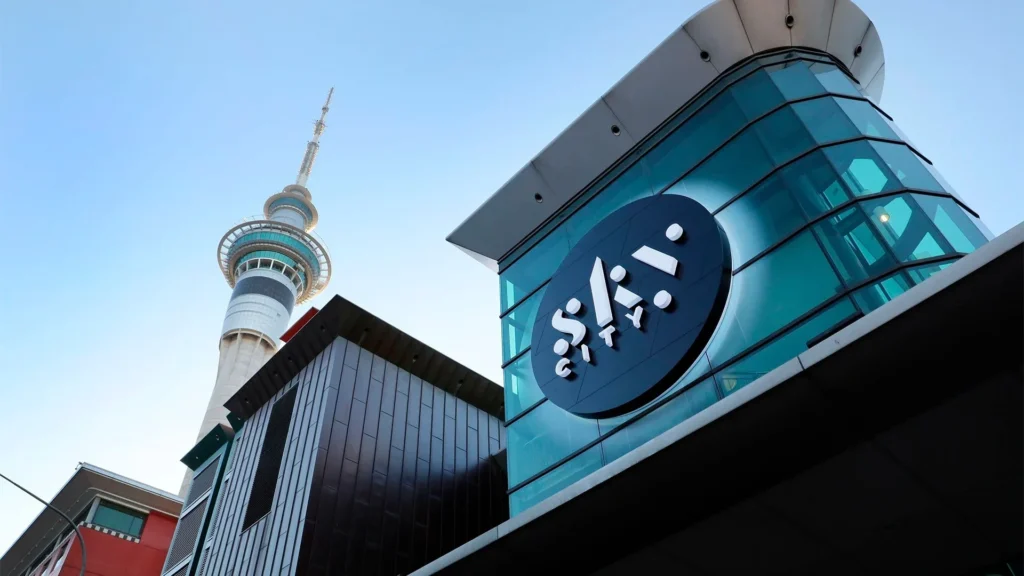
Two acquisition proposals arrived at SkyCity Entertainment Group’s boardroom in May, stayed confidential for months, got rejected by every director without a single vote against, and then became public news when Australian media forced the company’s hand. The New Zealand casino operator filed a disclosure to the NZX on 25 August 2026 confirming the bids existed, and that neither bidder came back with a revised offer after being turned away. The story sounds straightforward. It is not.
Two Bidders, Two Prices, One Unanimous Rejection
The first bid was made by a special situation fund at Oaktree Capital Management, offering NZ$0.70 per share in cash. The other, as yet unidentified, is now known to be Iris Capital, a Sydney-based company owned by Sam Arnaout, which runs Casino Canberra and Lasseters Hotel Casino, located in Alice Springs. The implied valuation by Iris Capital was NZ$0.75 per share. Using the total of 1.103 billion ordinary shares of SkyCity, this would translate to an equity value of approximately NZ$772m and NZ$827m respectively.
SkyCity’s board said both proposals failed on two fronts: the prices did not adequately reflect the company’s underlying value, and the conditions were “problematic.” The board stated it was open to further engagement if either party returned with a revised proposal. Neither did.
Why Did the Conditions Matter as Much as the Price?
Most coverage of this story stops at the price. The conditions deserve equal attention. Each proposal required at least eight weeks of due diligence, confirmation of debt financing, an agreed transaction structure, binding documentation, unanimous board support, shareholder approval, regulatory clearances and the acquirer’s own internal sign-off. One or both bidders also demanded exclusivity, insisted SkyCity retain its existing debt facilities, and, critically, sought a freeze on any binding asset acquisitions or disposals.
That last condition would have directly blocked SkyCity’s asset monetisation programme, which the company has already committed to publicly and in part executed. SkyCity has unconditionally sold two Auckland investment properties, 99 Albert Street and Victoria Street, for NZ$74.5m, and holds a non-binding agreement for the sale of the Grand Hotel. Accepting exclusivity while freezing that programme, for two months or longer, with no binding commitment from either bidder, was a risk the board chose not to take.
The Financial Reality Behind the “Undervalued” Claim
SkyCity’s own financial results, published just days before the bid disclosure, make the board’s valuation defence harder to stand on than it might appear. Net profit after tax fell 37.6% to NZ$18.2m for the year ended 30 June 2026. Underlying EBITDA dropped 22.3% to NZ$181.6m. Gaming revenue declined 5.9%, affected by the rollout of mandatory carded play across its New Zealand casinos, weaker premium play, and softer fourth-quarter visitation and spending.
Net debt reached NZ$590.7m on 30 June, pushing the bank-covenant net-debt-to-EBITDA ratio to 3.1 times. No dividend was declared. SkyCity shares closed at NZ$0.68 on the day of disclosure, fractionally below the lower of the two bids, suggesting the market read the Oaktree offer as priced at or near fair value rather than at a material discount. The company is targeting net debt below twice EBITDA by fiscal 2027, before any costs arise from an online casino licence.
The target of the asset sales of NZ$275m to NZ$300m is credible enough to support the board’s argument in itself. The target itself is close to filling the gap that exists between the two bids and higher valuations, provided that the program is delivered on time. Furthermore, the company’s objective of generating cost savings of NZ$30m in FY27 and NZ$70m in FY28 is another indicator of its success in meeting the expectations of shareholders. The chief executive officer stated that the FY26 EBITDA result was in line with the forecast provided in May.
Adelaide: The Compliance Weight Every Bidder Had to Price
Oaktree has been circling the Australian and New Zealand casino sector for years. It previously pursued positions in both Crown Resorts and Star Entertainment Group, neither of which resulted in completed acquisitions. Crown was ultimately taken private by Blackstone, while Bally’s later secured a controlling stake in Star alongside a local investment partner. Oaktree did acquire Interblock, an electronic table games supplier, in 2022, but its interest in larger casino operators has consistently stopped short of completion.
The case in Adelaide is something that would make all potential buyers hesitate. In June 2024, AUSTRAC was able to secure A$67m as a civil penalty against SkyCity, following SkyCity’s admission of a violation of Australia’s Anti-Money Laundering and Counter-Terrorism Financing Act 2006. Then, in June 2026, SkyCity was able to come up with a principal settlement with the Commissioner for Liquor and Gambling of South Australia, making the total fine amount to A$21m, which will be paid in three yearly instalments.
An independent review led by retired Supreme Court judge Brian Martin, spanning 514 pages and published in August 2025, found the Adelaide casino suitable to retain its licence despite years of anti-money laundering and harm minimisation failures. Martin found “a poor and inadequate culture” had existed at SkyCity until late 2021, with meaningful change only arriving at senior management level around April 2024. SkyCity Adelaide’s underlying EBITDA fell 26.7% to NZ$22.8m in fiscal 2026, and the company recorded a NZ$52.2m impairment against the asset. A formal strategic review of Adelaide will begin in the first half of fiscal 2027, a process that could result in the outright sale of the property.
Any acquirer running eight weeks of due diligence on SkyCity would need a significant portion of that time just to understand the remaining compliance commitments: a remediation programme running to June 2027, a full governance overhaul due by January 2028, and independent monitoring by Kroll Australia that is ongoing. That context helps explain why the conditions in both bids were framed the way they were and why SkyCity found them unworkable against an active restructuring timetable.
What Comes Next?
Australian media reports named Oaktree, Blackstone, Bally’s and Apollo Capital Management as parties that had at least considered a SkyCity approach before the disclosure. None has confirmed active interest since the bids became public. SkyCity has made its position clear: any revised proposal must address both the price and the conditions that ended the first two approaches.
SkyCity shares have declined roughly 11% over the past twelve months, trailing the broader market, and the dividend remains suspended. Whether a credible acquirer returns before the asset programme and cost reset begins to move those numbers is likely to define the next chapter for this company.
Our Analysis
What this situation really exposes is how difficult it is to buy a casino operator that is simultaneously restructuring, managing regulatory remediation and defending an asset programme. The eight-week diligence window both bidders requested was probably never going to be enough for Adelaide alone. We read the board’s rejection of the conditions as the more defensible part of the decision, even if the valuation argument is harder to sustain given the earnings trajectory. What interests us most is whether Iris Capital, a smaller and regionally focused Australian operator, returns with a cleaner, better-priced offer once the Adelaide strategic review produces a clearer picture. A SkyCity without Adelaide is a materially different asset, and the next bid, if one comes, may look very different from these two.
Explore more:
 Share
Share


 260 views