







Key Points
- Active8Insights traced at least 12 copyright takedown notices to a sender named Alex Gramm, with one October 2025 filing explicitly claiming to act “on behalf of 1xBet,” though 1xBet flatly denies authorising it.
- Sportradar’s shares fell roughly a fifth in a single day in April 2026 after Callisto Research and Muddy Waters accused it of serving illegal gambling operators; a shareholder lawsuit followed in May 2026.
- DMCA abuse against journalism is a documented and growing tactic. Google’s own system cannot always verify claims before delisting pages from search results.
The Email That Pulled a Publication Into a Bigger Story
On 5 August 2026, Active8Insights opened a message from Google that most publishers quietly dread. The specialist short-selling publication was told one of its articles had been flagged for copyright infringement and removed from search results. The article in question covered global operator 1xBet and its relationship with sports data giant Sportradar; two names already sitting at the middle of a months-long industry storm.
Most publishers would contest the removal, move on, and say nothing more. Active8Insights went looking instead.
“We got drawn into this matter randomly,” said a spokesperson for the news source to iGB. “It all began on 5 August when we were emailed by Google saying something to the effect of ‘Hey, we noticed you have infringed on copyright, and we are going to take your listing out of our search engine index.'”
What came next was a trail of paper that posed a lot of questions.
Twelve Notices – Eighty-Four URLs – One Name
Active8Insights traced the complaint through Google’s copyright notice system and the Lumen Database, an independent archive of takedown requests run as a research project. What came back was not an isolated incident. A sender operating under the name Alex Gramm appears on at least 12 takedown notices covering 84 URLs across roughly 68 domains. Ten of those notices appear to serve the interests of 1xBet, targeting its branding, marketing material, or journalism written about the company.
One notice, filed in October 2025, identified the sender as “Alex Gramm on behalf of 1xBet.” That specific detail is worth holding carefully. It is evidence of what the filer declared, not confirmation that 1xBet authorised or even knew about it.
The earliest matching notice in the Lumen archive dates to 1 November 2013, concerning football analysis on a blog apparently belonging to someone named Alex Gramm. That filing appears entirely unconnected to 1xBet. The pattern of notices targeting gambling coverage only becomes visible from October 2025 onwards.
Both Companies Deny Any Involvement
1xBet’s strategic advisor Simon Westbury was clear: “Activ8Insights is clear about the limits of what it can establish and does not allege that 1xBet was responsible for the activity described. 1xBet can confirm that it had no involvement in or knowledge of that notice. We have no further comment.”
Sportradar’s response was equally firm. A spokesperson told iGB the company “did not file or commission the notice in question and has never sought the removal of such press coverage from search results,” adding: “Sportradar has no relationship with, or knowledge of, anyone filing copyright takedown notices under the name Alex Gramm.”
Active8Insights itself drew the boundary of its own investigation clearly: “We have no evidence that 1xBet, or Sportradar, filed, commissioned, or knew about this notice, and we do not allege it. What we can document is what the filings did.”
That distinction matters. The investigation documents a pattern. It does not identify who designed it.
A Single-Day Batch Hit Publications Across Multiple Countries
The scope of the filing activity reached well beyond Active8Insights. A single notice filed on 27 April sought removal of 18 URLs across 14 domains, targeting publications including Gaming Intelligence, Brazilian newspaper Estadão, The Hindu, Play the Game, BettingBladet, and several other gambling and sport outlets. iGB itself received multiple requests to remove content covering 1xBet across both its editorial brands.
Active8Insights says the targeted material largely covered the 22 April short-seller reports on Sportradar by Callisto Research and Muddy Waters Research, along with wider 1xBet coverage. Curiously, one notice was apparently submitted “on behalf of” Muddy Waters Research, a firm that had just published a critical report on Sportradar. Muddy Waters has said it did not submit that complaint.
How Google’s System Makes This Possible?
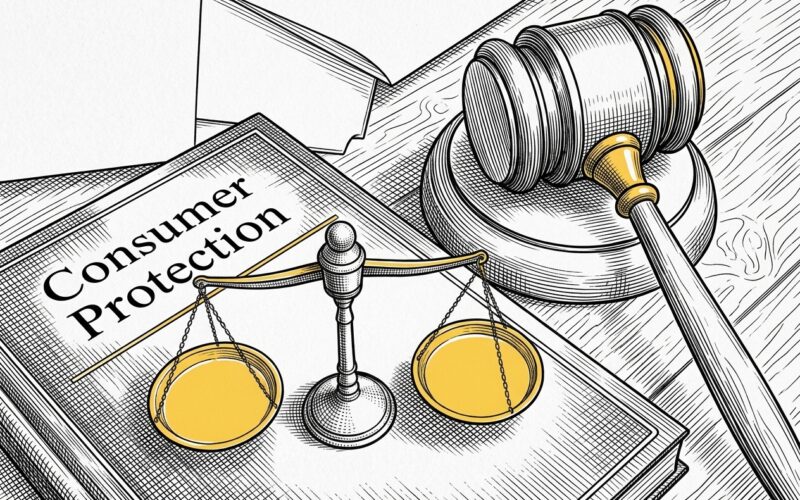
The mechanism behind these removals is important to understand. Under the Digital Millennium Copyright Act (DMCA), anyone claiming to hold a copyright can file a request asking Google to remove a page from search results. As Search Engine Journal reported in July 2026, Google’s own Transparency Report acknowledges that people submitting requests may provide inaccurate information and that it cannot always verify accuracy before acting on a notice.
Critically, the law does not require Google to decide whether a copyright claim is actually valid. The burden of disputing a removal falls entirely on the site that was delisted. A page can stay absent from search results for days or longer, even after the owner contests it, because the counter-notice process takes time by design.
Fake DMCA abuse against publishers is not new. In 2018, filers posed as rights-holders to push competitor websites down Google rankings, sometimes using names that resembled real companies to appear credible. By 2022, the Organised Crime and Corruption Reporting Project had documented bogus copyright complaints being used specifically to remove investigative journalism, with complainants using fake identities and backdated articles as supposed source material.
The Dispute This Sits Inside
The takedown story arrived during a genuinely serious argument about Sportradar. On 22 April 2026, Callisto Research and Muddy Waters each published separate reports alleging that Sportradar maintained extensive relationships with black-market and grey-market gambling operators. Sportradar’s shares fell by approximately 22.6% by the close of trading that day.
Callisto estimated that around a third of Sportradar’s revenue could be connected to unlicensed platforms, citing a former senior employee who said unlicensed operators accounted for between 30% and 40% of the data giant’s revenue. Muddy Waters separately claimed a member of Sportradar’s sales team had told undercover investigators, posing as representatives of illegal markets at ICE Barcelona 2026, that the company “serves everyone.”
Sportradar CEO Carsten Koerl rejected both reports publicly, describing them as “false, misleading and defamatory.” On the post-Q1 earnings call, Koerl told analysts directly: “We do not work with black market operators. For the grey market, we have a solid compliance structure in place, and we only work with licensed operators.” He placed the maximum possible grey-market revenue exposure at around 12% of total revenues, stating his own assessment was “a low to mid single-digit number.”
An independent review commissioned by Sportradar’s Audit Committee supported that position. The Sportradar spokesperson told iGB: “It concluded the allegations are unfounded and present a deliberately misleading narrative. The licensing of our customers is determined by the regulatory bodies in the jurisdictions where those clients operate, not by Sportradar.”
From the Stock Market to the Courtroom
However, the dispute did not remain limited to analysts’ calls. On May 18, 2026, investor James Anthony Smale sued Sportradar in the U.S. District Court for the Southern District of New York for the violation of the Securities Exchange Act over a class period from November 7, 2024, until April 21, 2026. According to the lawsuit, the losses were incurred by the investors due to the distortion of the perception of risks that Sportradar was exposed to in the market.
These are allegations in a filed complaint. No court has made findings against any party. The same standard applies to the short-seller reports, and to Active8Insights’ investigation of the takedown trail.
What the Paper Trail Proves and What It Does Not?
The Lumen archive records what was requested and what content was targeted. It does not, by itself, establish who designed or commissioned the campaign. That gap is significant. Copyright complaints are relatively simple to file, and many publications routinely appeal invalid requests. The person or entity filing a notice faces few immediate consequences for an inaccurate submission, while the target bears the full cost of disputing it.
What Active8Insights documented is a concentrated pattern: notices targeting journalism about 1xBet, notices targeting coverage of the short-seller reports, a coordinated 27 April batch hitting fourteen domains in a single move, and at least one notice explicitly naming 1xBet as the represented party. 1xBet says that declaration was not authorised by them. The filer, operating under the name Alex Gramm, has not been publicly identified.
The question of who actually commissioned the campaign, and with what knowledge, remains open.
Expert Analysis
We have watched DMCA abuse expand slowly from a competitive SEO nuisance into something that now reaches investigative journalism. What makes this case harder to dismiss than most is the specificity of the pattern. Fourteen domains hit in one notice, all covering the same story, on the same day, is not the behaviour of a disorganised actor. It suggests a deliberate plan, even if its origin cannot yet be confirmed.
The structural problem is that DMCA law creates an inherent imbalance. Filing costs almost nothing; disputing costs real time and resources. A smaller publication with no dedicated legal capacity may never even notice a removal, let alone appeal it in time. For stories with a short news cycle, even a 48-hour absence from search results can permanently reduce reach.
Whether 1xBet, Sportradar, a third party acting on their behalf, or someone acting entirely without authorisation filed these notices, is precisely what has not been established. What we do think matters, and what the industry should be watching, is whether this investigation prompts a broader conversation about how copyright law can be reformed to make abuse meaningfully harder and, importantly, more expensive for those who misuse it against the press.
Explore more:
 Share
Share


 221 views